The Echinopsis 'Eso Es Todo' is a masterpiece of floral gradient and texture. This hybrid is a definitive showstopper, earning its name by being the "total package" of color, form, and delicate beauty.
1. Breeding History
The world of Echinopsis hybridizing is a pursuit of floral perfection, transforming rugged cacti into vessels for magnificent, oversized blooms. At our nursery, we carry forward this legacy by maintaining a rigorous cataloging system, assigning unique numbers to each hybrid and preserving a "living library" of original mother plants. Because the intricate color bleeding and ruffled petal edges of 'Eso Es Todo' are complex genetic traits, all our plants are vegetatively propagated. This ensures that every offset retains the precise, multi-tonal character of the parent flower.
2. Origin of Name
The name 'Eso Es Todo' is a Spanish phrase that translates literally to "That is all" or, more colloquially, "That’s it!" or "The End." It was chosen to signify that once you see this bloom, there is nothing more to be said—it is the ultimate expression of the genus. The name reflects the breeder's confidence that this hybrid represents the pinnacle of beauty. Linguistically, it carries a celebratory tone, often used when something has reached its highest possible standard.
3. Origin of Plant
'Eso Es Todo' is a sophisticated garden hybrid, but its genetic foundations lie in the high-altitude deserts and rocky slopes of the South American Andes (Argentina and Bolivia). These ancestors were first documented by 19th-century explorers who marveled at how such hardy plants could produce such delicate, ephemeral flowers. Hybridizers have harnessed that mountain resilience to create this modern cultivar, which pairs "wild" durability with "high-fashion" floral aesthetics.
4. Description
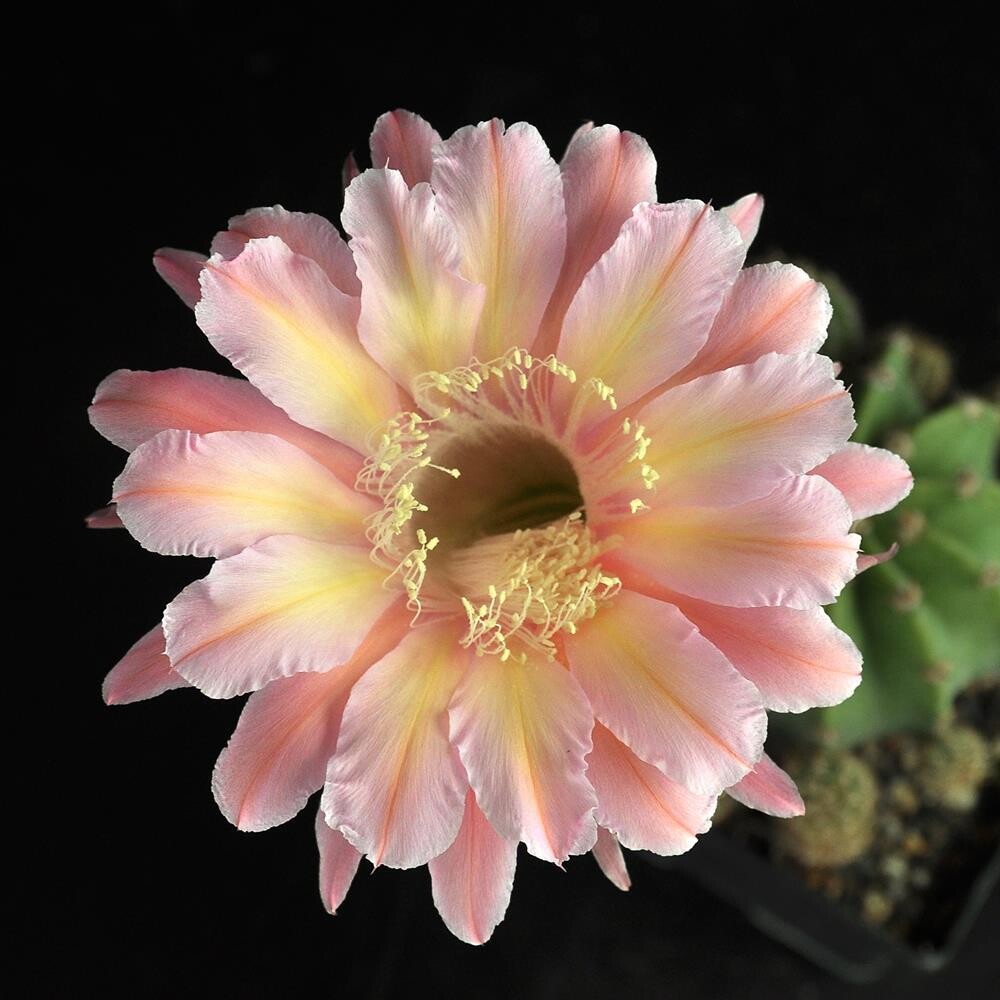
Based on the exquisite bloom (pictured), Echinopsis 'Eso Es Todo' features a complex, multi-layered floral architecture:
- The Petals: The petals are delicately ruffled or "frilled" at the edges, giving the flower a soft, voluminous appearance. The color is a sophisticated pale salmon-pink at the edges, which transitions smoothly into a warm peach and apricot mid-section.
- The Glow: Each petal features a luminous pale-yellow to cream-colored midrib that radiates from the center, creating a "sunburst" effect.
- The Core: The heart of the flower is deep and inviting, filled with a crown of delicate, creamy-yellow stamens that dance above a pale throat.
- The Body: The plant itself is a tidy, globular dark green cactus with distinct ribs and short, inconspicuous spines, ensuring all focus remains on the breathtaking floral display.
5. Conservation Status
As a man-made cultivar, 'Eso Es Todo' does not exist in the wild and is therefore not an endangered species. It is a stable and celebrated variety in the horticultural trade. By choosing nursery-grown hybrids, collectors play a vital role in conservation, as these domestic varieties reduce the demand for wild-harvested plants and support the preservation of the original Cactaceae species in South America.
6. Care
- Light: Enjoys bright, filtered sunlight. To achieve the most vivid salmon and peach tones, provide ample morning sun.
- Watering: Use the "soak and dry" method. Water thoroughly when the soil is completely dry, and keep the plant dry during the winter months to encourage the development of flower buds.
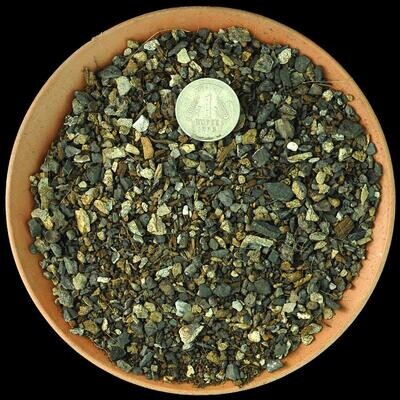
- Soil: Requires a fast-draining, mineral-heavy cactus mix (incorporating pumice, lava rock, or coarse sand).
- Temperature: Prefers a range of 50°F to 90°F. Protect from frost and extreme dampness, especially during the winter dormant period.
7. Interesting Anecdote
The naming of 'Eso Es Todo' is said to have occurred when the hybridizer first saw the plant in full bloom after years of selective crossing. Legend has it that they took one look at the ruffled, glowing salmon petals and exclaimed, "¡Eso es todo!"—implying that the search for the perfect hybrid was finally over. It has since become a "must-have" for collectors who appreciate the "soft-focus" look in cacti, as the flower’s color gradient is so smooth it almost looks airbrushed by hand.