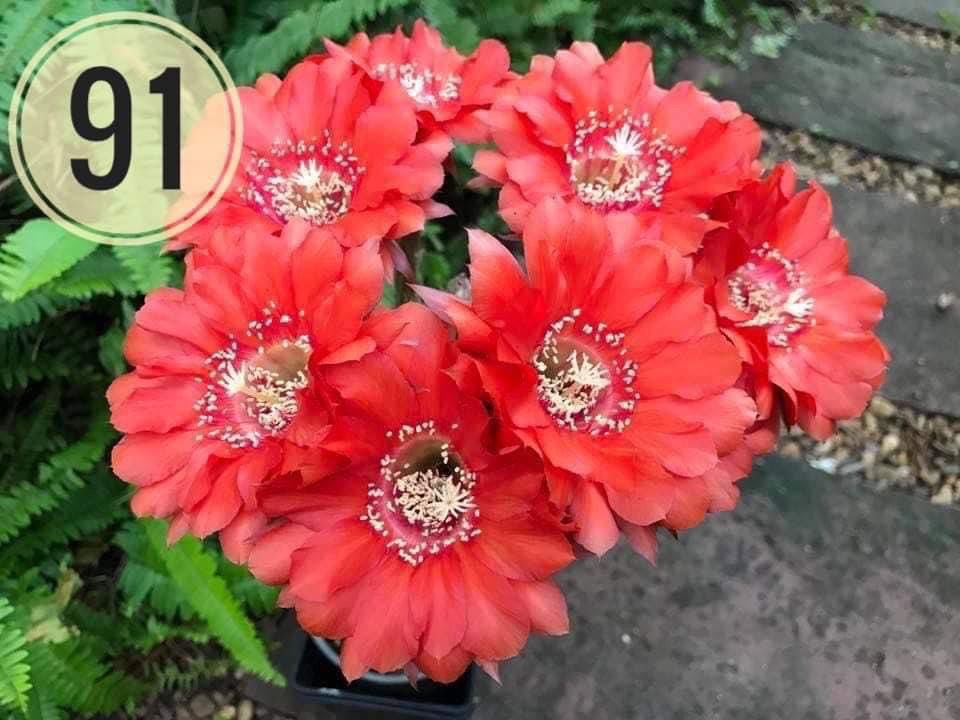
Lobivia Hybrid 'Egyptian Red'
A show-stopping cluster cactus that erupts into a crown of glowing scarlet-red blooms, each centered with a starburst of creamy stamens — a true collector's showpiece when in full flower.
1. Origin of Name
As with 'Prometheus,' the genus name Lobivia is an anagram of Bolivia, coined in 1922 by botanists Nathaniel Lord Britton and Joseph Nelson Rose in The Cactaceae to classify the many small, clustering globular cacti native to the Bolivian Andes and surrounding regions. Modern taxonomy often merges Lobivia into Echinopsis, though growers and nurseries continue to use the older name, particularly for hybrids, since it remains the recognized term within the cactus-collecting community.
The cultivar name 'Egyptian Red' is a hybridizer's descriptive name rather than a reference to any wild origin in Egypt — cactus breeders frequently draw on evocative, exotic-sounding names to capture a flower's intensity of color. Here, "Egyptian Red" likely alludes to the deep, saturated red tone of the petals, reminiscent of ochres and reds associated with Egyptian art, pottery, and pigments, paired with the flower's warm, sun-baked glow. Like most modern Lobivia/Echinopsis hybrids, 'Egyptian Red' was developed through selective cross-breeding by cactus specialists aiming to intensify flower color, size, and bloom count rather than being a naturally occurring variety.
2. Origin of Plant
The wild ancestors behind hybrids like 'Egyptian Red' originate in the high-altitude Andean regions of Bolivia, Peru, and northern Argentina, where Lobivia species grow among rocky outcrops and grassy slopes at elevations frequently above 2,000 meters. These plants evolved to withstand intense high-altitude sunlight, cold nights, and nutrient-poor soils — conditions that shaped the compact, clustering growth habit and the vigorous, colorful flowering response seen in today's cultivated hybrids.
3. Description
'Egyptian Red' is a clumping, offsetting cactus, forming tight clusters of small, ribbed, spiny green stems that multiply readily over time to create a dense mound. Its true glory, however, is the flowering display: numerous large, glossy, deep red to coral-red blooms open in unison, each with broad, satiny petals surrounding a striking central boss of ivory-white to pale-yellow stamens and a darker maroon throat. Because the plant clusters and offsets so freely, mature specimens can produce a dozen or more flowers simultaneously, creating the dramatic "bouquet" effect seen in well-grown pots — a hallmark trait that has made Lobivia hybrids prized among succulent collectors and competitive growers (note the show entry marker in the photo, a nod to how frequently these hybrids are exhibited at cactus and succulent society shows).
4. Conservation Status
'Egyptian Red' is a cultivated hybrid with no formal conservation status of its own, as it exists solely through nursery propagation. Its wild Lobivia/Echinopsis relatives, however, face ongoing pressures in their native Andean habitats from land development, mining, and over-collection, and several related species are protected under CITES Appendix II to regulate international trade. Growing hybrids such as this one allows enthusiasts to enjoy spectacular flowering cacti while taking pressure off wild populations.
5. Care
- Light: Needs full sun to very bright light for tight, compact growth and heavy flowering — a minimum of 6 hours of direct sun, or the brightest available window indoors.
- Watering: Water deeply during the active growing season (spring through summer), letting the soil dry completely between waterings. Cut back sharply in winter, keeping the plant nearly dry to support dormancy.
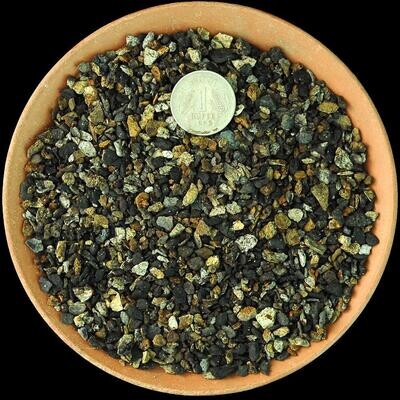
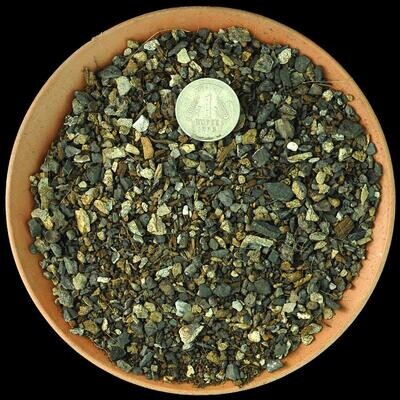
- Soil: A gritty, fast-draining cactus mix is essential — combine potting soil with pumice, perlite, or coarse sand to prevent waterlogging around the roots.
- Temperature: Prefers warm days and cooler nights; tolerates light winter chill (down to around 5–10°C / 40–50°F) when kept dry, which helps set the following season's flower buds.
- Fertilizing: Apply a low-nitrogen, phosphorus-rich cactus fertilizer during active growth to encourage strong, abundant blooming.
- Tip: Because this hybrid clusters and offsets readily, allow it to fill its pot before repotting — crowded clumps tend to flower more prolifically, producing that signature "crown" of red blooms all at once.
An Engaging Aside
Lobivia hybrids like 'Egyptian Red' are beloved on the cactus and succulent show circuit specifically because of their synchronized flowering — many varieties are bred and selected so that most or all buds on a clump open on the same day, turning an otherwise modest, spiny plant into a jaw-dropping floral display for just a few hours to a couple of days. This fleeting, coordinated bloom event is part of what drives collectors to trade and prize specific named hybrids, each competing to produce the boldest, most photogenic flush of color.