

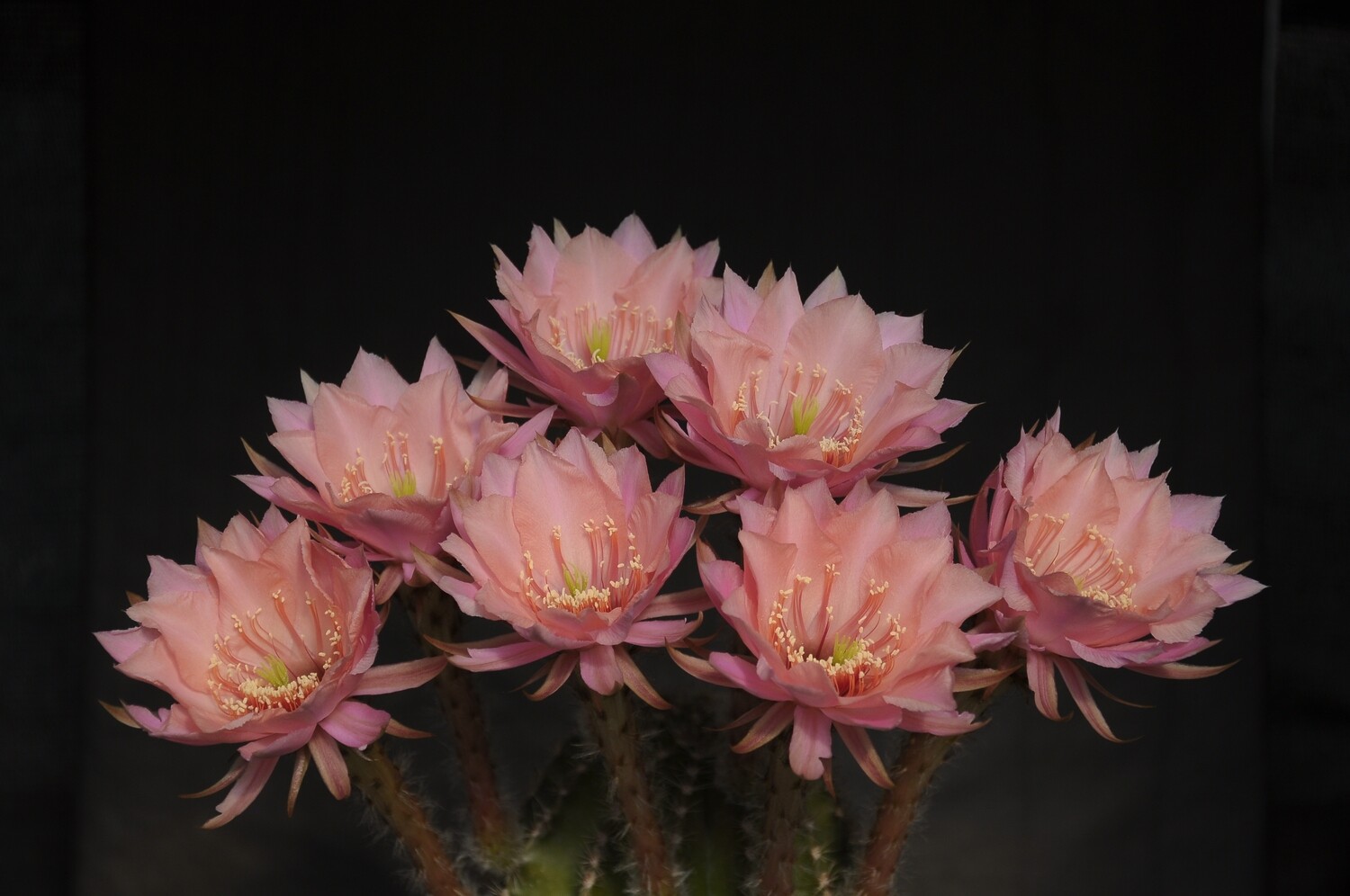
Echinopsis hybrid Peach Ishtaar
Product Details
Radiant Sunset: Echinopsis hybrid 'Peach Ishtaar'
A rare floral masterpiece featuring multi-layered, lanceolate petals in a breathtaking gradient of soft peach and electric pink.
- Origin & History of Name: The genus name Echinopsis stems from the Greek echinos (hedgehog or sea urchin) and opsis (appearance), describing the spiny, globose stems.
- Morphology: This hybrid features a cylindrical, ribbed epidermis with well-defined costae (ribs) lined with felted areoles and sharp radial spines. Its defining feature is the nocturnal-blooming flower: a large, funnel-form bloom with multiple layers of sharp, lanceolate petals. The coloration is a sophisticated gradient, shifting from a creamy peach throat to vibrant pink highlights at the distal tips.
- Habitat & Origin: This plant is a man-made cultivar, not found in the wild. It is the result of intensive selective breeding within the Echinopsis (formerly Trichocereus) group to maximize flower size and color complexity. All our specimens are produced via vegetative propagation or nursery-sown seeds, ensuring a 100% sustainable supply chain that protects wild South American populations.
- Cultivation Profile:
- Substrate: Use a highly porous, mineral-based mix (60% coarse sand/perlite and 40% organic compost). Avoid heavy clay soils common in parts of India.
- Light: Thrives in full morning sun with afternoon filtered shade. In the Indian subcontinent, protection from the harsh 12 PM – 4 PM sun is essential to prevent epidermal scorching.
- Water/Dormancy: Follow a "soak and dry" cycle. In the monsoon, protect from persistent rain to avoid root rot. During winter, reduce watering significantly to induce a cool dormancy, which is critical for triggering the following season's flower buds.
- Scientific/Historical Anecdote: Echinopsis species were once famously known as "Easter Lily Cacti" due to their massive, trumpet-shaped flowers. In the mid-20th century, breeders like Bob Schick revolutionized the genus by crossing species to create "Schick Hybrids," proving that these rugged, desert-dwellers could produce some of the most complex, neon-saturated colors in the entire plant kingdom.
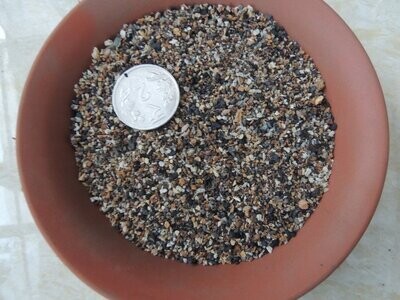
Cactus Seed Planting Mix
Cactus Seed Planting Mix
Sterile, Fine-Grain Media for Cactus & Succulent Seeds
SKU MNS005
₹66.35
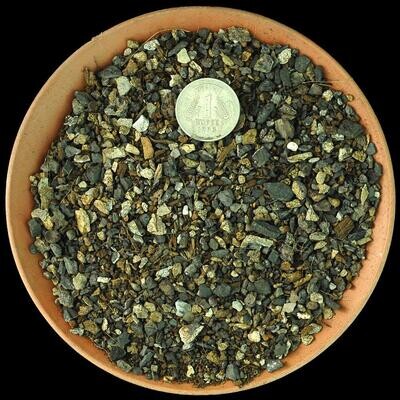
Cactus & Succulent Planting Mix COARSE (aka Cactus Soil Mix or Succulent Soil Mix)
Cactus & Succulent Planting Mix COARSE (aka Cactus Soil Mix or Succulent Soil Mix)
Washed, Free-Draining Mineral Mix for Cactus & Succulents
SKU MNS003
₹38.74
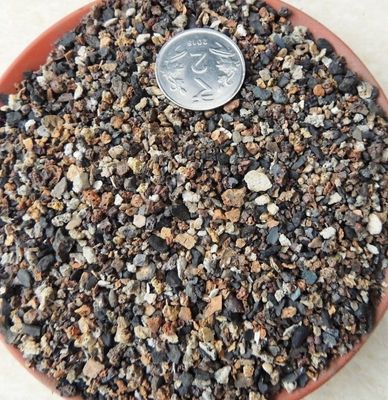
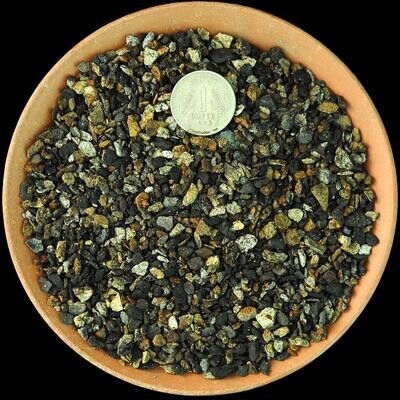
Cactus & Succulent Planting Mix FINE (aka Cactus Soil Mix or Succulent Soil Mix)
Cactus & Succulent Planting Mix FINE (aka Cactus Soil Mix or Succulent Soil Mix)
Fine-Grain Potting Mix for Cactus & Succulent Roots
SKU MNS001
₹33.74