Capture the celestial beauty of the desert with Echinopsis 'Purple Starling'. A standout hybrid known for its lush, multi-layered petals and vibrant contrast, this plant is a "star" performer in any succulent collection, offering large-scale blooms that are as thick and textured as they are colorful.
1. Breeding History
The world of Echinopsis hybridizing is dedicated to pushing the boundaries of what nature originally provided, focusing on increasing flower diameter and introducing complex, multi-tonal colors. 'Purple Starling' is a product of this specialized breeding tradition. Because flower characteristics like petal thickness and color gradients can be lost through seed, all our 'Purple Starling' specimens are vegetatively propagated from offsets. This ensures that every plant we sell retains the exact "parent character" of its magnificent bloom.
2. Origin of Name
The name 'Purple Starling' is a poetic reference to both the flower’s color and its celestial, radial form.
- Linguistic Roots: "Purple" refers to the deep magenta and violet-pink tones of the petals, while "Starling" refers to the common bird (Sturnus vulgaris), known for its iridescent feathers that shimmer with purple and green hues in the sun.
- Reason for Choice: The name was chosen to evoke the image of a "star" (the flower’s shape) and the "ling" (a suffix often denoting a small or precious thing). Historically, names involving birds in the Echinopsis world signify grace and vibrant movement, reflecting how the thick, magenta petals seem to take flight from the dark green body of the cactus.
3. Origin of Plant
As a cultivated hybrid, 'Purple Starling' was developed in a greenhouse environment; however, its "DNA" belongs to the rugged Andean regions of South America. The ancestor species were originally discovered by 19th-century botanists exploring the rocky outcrops of Bolivia and Argentina. These wild ancestors produced large, white, nocturnal flowers to attract moths; modern breeding has redirected that energy into the vibrant, day-blooming magenta display seen in this hybrid today.
4. Description
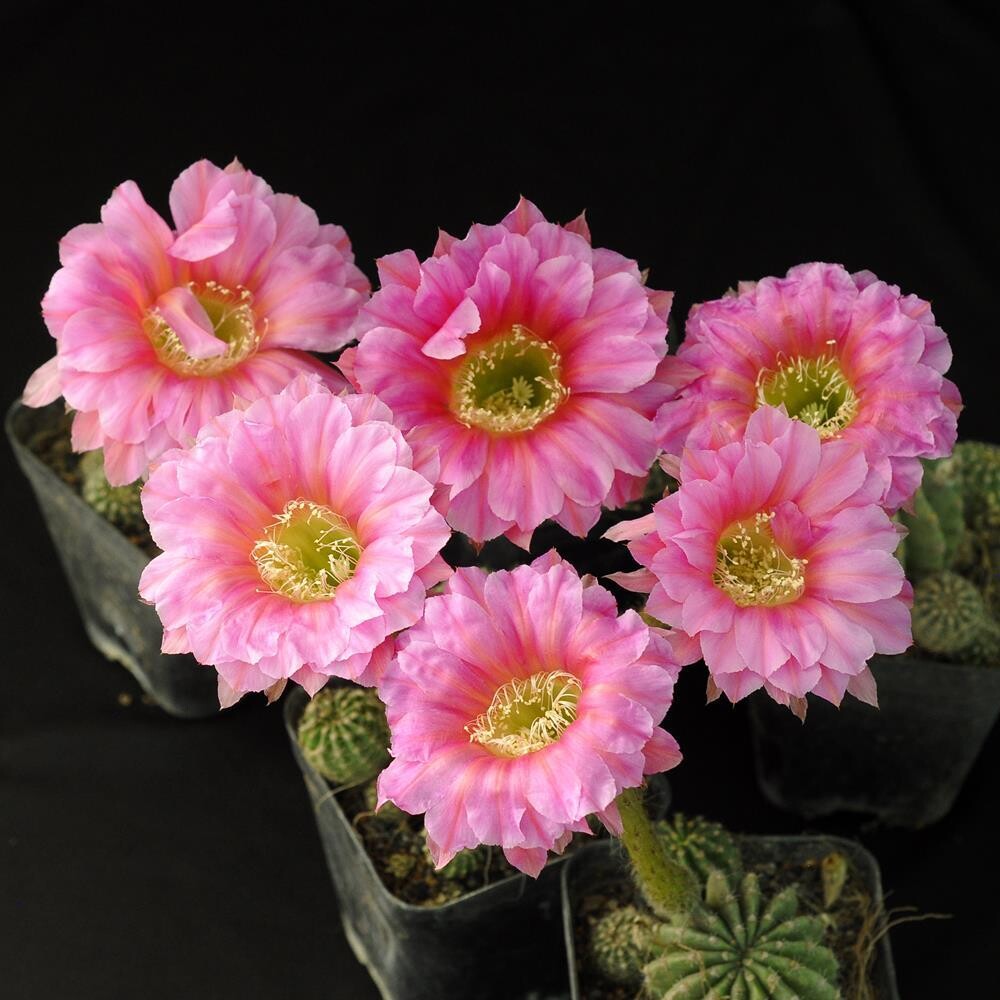
Echinopsis 'Purple Starling' is most famous for the sheer physical presence of its blossoms. The flowers are largish in size and feature thick, heavy layers of petals that give the bloom a "double" or semi-double appearance, providing a structural depth rarely seen in other hybrids.
- Color: The petals are a stunning light pink-magenta, saturated with color but softened by a silky sheen.
- Core: At the center, the flower features a luminous light yellow core, creating a "starburst" effect that draws the eye inward.
- Plant Body: The cactus itself is a sturdy, dark green globe with well-defined ribs and short, neat spines that form a geometric pattern, providing an attractive, architectural look even when not in bloom.
5. Conservation Status
This plant is a cultivated hybrid (cultivar) and does not exist in the wild, meaning it has no specific conservation threat level. However, it represents the importance of "Ex-situ" conservation—protecting the genetic diversity of the Echinopsis family through horticulture. By growing hybrids like 'Purple Starling,' collectors support nurseries that help prevent the illegal poaching of wild species from their native habitats.
6. Care
- Light: Needs plenty of bright light to produce its thick-petaled flowers. A spot with 4-6 hours of direct morning sun is ideal.
- Watering: Use a "soak and dry" approach. Water thoroughly when the soil is dry to the bottom of the pot, and keep the plant dry during the winter to allow for a proper dormant period.
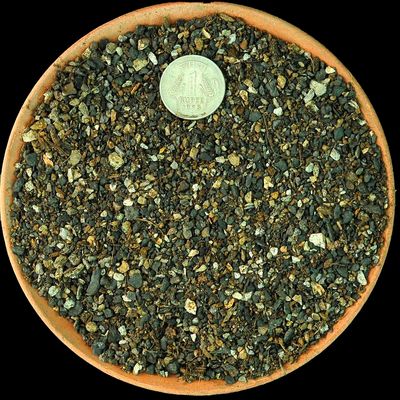
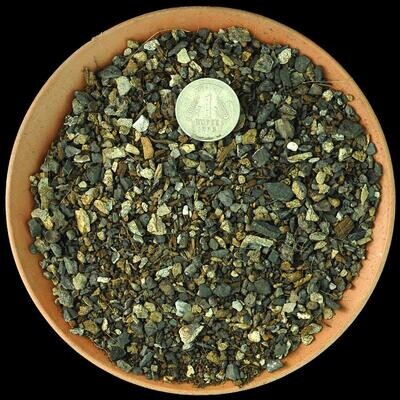
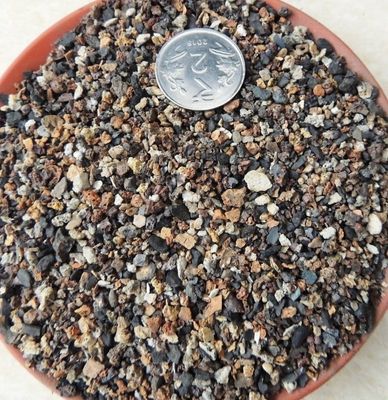
- Soil: Use a very gritty, fast-draining cactus mix (pumice, perlite, and coarse sand are excellent additives).
- Temperature: Thrives in temperatures between 50°F and 90°F. Protect from frost, as cold dampness can damage the thick, succulent petals during the budding stage.
7. Interesting Anecdote
In the world of birdwatching, a "murmuration" of starlings is a breathtaking sight where thousands of birds move as one. Similarly, mature specimens of 'Purple Starling' are known for their ability to produce "flushes" of flowers. When a well-cared-for plant reaches maturity, it doesn't just produce one flower; it often erupts in a synchronized display of multiple large, magenta blooms all at once. For a few days, the cactus is almost entirely hidden behind a shimmering "cloud" of pink and yellow, mimicking the spectacular, coordinated beauty of the bird for which it was named.