

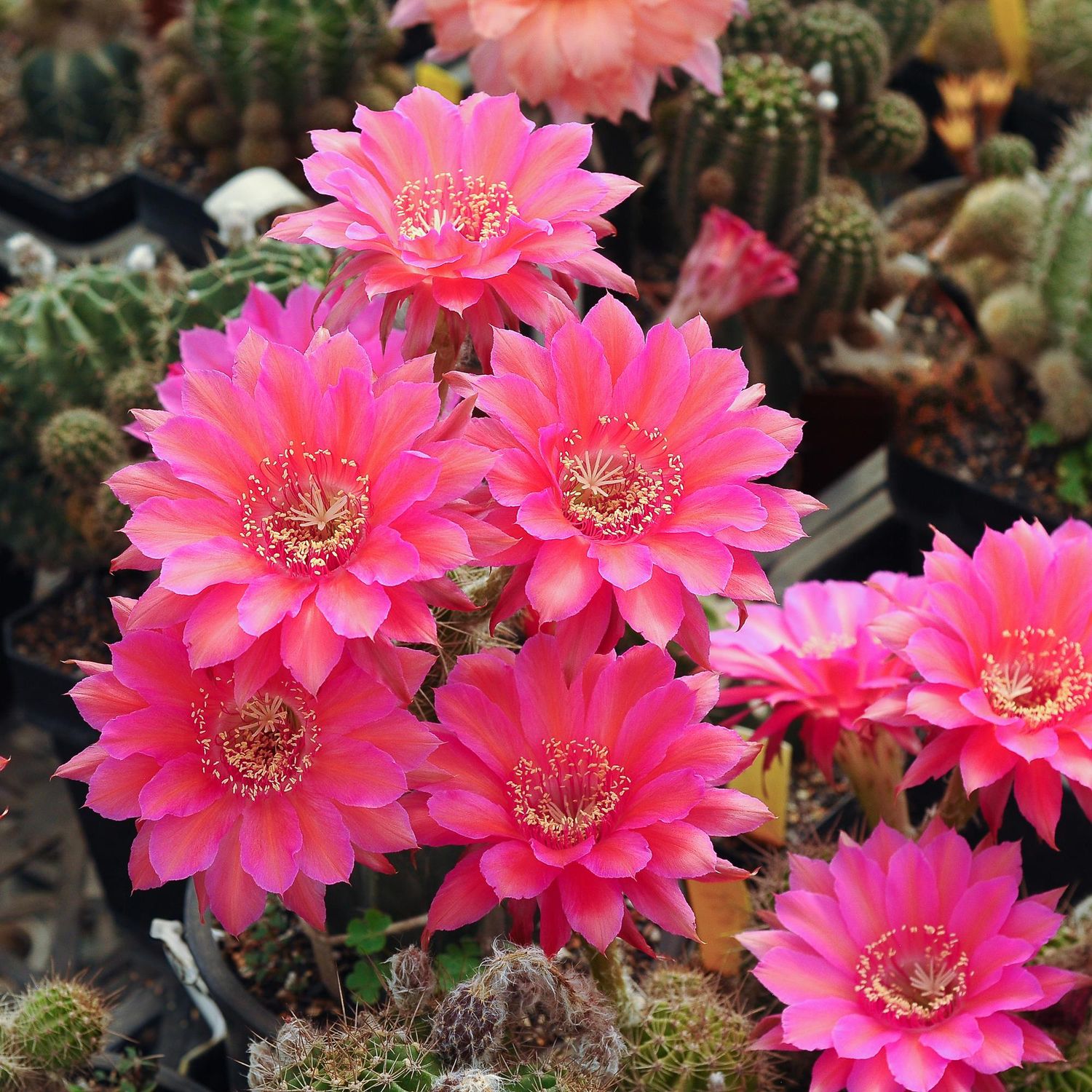
Echinopsis 'Sorceress' (Schick Hybrid)
Product Details
Enchanting Radiance: Echinopsis 'Sorceress' (Schick Hybrid)
A rare masterwork of hybridizing, this Schick selection offers a spellbinding display of multi-tonal floral symmetry.
- Origin & History of Name: The name 'Sorceress' was bestowed by renowned breeder Bob Schick to evoke the "magical" quality of its complex color transitions. Derived from the Greek echinos (hedgehog) and opsis (appearance), the genus name refers to the spiny, globose form.
- Morphology: This cactus features a cylindrical, dark-green epidermis organized into distinct costae (ribs) lined with small, felted areoles and short, defensive spines. Its primary appeal is the large, diurnal flower: a multi-layered perianth of hot-pink petals bisected by orange-apricot midstripes. The floral throat contains a dense, organized cluster of yellow stamens surrounding a prominent, multi-lobed stigma.
- Habitat & Origin: Echinopsis 'Sorceress' is a man-made cultivar, not found in the wild.
- Cultivation Profile:
- Substrate: A strictly mineral-based, gritty mix. Use 70% coarse sand/pumice/perlite and 30% organic compost to prevent root rot in humid Indian climates.
- Light: High-intensity light is essential. In India, provide morning sun but use 30–50% shade cloth during peak summer afternoons to prevent epidermal scorching.
- Water/Dormancy: Deep drenching once the substrate is completely dry during the monsoon and summer. Maintain a strict dry dormancy from November to February to trigger spring budding.
- Scientific/Historical Anecdote: Bob Schick’s breeding program revolutionized the hobby by crossing "Night-blooming Cereus" types with colorful Lobivia species. While ancestral Echinopsis were often white-flowered and fragrant to attract nocturnal moths, hybrids like 'Sorceress' were engineered for daytime viewing, sacrificing fragrance for the vivid, light-refracting pigments seen today.
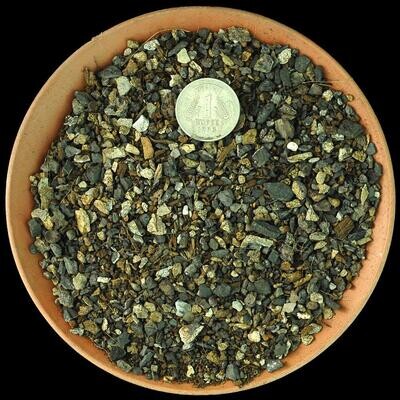
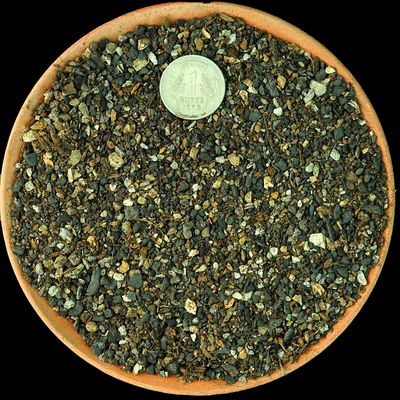
Cactus & Succulent Planting Mix FINE (aka Cactus Soil Mix or Succulent Soil Mix)
Cactus & Succulent Planting Mix FINE (aka Cactus Soil Mix or Succulent Soil Mix)
Fine-Grain Potting Mix for Cactus & Succulent Roots
SKU MNS001
₹33.74
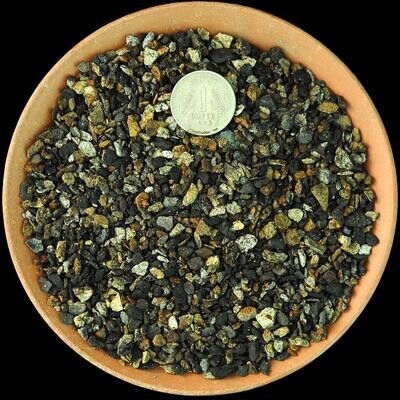
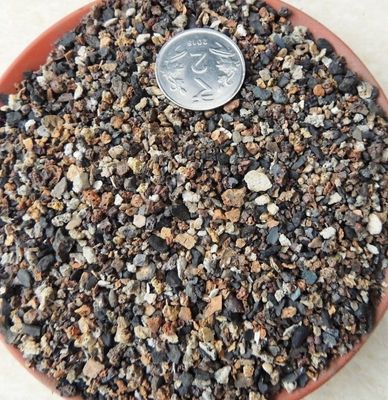
Cactus & Succulent Planting Mix COARSE (aka Cactus Soil Mix or Succulent Soil Mix)
Cactus & Succulent Planting Mix COARSE (aka Cactus Soil Mix or Succulent Soil Mix)
Washed, Free-Draining Mineral Mix for Cactus & Succulents
SKU MNS003
₹38.74