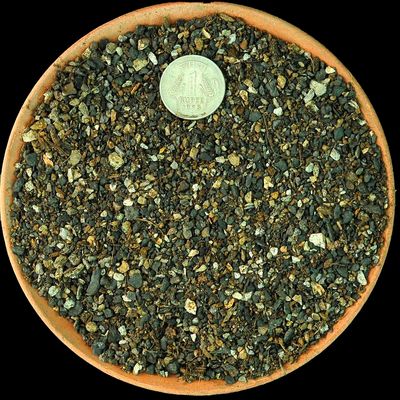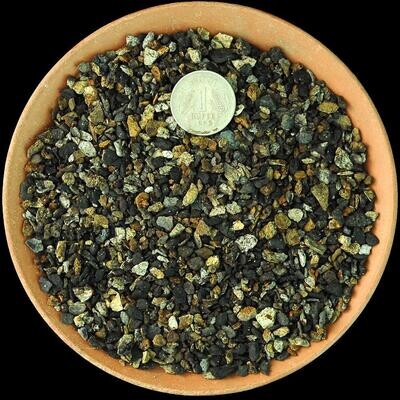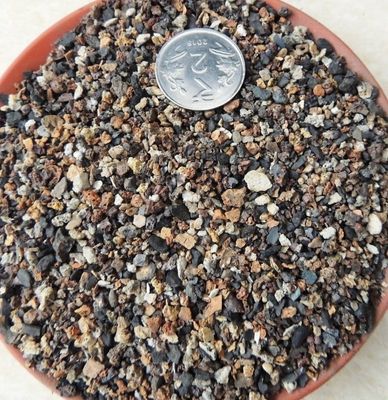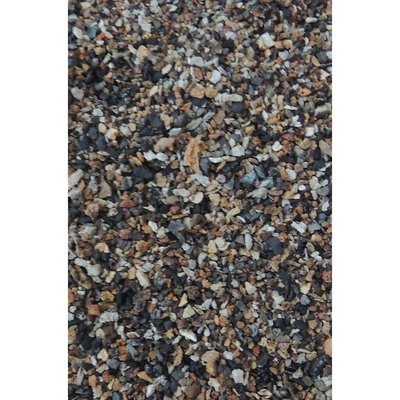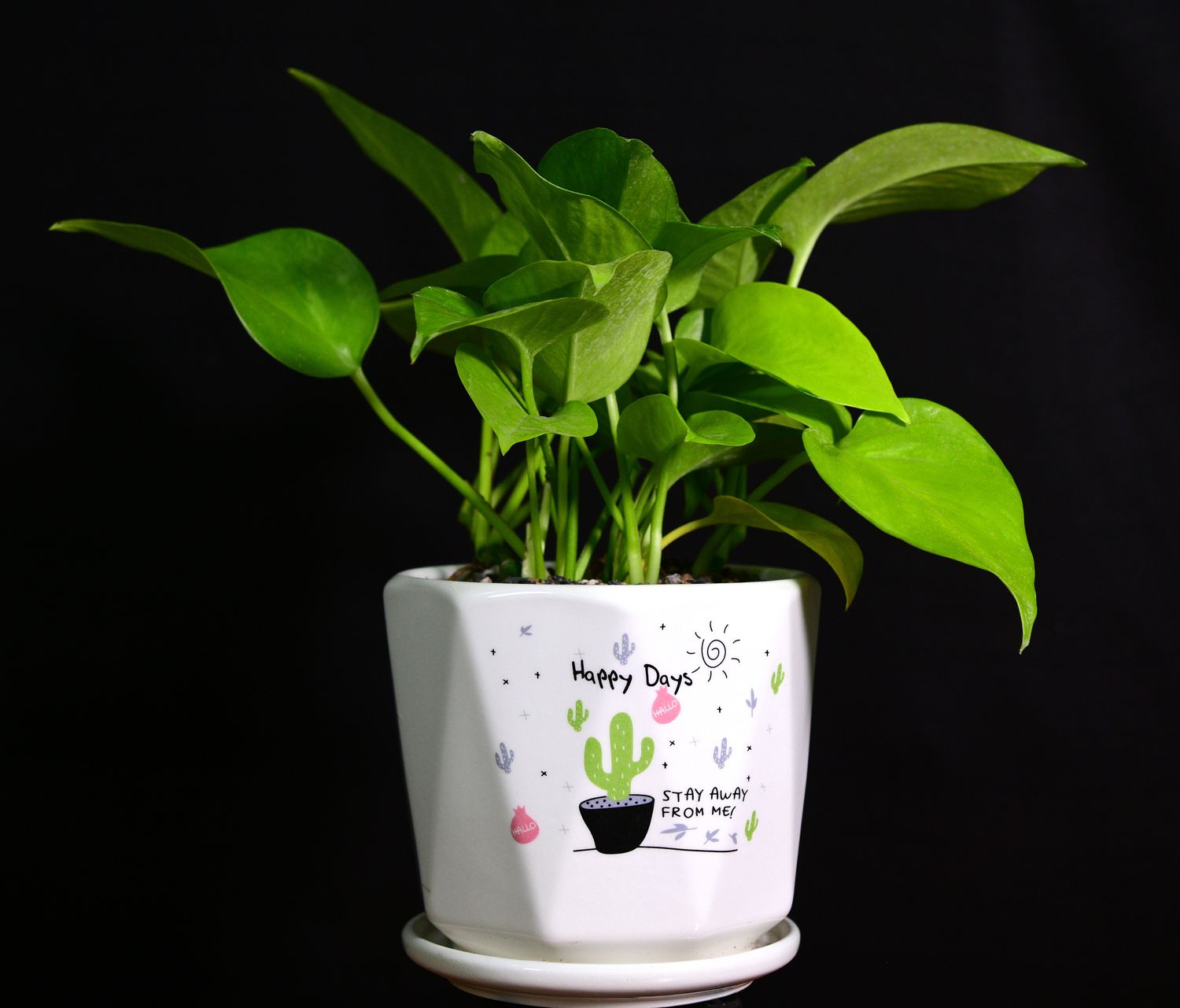
How your gift arrives: to keep both the ceramic pot and the plant safe in transit, we don't ship them potted. Instead, the plant, ceramic pot, potting mix and top dressing are packed separately in the same box, so everything reaches you in perfect condition and ready to pot up in minutes.
Epipremnum aureum — Golden Pothos | Money Plant
The plant that conquered the world's windowsills while hiding its own secret for over a century. Heart-shaped leaves splashed with gold, a near-indestructible constitution, and a botanical backstory full of mistaken identities — this is the original, true-species Golden Pothos, the "Money Plant" that has brought luck to Indian homes for generations.
Origin of Name
Epipremnum comes from the Greek epi ("upon") and premnon ("tree trunk"), describing the plant's habit of climbing up forest trees. The species epithet aureum is Latin for "golden," referring to the yellow streaks marbling its leaves.
Few houseplants have changed names as often. It was first described in 1880 as Pothos aureus by the Belgian nurseryman Jean Jules Linden and French botanist Édouard-François André in L'Illustration Horticole, based on sterile juvenile material reportedly from the Solomon Islands. Without flowers to study, botanists struggled to place it: Adolf Engler moved it to Scindapsus aureus in 1908, Monroe Birdsey to Rhaphidophora aurea in 1963, and finally George Sydney Bunting transferred it to Epipremnum in 1964 in the Annals of the Missouri Botanical Garden, the name accepted today by Kew. The old name lives on in the popular common name "pothos," even though it no longer belongs to that genus.
Other names include Devil's Ivy (because it is almost impossible to kill and stays green even in near-darkness), Ceylon Creeper, Hunter's Robe and, across the Indian subcontinent, Money Plant — its round, coin-like gold-flecked leaves long associated with prosperity.
Origin of Plant
Despite being one of the most widespread plants on Earth, E. aureum is native to a single place: Mo'orea, a volcanic island in the Society Islands of French Polynesia. There it scrambles through humid lowland rainforest, rooting in the forest floor and climbing trunks towards the light. Its true homeland was only firmly established in the early 2000s by aroid botanist Peter Boyce. Through the horticultural trade it has since naturalised across tropical Asia, Africa, Australia, the Pacific and the Caribbean, including parts of India and Sri Lanka.
Description
A vigorous evergreen climber or trailer with glossy, heart-shaped leaves in rich green, irregularly streaked and splashed with golden yellow — no two leaves are marked alike. Indoors, juvenile leaves typically reach 10–20 cm and stems trail or climb 2–3 metres or more. Give it a moss pole and it transforms: leaves grow progressively larger, and in the wild, mature plants climbing tall trees produce leaves up to a metre long, deeply split like a Monstera. Aerial roots form at each node, allowing it to cling to supports. Flowering is exceptionally rare and almost never seen in cultivation.
Conservation Status
Not listed under CITES and not assessed on the IUCN Red List. Far from threatened, it is regarded as an invasive species in several tropical regions, including Florida, Hawaii and Sri Lanka, where escaped plants can smother native forest. Our plants are nursery-propagated from cuttings. Please never dispose of cuttings outdoors in tropical areas.
Care
- Light: Bright, indirect light gives the best golden variegation. Tolerates low light, though leaves may turn greener. Avoid harsh direct afternoon sun, which scorches leaves.
- Watering: Water when the top 2–3 cm of soil is dry. Drooping leaves signal thirst. Yellowing leaves usually mean overwatering. Reduce watering in winter.
- Soil: Light, well-draining aroid mix, such as potting soil with cocopeat, perlite and bark.
- Pot: Any container with drainage holes. Also grows happily in water for long periods.
- Temperature: 18–30 °C is ideal. Protect from temperatures below 12 °C and from cold winter drafts.
- Humidity: Adapts to average household humidity and appreciates more.
- Feeding: Balanced liquid fertiliser monthly during spring and summer.
- Tips: Pinch back long vines to encourage bushier growth. Cuttings with a node root readily in water or soil. A moss pole encourages larger, more mature leaves.
- Caution: Contains calcium oxalate crystals and is toxic if eaten. Keep away from pets and small children.
A Story Worth Telling
The pothos kept botanists guessing for more than eighty years because it almost never flowers. Without blooms, there was nothing reliable to classify it by, which explains why it was shuffled between four genera. The mystery deepened in 1962, when flowering specimens were finally reported from Puerto Rico and Miami. Ironically, the French botanist Jean Nadeaud had already named a plant from Mo'orea Epipremnum mooreense back in 1899 — the correct genus and the correct home island. His name was overlooked for decades and is now treated as a synonym.
The reason it so rarely blooms was only solved in 2016. Researchers found that the plant carries a defect in a gene involved in making gibberellin, the hormone that triggers flowering. It is a plant with a broken "flower switch," spreading across the globe by cuttings alone. Every Money Plant on every windowsill is, in a sense, a clone of the same untold story.