

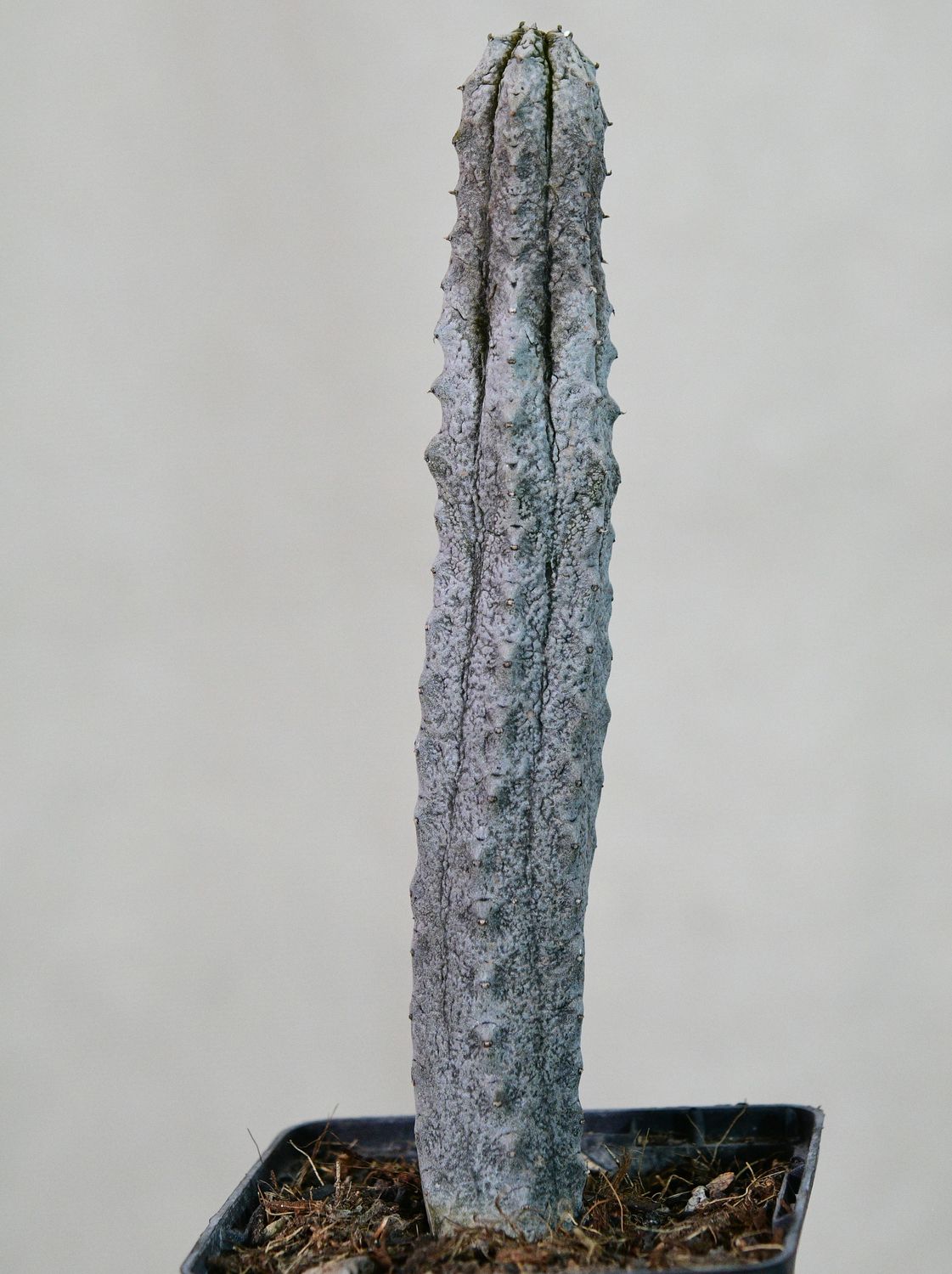
Euphorbia abdelkuri
Product Details
Ghostly Rare: Euphorbia abdelkuri
A prehistoric architectural marvel, this spineless succulent is a coveted 'holy grail' for collectors seeking an otherworldly, desert-chic aesthetic.
- Origin & History of Name: The genus Euphorbia honors Euphorbus, the Greek physician to King Juba II of Numidia, who allegedly used the plants' caustic latex for medicinal purposes.
The specific epithet abdelkuri is derived directly from its only known home: the island of Abd al Kuri in the Socotra Archipelago. It was formally described by botanist Isaac Bayley Balfour in 1901. - Morphology: This species is distinct for its lack of spines and leaves.
It features cylindrical, candle-like stems with a unique epidermis (outer skin) that is greyish-white or "ghostly" in color, lacking the typical green chlorophyll on the surface. The stems have low, rounded costae (ribs) and a wrinkled texture, resembling dripped candle wax or pale coral. - Habitat & Origin: This is a wild species endemic to the limestone hills of Abd al Kuri island, Yemen.
Because it is highly sought after and restricted to a tiny geographical range, it is considered vulnerable. Responsible nurseries offer specimens propagated via grafting (usually on Euphorbia canariensis or resinifera) to ensure sustainability and prevent poaching from its fragile desert habitat. - Cultivation Profile:
- Substrate: Use a strictly mineral-based mix (60% coarse sand, pumice, or crushed brick and 40% garden soil). In the Indian climate, ensure the pot is unglazed terracotta to prevent root rot.
- Light: Requires bright, indirect sunlight.
While it loves heat, the intense afternoon sun in North or Central India can scorch the pale epidermis; provide 40-50% shade during peak summer. - Water/Dormancy: Water deeply only when the medium is bone-dry. During the monsoon and winter dormancy, withhold water almost entirely. This species is highly sensitive to humidity-induced fungal issues.
- Scientific/Historical Anecdote: Unlike most plants that use green chlorophyll to photosynthesize on their surface, Euphorbia abdelkuri contains its chlorophyll deeper within the stem tissues. This "internalized" photosynthesis is an evolutionary adaptation to the intense UV radiation of the Socotra region, where the white exterior reflects heat to keep the plant's core cool.


Cactus & Succulent Planting Mix FINE (aka Cactus Soil Mix or Succulent Soil Mix)
Cactus & Succulent Planting Mix FINE (aka Cactus Soil Mix or Succulent Soil Mix)
Fine-Grain Potting Mix for Cactus & Succulent Roots
SKU MNS001
₹39.85


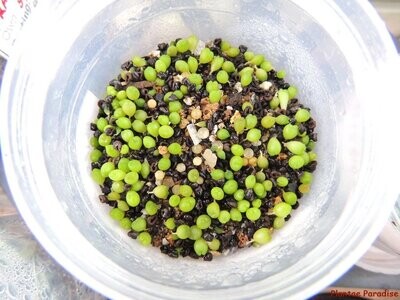
Cactus Seed Planting Mix
Cactus Seed Planting Mix
Sterile, Fine-Grain Media for Cactus & Succulent Seeds
SKU MNS005
₹74.85
