

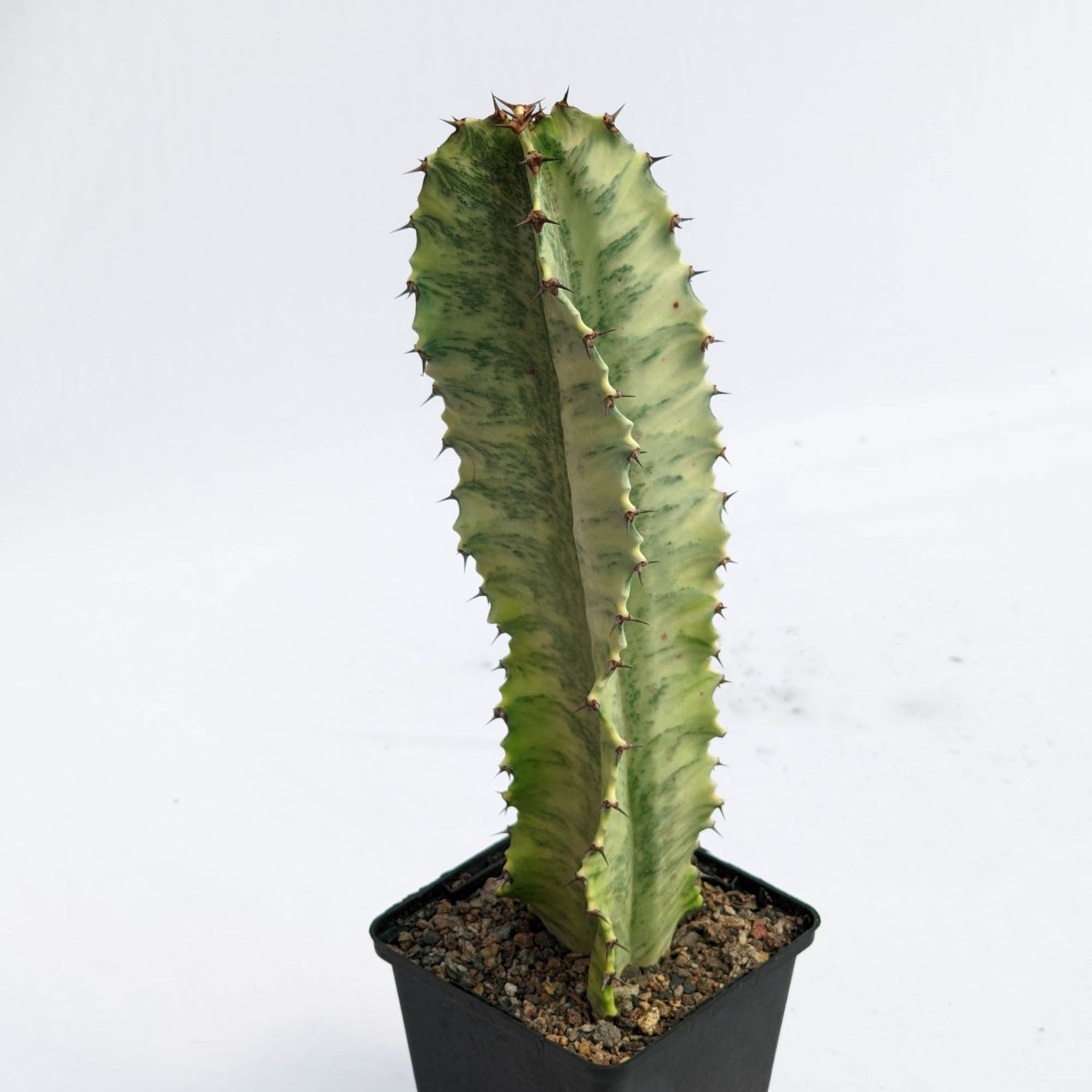
Euphorbia ammak 'Variegata'
Product Details
Architectural Elegance: Euphorbia ammak 'Variegata'
A high-contrast living sculpture, this marbled candelabra cactus is the ultimate rare centerpiece for the modern collector.
- Origin & History of Name: The genus name Euphorbia honors Euphorbus, the Greek physician to King Juba II of Numidia (c. 50 BCE), who supposedly used the plant's caustic latex for medicinal purposes.
- Morphology: This succulent is characterized by its "candelabra" growth habit and deeply ribbed costae (edges).
- Habitat & Origin: The base species Euphorbia ammak is native to Saudi Arabia and Yemen.
- Cultivation Profile:
- Substrate: Use a strictly mineral-based mix (50% volcanic rock or crushed leca, 25% coarse sand, 25% organic compost) to ensure rapid drainage.
- Light: Requires bright, indirect light to full sun.
- Water/Dormancy: Water deeply only when the substrate is bone-dry.
- Scientific/Historical Anecdote: Like all members of the Euphorbiaceae family, this plant contains a milky white latex.

Cactus & Succulent Planting Mix COARSE (aka Cactus Soil Mix or Succulent Soil Mix)
Cactus & Succulent Planting Mix COARSE (aka Cactus Soil Mix or Succulent Soil Mix)
Washed, Free-Draining Mineral Mix for Cactus & Succulents
SKU MNS003
₹40.51


Cactus Seed Planting Mix
Cactus Seed Planting Mix
Sterile, Fine-Grain Media for Cactus & Succulent Seeds
SKU MNS005
₹70.51
