

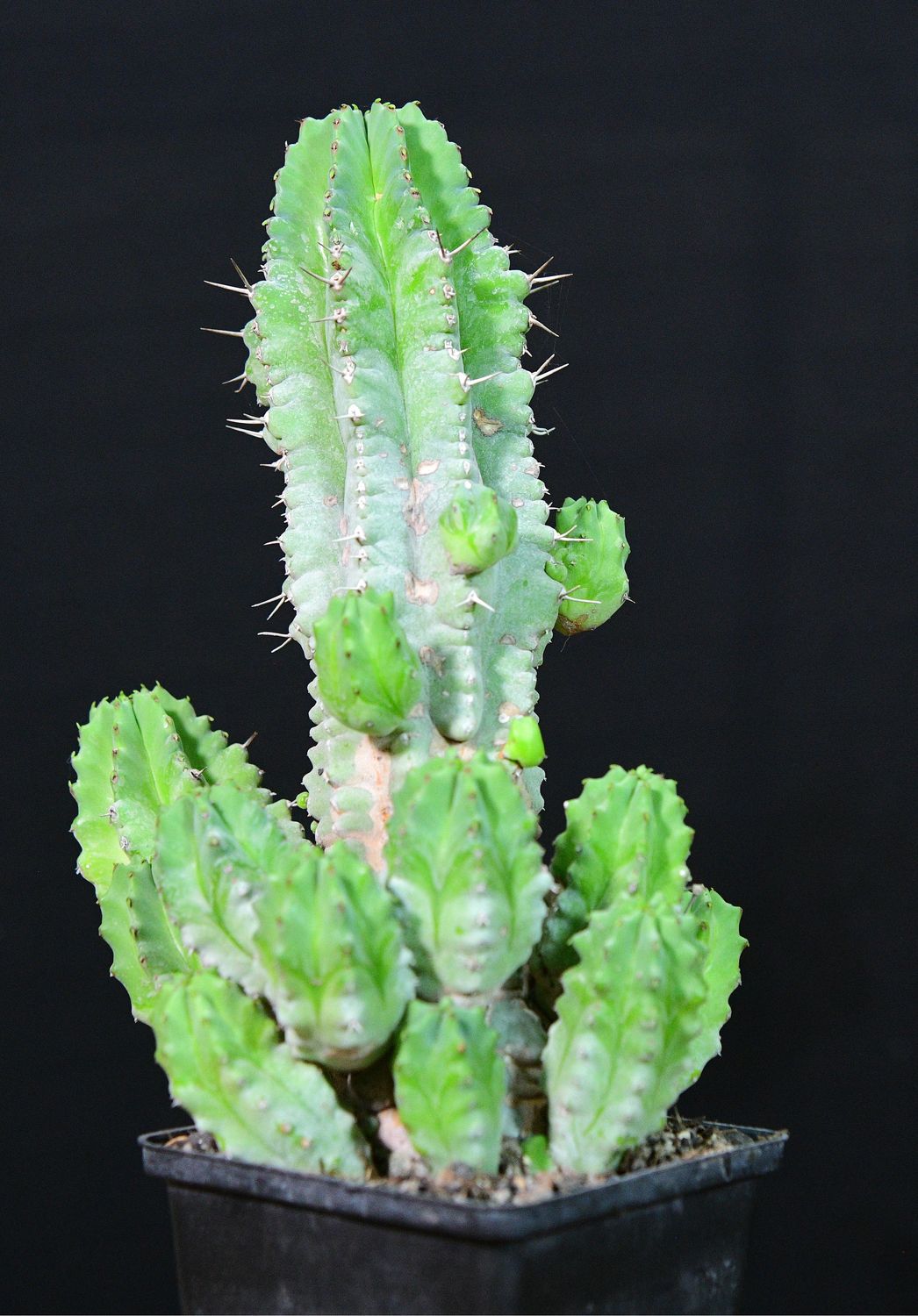
Euphorbia anoplia
Product Details
The Tanzanian Zipper: Euphorbia anoplia
Commonly known as the 'Tanzanian Zipper Plant,' this spineless succulent is prized for its symmetrical, ribbed geometry and soft, velvet-matte finish.
- Origin & History of Name: The genus Euphorbia was named by King Juba II of Numidia in honor of his Greek physician, Euphorbus, who utilized the plant's potent latex for medicinal purposes. The specific epithet anoplia is derived from the Greek an- (without) and hoplon (weapon/armor), directly referencing the plant’s lack of the sharp spines or thorns typically found in its close relatives.
- Morphology: Euphorbia anoplia features cylindrical, globose stems characterized by 7 to 9 vertical costae (ribs). Along these ribs, horizontal purple-grey banding creates a "zipper" effect against the glaucous green epidermis.
Unlike other African euphorbias, this species lacks true spines, possessing only tiny, harmless deciduous leaves at the apex. The plant exhibits a clumping habit, offsets freely from the base to form a dense colony of ribbed columns. - Habitat & Origin: This is a wild species endemic to the rocky outcrops and scrublands of the Limpopo and Mpumalanga provinces in South Africa (formerly often attributed to Tanzania in trade names). Our specimens are nursery-propagated via offsets to ensure the preservation of wild populations and adhere to ethical trade standards.
- Cultivation Profile:
- Substrate: Requires a strictly porous, mineral-based medium. A mix of 60% coarse sand/grit and 40% organic compost is ideal for Indian conditions to prevent root fungal pathogens.
- Light: Thrives in bright, indirect light.
In the Indian subcontinent, it should be protected from the harsh midday sun, which can scorch the epidermis; a bright windowsill or a shade-net house (50% shade) is recommended. - Water/Dormancy: Highly susceptible to overwatering. Water only when the substrate is completely dehydrated. During the Indian monsoon, maintain high ventilation and cease watering. In winter, the plant enters a semi-dormant state; reduce water to once a month to prevent stem shriveling.
- Scientific/Historical Anecdote: Euphorbia anoplia is often confused with Euphorbia polygona in the horticultural trade, but it is chemically distinct.
Like all members of its genus, it contains a milky white latex sap containing diterpene esters. Historically, while this sap is a skin irritant, various Euphorbia species were studied by early 18th-century botanists for their complex "cyathia"—unique false flowers that consist of a cup-shaped involucre hiding highly reduced individual male and female flowers.
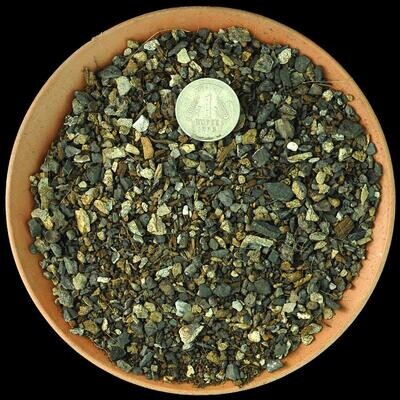
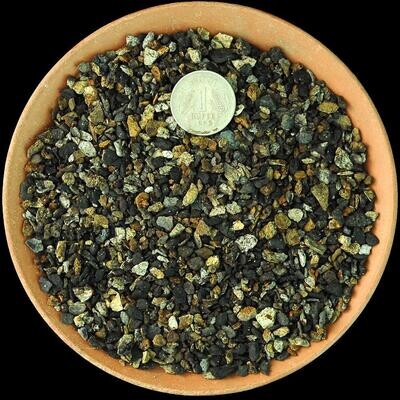
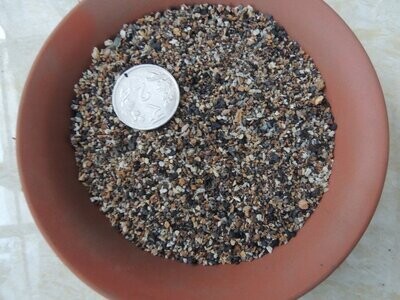
Cactus & Succulent Planting Mix COARSE (aka Cactus Soil Mix or Succulent Soil Mix)
Cactus & Succulent Planting Mix COARSE (aka Cactus Soil Mix or Succulent Soil Mix)
Washed, Free-Draining Mineral Mix for Cactus & Succulents
SKU MNS003
₹44.85
New

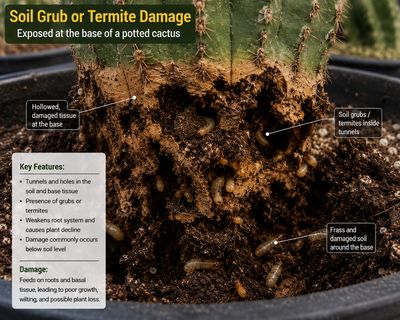
Monsoon Guardian Kit (5 in 1)
Monsoon Guardian Kit (5 in 1)
Complete 5-in-1 biological protection kit for cacti & succulents
SKU MNS024
₹850.00
Cactus Seed Planting Mix
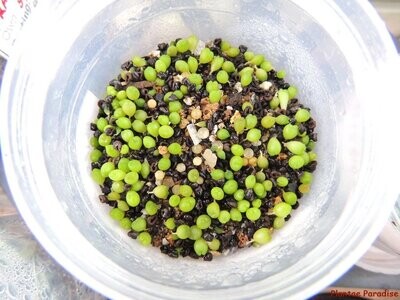
Cactus Seed Planting Mix
Sterile, Fine-Grain Media for Cactus & Succulent Seeds
SKU MNS005
₹74.85