

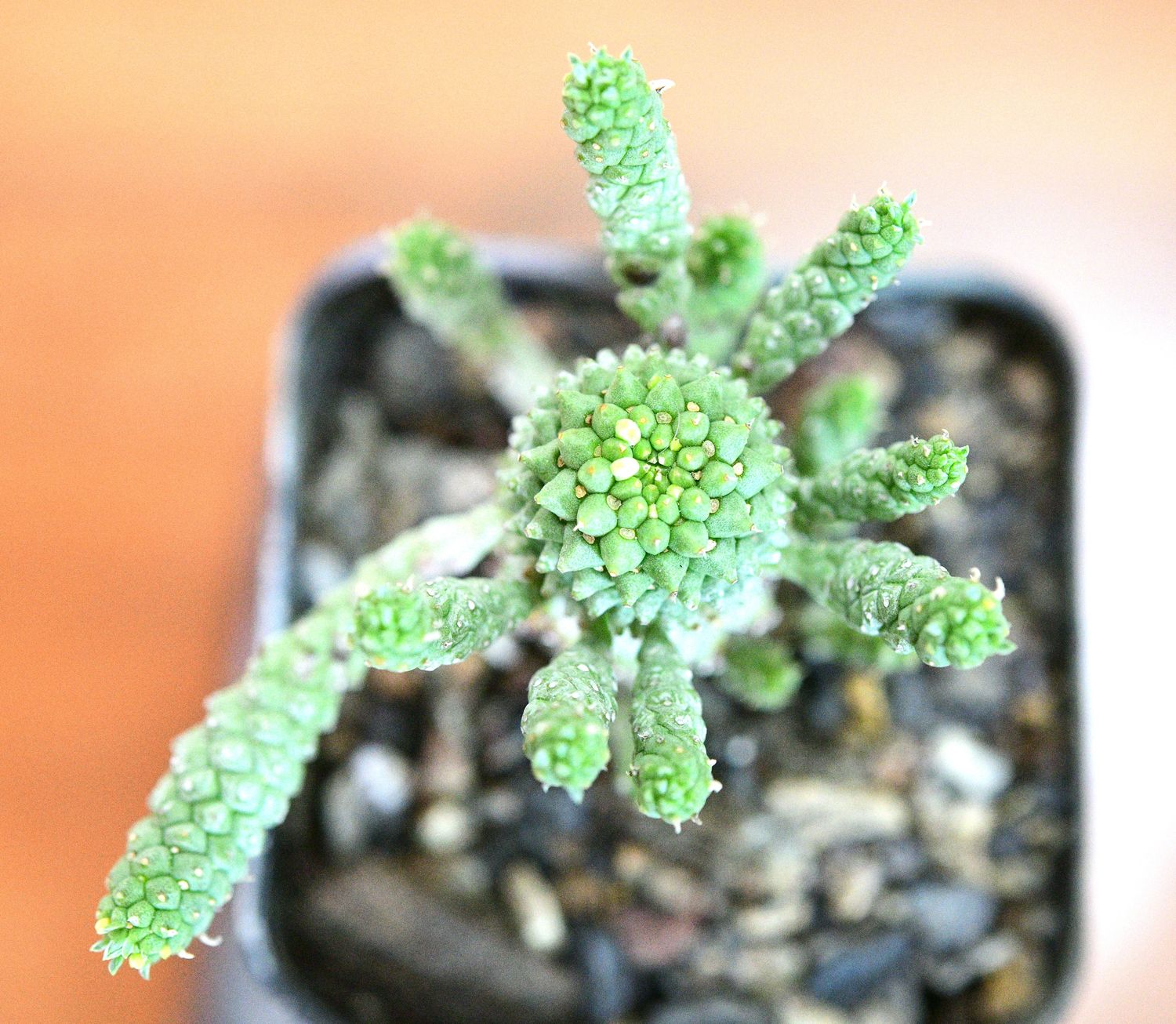
Euphorbia caput-medusae
Product Details
Medusa’s Living Crown: Euphorbia caput-medusae
A mesmerizing botanical masterpiece featuring a serpentine silhouette that transforms any collection into a gallery of natural art.
- Origin & History of Name The name is derived from the Greek Euphorbos, the physician to King Juba II of Numidia.
The specific epithet, caput-medusae, translates literally from Latin as "Head of Medusa." It was formally described by Carl Linnaeus in 1753, chosen because the plant’s numerous sprawling branches bear a striking resemblance to the venomous snakes that formed the hair of the Gorgon Medusa in Greek mythology. - Morphology This species is a "medusoid" succulent characterized by a thick, central caudex (a woody water-storage organ) from which multiple serpentine tubercles (cylindrical branches) radiate.
The epidermis is a deep grayish-green, covered in distinct, diamond-shaped scars left by deciduous leaves. Unlike many Euphorbias, it lacks true spines, instead producing small, fragrant cyathia (specialized floral structures) at the tips of the branches during the growing season. - Habitat & Origin Euphorbia caput-medusae is a wild species native to the coastal regions surrounding Cape Town, South Africa.
It thrives in rocky outcrops and sandy soils. Our specimens are sustainably nursery-grown through architectural cuttings or seed propagation to ensure the protection of wild South African populations. - Cultivation Profile
- Substrate: Requires a strictly mineral-based, gritty mix. Use a ratio of 50% pumice or perlite, 25% coarse river sand, and 25% organic compost to prevent root rot.
- Light: Thrives in bright, indirect sunlight. In the Indian subcontinent, provide 4–6 hours of morning sun; protect from harsh afternoon "loo" winds and extreme direct heat during peak summer to prevent epidermal scorching.
- Water/Dormancy: Water thoroughly when the substrate is completely dry.
During the Indian monsoon, keep the plant sheltered from heavy rain. It enters a semi-dormant state in the peak of winter; reduce watering significantly during December and January.
- Scientific/Historical Anecdote While the "snakes" of the plant look like stems, they are biologically unique. If the central caudex is damaged or removed, the radiating branches can be rooted as independent plants. However, these "arm" cuttings often grow as prostrate, trailing plants for years before they eventually develop the hormonal capability to form a new central "head," a process that fascinates botanists studying plant apical dominance.


Cactus & Succulent Planting Mix FINE (aka Cactus Soil Mix or Succulent Soil Mix)
Cactus & Succulent Planting Mix FINE (aka Cactus Soil Mix or Succulent Soil Mix)
Fine-Grain Potting Mix for Cactus & Succulent Roots
SKU MNS001
₹39.85


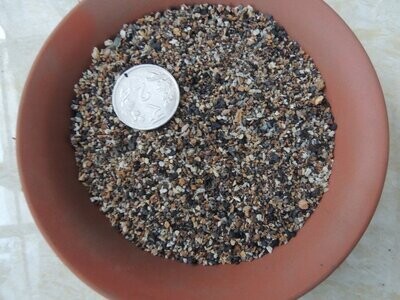
Cactus & Succulent Planting Mix COARSE (aka Cactus Soil Mix or Succulent Soil Mix)
Cactus & Succulent Planting Mix COARSE (aka Cactus Soil Mix or Succulent Soil Mix)
Washed, Free-Draining Mineral Mix for Cactus & Succulents
SKU MNS003
₹44.85
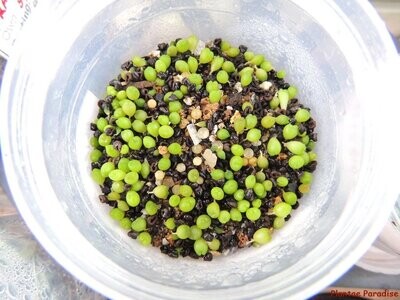
Cactus Seed Planting Mix
Cactus Seed Planting Mix
Sterile, Fine-Grain Media for Cactus & Succulent Seeds
SKU MNS005
₹74.85