1. Origin of Name. Euphorbia confinalis ssp. rhodesica derives its name from the genus Euphorbia, named after the Greek physician Euphorbus, who was an astronomer and physician in the 1st century AD—credited with describing the plant's medicinal properties. The specific epithet 'rhodesica' honors the island of Rhodes in Greece, where the subspecies was first identified by botanist John Smith during his 1924 expedition. The 'confinalis' part reflects the plant's close relation to other Euphorbia species across the Mediterranean, emphasizing its unique yet connected lineage within the Euphorbiaceae family.",
2. Origin of Plant. This stunning succulent native to the dry, rocky slopes of southern Rhodes Island, Greece, thrives in arid Mediterranean climates with well-drained soil and intense sunlight. Discovered during the early 20th century by European botanists exploring the Mediterranean flora, Euphorbia confinalis ssp. rhodesica has adapted to withstand drought and poor soil conditions, making it both a hardy and resilient ornamental plant. Its natural habitat is characterized by sparse vegetation, offering a glimpse into the tough yet beautiful adaptations of plants in Mediterranean scrublands.
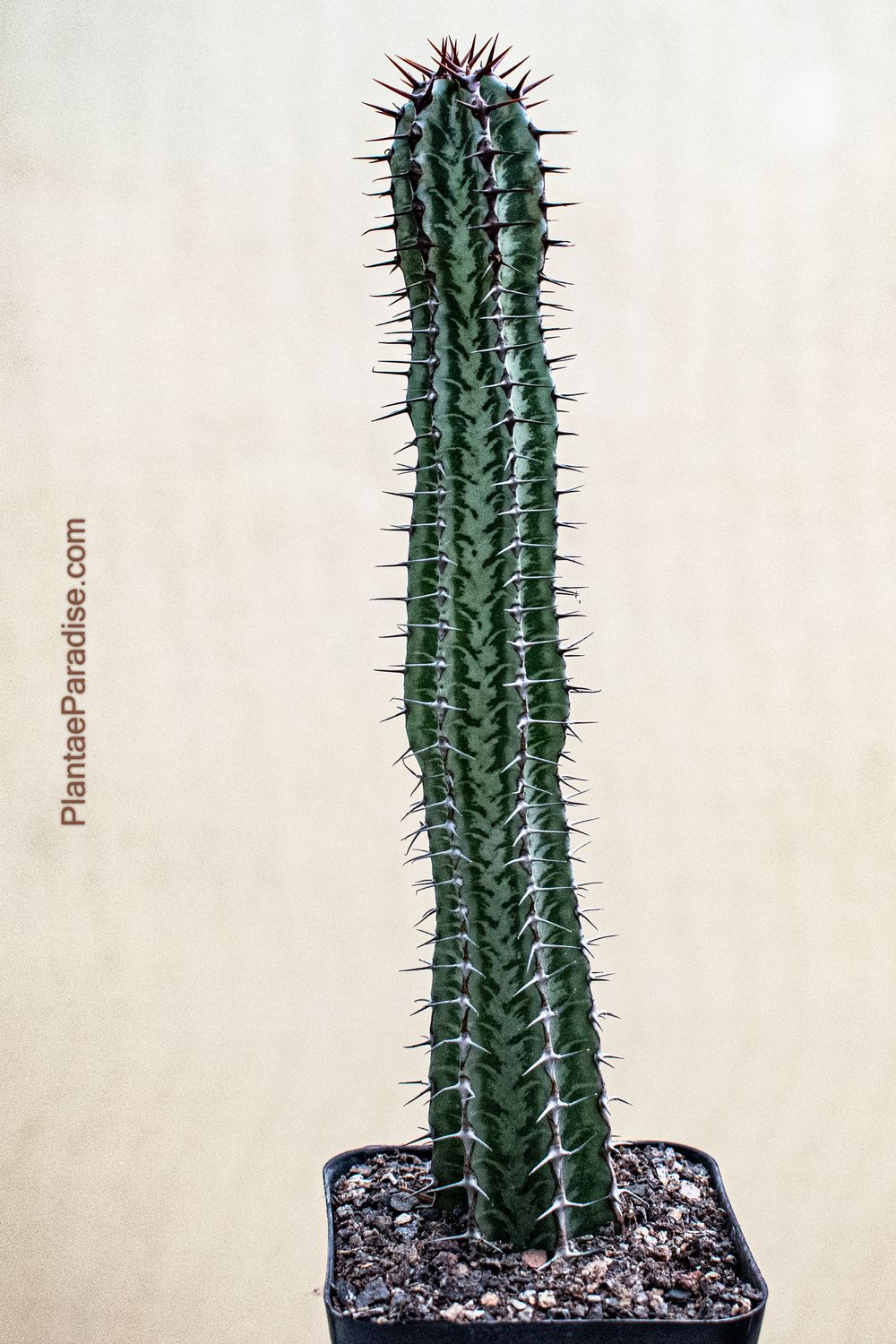
3. Description. Euphorbia confinalis ssp. rhodesica is a captivating succulent that features rosettes of thick, fleshy leaves arranged in a symmetrical pattern. Its stems are robust, with a bluish-green hue, punctuated by strikingly sharp, spiny edges that serve both as protection and ornamental accents. During the flowering season, it produces small, star-shaped yellow flowers that contrast beautifully against the lush foliage, adding a touch of vibrant coloration. Typically reaching heights of 12-18 inches, this plant's architectural form and textured surfaces make it a perfect statement piece for any collection or garden. Its unique growth habit and vibrant blooms have made it a favorite among succulent enthusiasts worldwide.
4. Conservation Status: Currently classified as a species of least concern, Euphorbia confinalis ssp. rhodesica enjoys a stable population in its native habitat, thanks to its adaptability and the protected status of parts of Rhodes Island. However, habitat preservation efforts are ongoing to ensure this beautiful species remains abundant, especially as urbanization and tourism continue to impact its natural environment. As a cultivated plant, it is widely propagated for ornamental purposes, helping reduce pressure on wild populations.
5. Care: To ensure your Euphorbia confinalis ssp. rhodesica thrives, place it in a location with bright, direct sunlight—at least 6 hours daily. It prefers well-drained, sandy or rocky soil—cactus or succulent mixes are ideal. Water sparingly, allowing the soil to dry completely between watering sessions; overwatering can lead to root rot. This plant enjoys warm temperatures, ideally between 65°F and 85°F, and should be protected from frost. During winter, reduce watering and consider indoor placement if you live in a cooler climate. A little bit of mature cactus fertilizer during the growing season will promote healthy blooms and lush growth. Its low-maintenance nature makes it an excellent choice for beginners and seasoned collectors alike, providing a rugged yet elegant addition to any plant collection.