

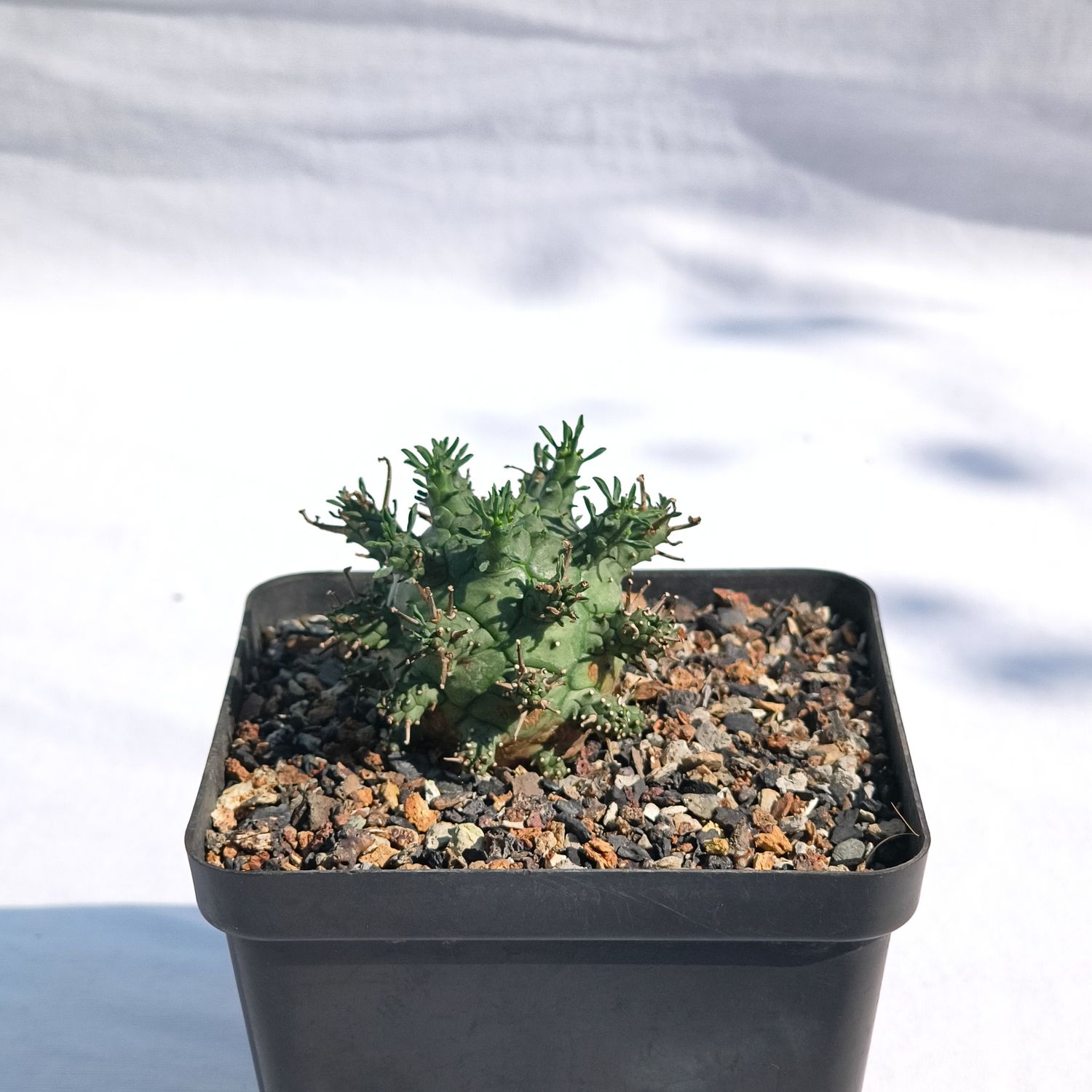
Euphorbia decepta
Product Details
Master of Mimicry: Euphorbia decepta
A cryptic architectural gem for the serious collector, prized for its rugged, stone-like appearance and rare geometric form.
- Origin & History of Name: The genus Euphorbia was named by King Juba II of Numidia after his Greek physician, Euphorbus, in the 1st century BCE. The specific epithet decepta is Latin for "deceived" or "cheated," a name chosen by botanist N.E. Brown in 1915 to describe the plant’s uncanny ability to blend into its stony surroundings, effectively deceiving those searching for it in the wild.
- Morphology: This succulent features a globose to cylindrical caudex (a thickened stem) that is mostly subterranean in nature.
- Habitat & Origin: This is a wild species endemic to the Karoo region of South Africa.
- Cultivation Profile:
- Substrate: Use a highly mineral-based mix (80% coarse sand, pumice, or crushed brick and 20% compost). Sharp drainage is vital to prevent the taproot from rotting.
- Light: Provides full morning sun with protection from the harsh Indian afternoon heat. In regions like Rajasthan or Central India, 30% shade cloth is recommended during peak summer.
- Water/Dormancy: Water sparingly during the growing season (March–September). In the Indian monsoon, keep the plant completely dry and sheltered from rain. Observe a strict dry dormancy in winter to mimic its natural habitat.
- Scientific/Historical Anecdote: Euphorbia decepta is a classic example of "cryptic coloration" or crypsis. In its native habitat, the plant pulls itself deeper into the soil during droughts using contractile roots, leaving only its flat, grey-brown top visible. This makes it nearly indistinguishable from the surrounding pebbles—a survival strategy to avoid being eaten by thirsty desert animals.
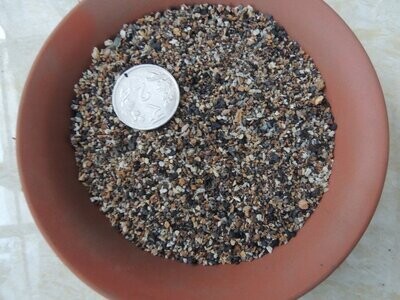
Cactus Seed Planting Mix
Cactus Seed Planting Mix
Sterile, Fine-Grain Media for Cactus & Succulent Seeds
SKU MNS005
₹70.51
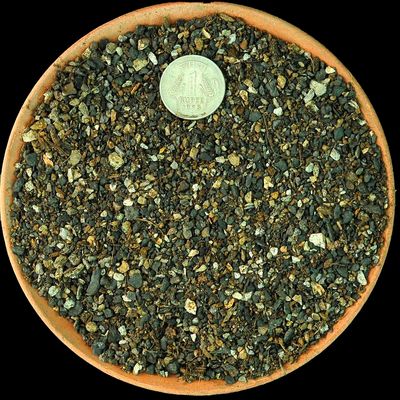
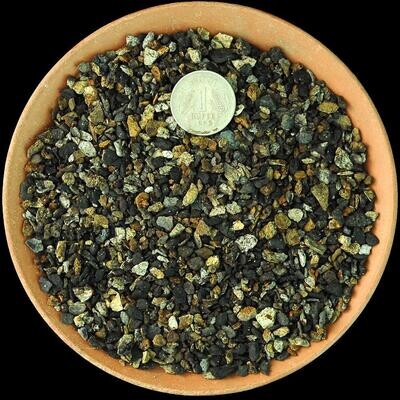
Cactus & Succulent Planting Mix COARSE (aka Cactus Soil Mix or Succulent Soil Mix)
Cactus & Succulent Planting Mix COARSE (aka Cactus Soil Mix or Succulent Soil Mix)
Washed, Free-Draining Mineral Mix for Cactus & Succulents
SKU MNS003
₹40.51
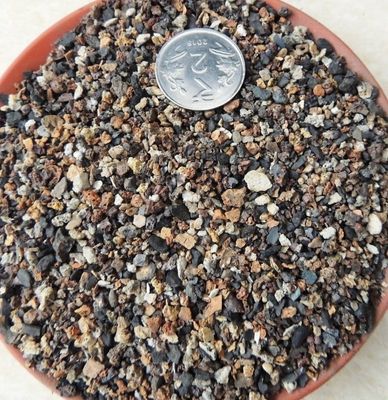
Cactus & Succulent Planting Mix FINE (aka Cactus Soil Mix or Succulent Soil Mix)
Cactus & Succulent Planting Mix FINE (aka Cactus Soil Mix or Succulent Soil Mix)
Fine-Grain Potting Mix for Cactus & Succulent Roots
SKU MNS001
₹35.51