

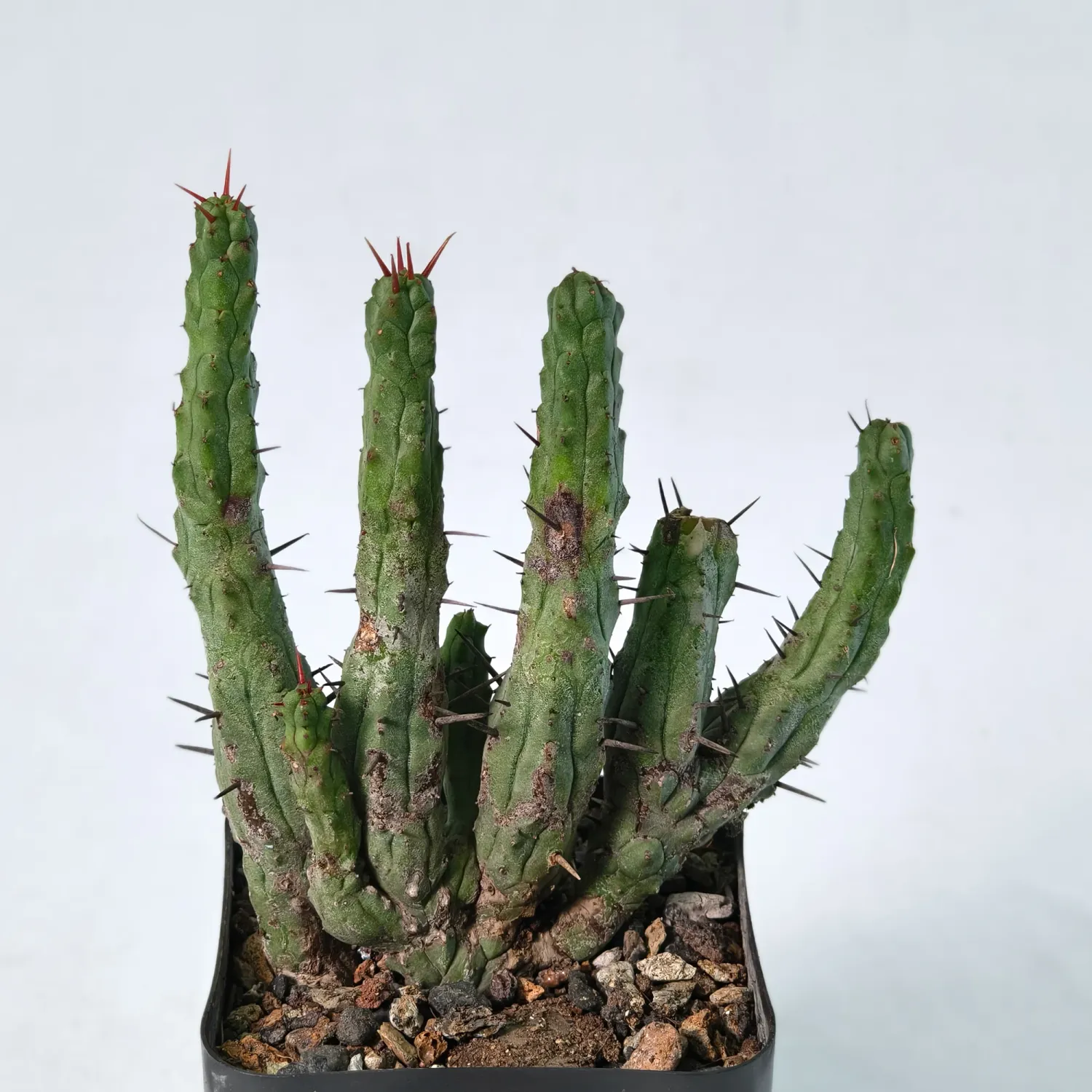
Euphorbia enopla monstrosa
Product Details
Sculptural Oddity: Euphorbia enopla monstrosa
A rare, architectural marvel prized for its distorted growth and vibrant crimson spines.
- Origin & History of Name: The genus is named after Euphorbus, the Greek physician to King Juba II of Numidia, who reportedly used the plant’s latex for medicinal purposes.
- Morphology: This succulent features a dense, globose habit characterized by a "monstrose" growth pattern, where the epidermis (outer skin) is a rich glaucous green. Unlike the symmetrical costae (ribs) of the standard species, this cultivar produces chaotic, tuberculated mounds. It is famously "armed" with persistent, sterile peduncles that harden into stiff, reddish-purple spines, providing a striking color contrast.
- Habitat & Origin: Euphorbia enopla is originally native to the Noorsveld region of the Eastern Cape, South Africa. However, the monstrosa form is a cultivar—a product of selective cultivation of a naturally occurring mutation. Our specimens are propagated via offsets to ensure sustainability and prevent the poaching of wild South African succulents.
- Cultivation Profile:
- Substrate: A strictly mineral-based mix (60% grit/pumice, 20% coarse sand, 20% organic matter) to prevent root rot in humid Indian climates.
- Light: High-intensity light; thrives in bright indirect sunlight or morning sun. In peak Indian summers (April–June), provide 30% shade to avoid epidermal scorching.
- Water/Dormancy: Follow a "soak and dry" method. Water sparingly during the monsoon to avoid fungal issues. The plant enters a semi-dormancy in winter; reduce watering to once every 3–4 weeks.
- Scientific/Historical Anecdote: While it looks like a cactus, this plant is a classic example of convergent evolution.
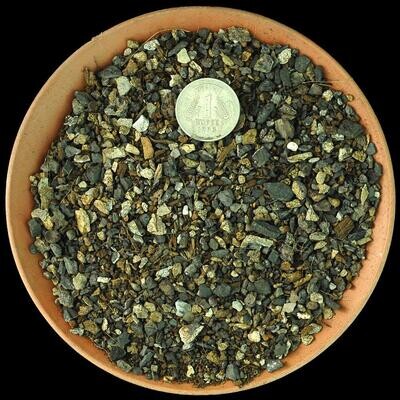
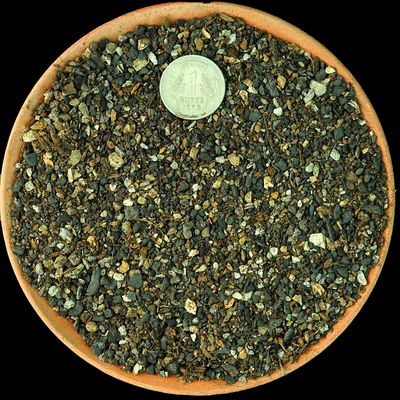
Cactus & Succulent Planting Mix FINE (aka Cactus Soil Mix or Succulent Soil Mix)
Cactus & Succulent Planting Mix FINE (aka Cactus Soil Mix or Succulent Soil Mix)
Fine-Grain Potting Mix for Cactus & Succulent Roots
SKU MNS001
₹33.74
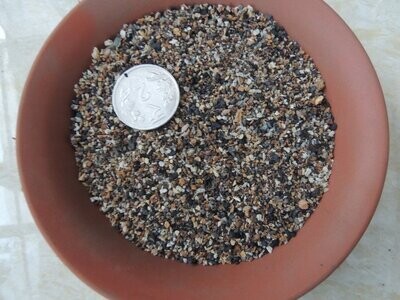
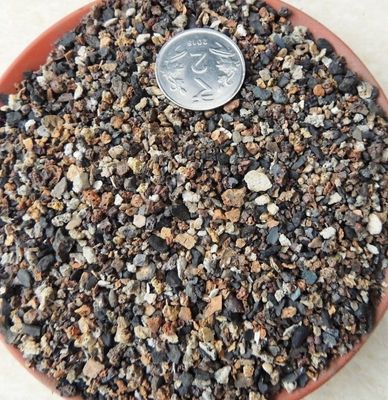
Cactus Seed Planting Mix
Cactus Seed Planting Mix
Sterile, Fine-Grain Media for Cactus & Succulent Seeds
SKU MNS005
₹66.35