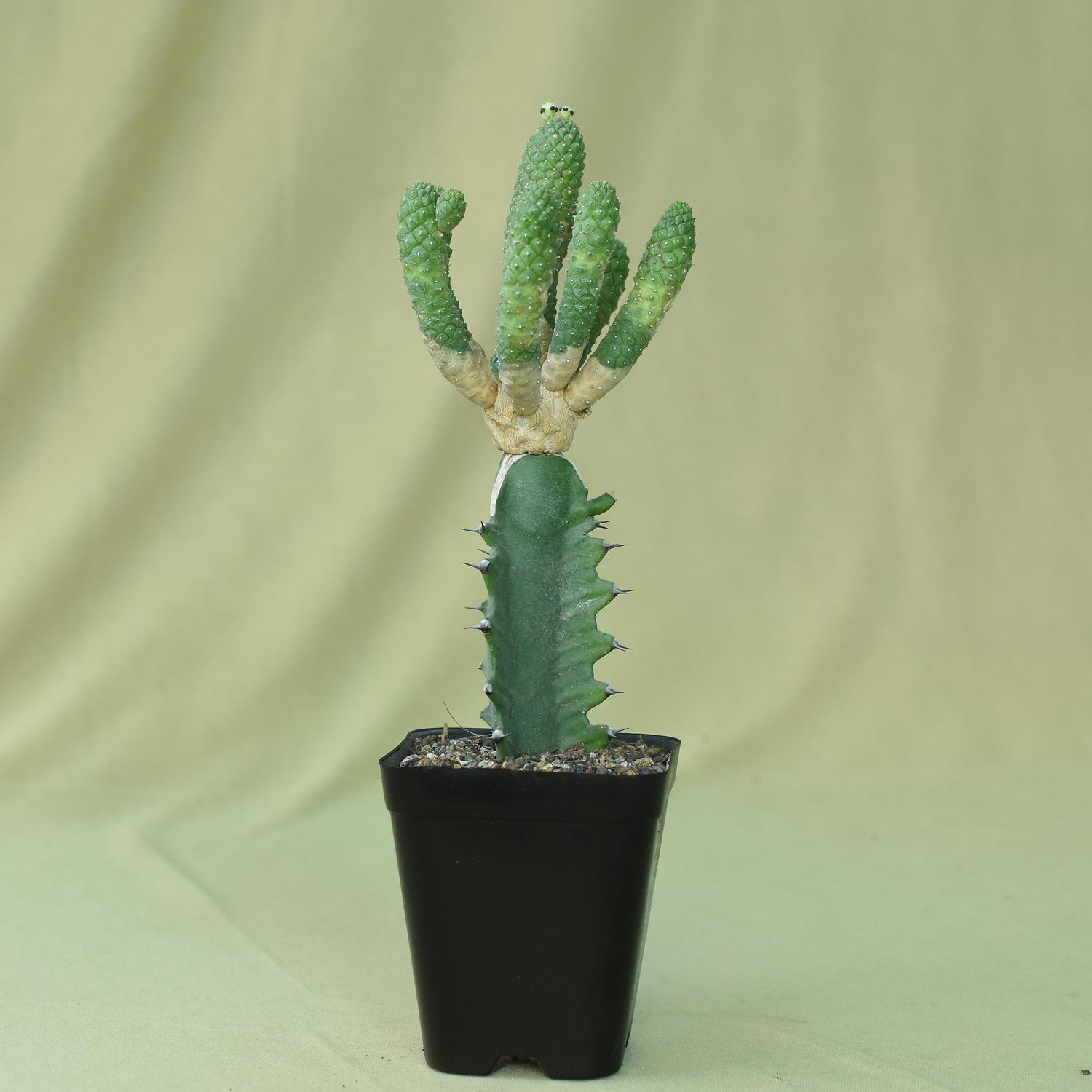
Euphorbia esculenta
Product Details
Architectural Wonder: Euphorbia esculenta
A geometric masterpiece for the discerning collector, this rare South African succulent mimics a crown of intricate, medusoid arms.
- Origin & History of Name: The genus Euphorbia was named by King Juba II of Numidia after his Greek physician, Euphorbus, around 12 BCE. The specific epithet esculenta is derived from the Latin esculentus, meaning "edible" or "full of food."
- Morphology: This "Medusa-head" succulent features a thick, central caudex (a swollen basal stem) from which numerous cylindrical, tuberculate branches emerge.
- Habitat & Origin: Euphorbia esculenta is a wild species endemic to the Eastern Cape Province of South Africa. It grows in stony soils and Karoo scrubland. All specimens should be sourced from nursery-propagated stock to prevent the exploitation of wild populations, as habitat loss is a mounting concern in the succulent trade.
- Cultivation Profile:
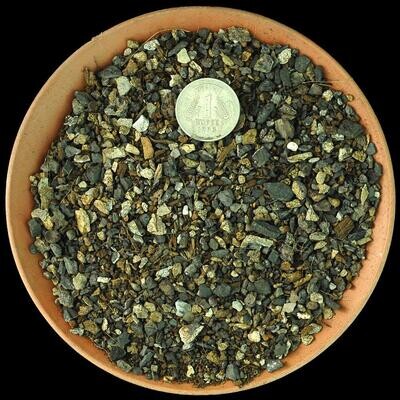
- Substrate: Use a strictly mineral-based mix. A ratio of 70% inorganic material (grit, perlite, or crushed brick) to 30% organic matter is ideal for the Indian climate to prevent root rot.
- Light: Requires bright, indirect light.
- Water/Dormancy: Water deeply when the substrate is completely dry during the growing season. In the monsoon, ensure perfect drainage or keep under cover. In winter, reduce watering significantly as the plant enters a semi-dormant state.
- Scientific/Historical Anecdote: The "Medusoid" Euphorbias represent a fascinating example of convergent evolution. Their growth habit allows the plant to maximize surface area for photosynthesis while keeping the main water-storage organ (the caudex) partially subterranean or low to the ground, protecting it from the intense African sun and herbivory—a survival strategy that makes them exceptionally resilient in arid home environments.
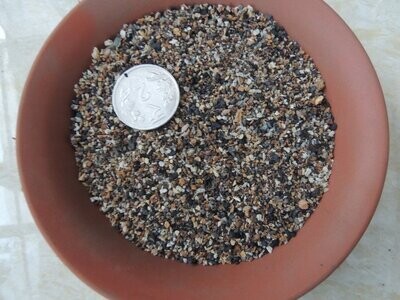
Cactus Seed Planting Mix
Cactus Seed Planting Mix
Sterile, Fine-Grain Media for Cactus & Succulent Seeds
SKU MNS005
₹66.35
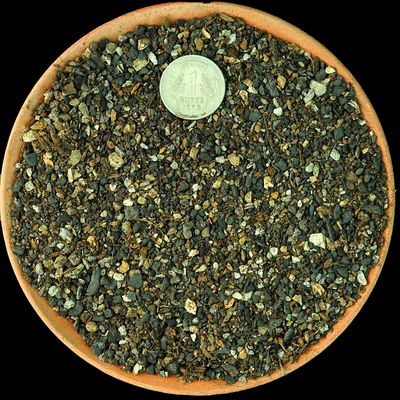
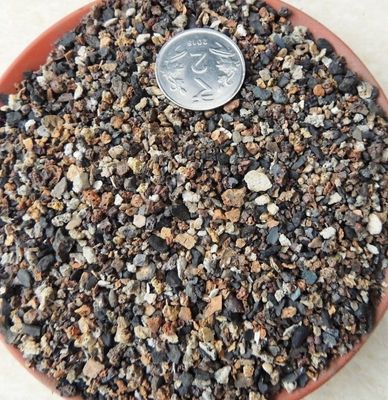
Cactus & Succulent Planting Mix FINE (aka Cactus Soil Mix or Succulent Soil Mix)
Cactus & Succulent Planting Mix FINE (aka Cactus Soil Mix or Succulent Soil Mix)
Fine-Grain Potting Mix for Cactus & Succulent Roots
SKU MNS001
₹33.74