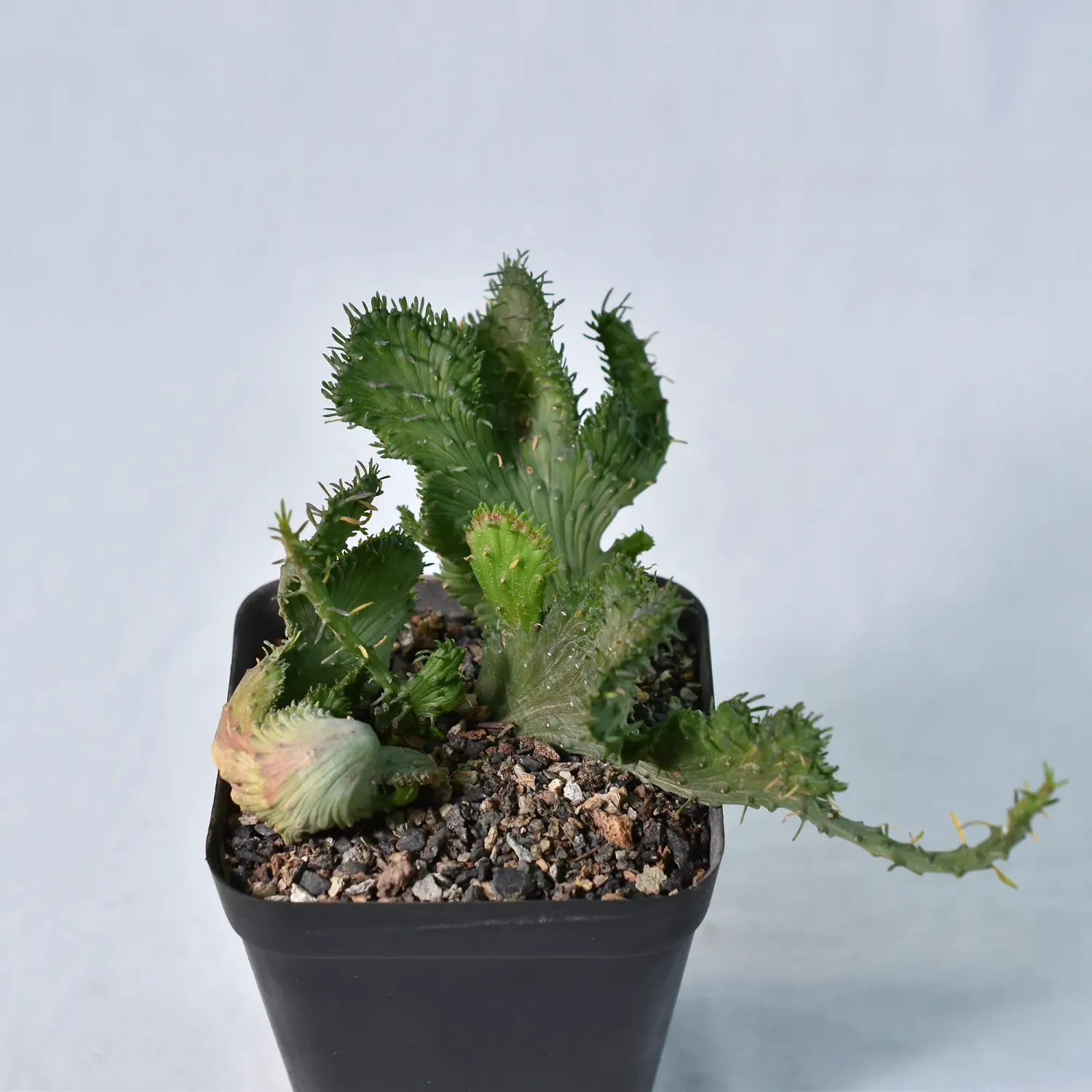
Euphorbia Flanaganii crest 'Arm Crest' Rooted
Product Details
Sculptural Masterpiece: Euphorbia flanaganii f. cristata 'Arm Crest'
A rare, architectural marvel featuring emerald waves of crested growth that make each specimen a living piece of botanical art.
- Origin & History of Name The genus Euphorbia was named by King Juba II of Numidia in honor of his Greek physician, Euphorbus, around 12 BCE. The specific epithet flanaganii commemorates Henry George Flanagan, a 19th-century South African citrus farmer and prolific plant collector.
- Morphology This succulent exhibits fasciation, a mutation where the apical meristem (growing tip) becomes elongated, creating a wide, wavy "crest" rather than a single point. The epidermis is a deep matte green, often textured with small tubercles. Unlike the standard "Medusa-head" form, 'Arm Crest' develops thickened, undulating ridges known as costae, which give the plant its brain-like or coral-like appearance.
- Habitat & Origin While the base species Euphorbia flanaganii is native to the Eastern Cape Province of South Africa, the 'Arm Crest' is a cultivar—a horticultural selection maintained through vegetative propagation to preserve its mutated form. It does not occur naturally in the wild in this crested state. All specimens are nursery-grown, ensuring no impact on wild succulent populations.
- Cultivation Profile
- Substrate: Use a strictly mineral-based mix (50% crushed expanded clay or pumice, 25% coarse river sand, and 25% organic compost). Avoid standard garden soil to prevent root rot.
- Light: High-intensity filtered light. In the Indian subcontinent, provide 4–6 hours of morning sun. Protect with 50% shade cloth during harsh May–June afternoons to prevent epidermal scorching.
- Water & Dormancy: Water deeply when the substrate is bone-dry.
5. Scientific/Historical Anecdote The genus Euphorbia is famous for its "Cyathium"—a specialized pseudanthium (false flower).


Cactus Seed Planting Mix
Cactus Seed Planting Mix
Sterile, Fine-Grain Media for Cactus & Succulent Seeds
SKU MNS005
₹74.85
New


Monsoon Guardian Kit (5 in 1)
Monsoon Guardian Kit (5 in 1)
Complete 5-in-1 biological protection kit for cacti & succulents
SKU MNS024
₹850.00

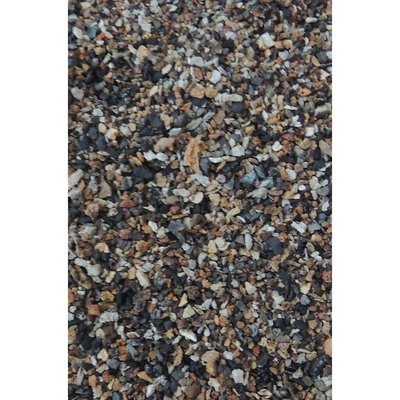
Cactus & Succulent Planting Mix FINE (aka Cactus Soil Mix or Succulent Soil Mix)
Cactus & Succulent Planting Mix FINE (aka Cactus Soil Mix or Succulent Soil Mix)
Fine-Grain Potting Mix for Cactus & Succulent Roots
SKU MNS001
₹39.85