

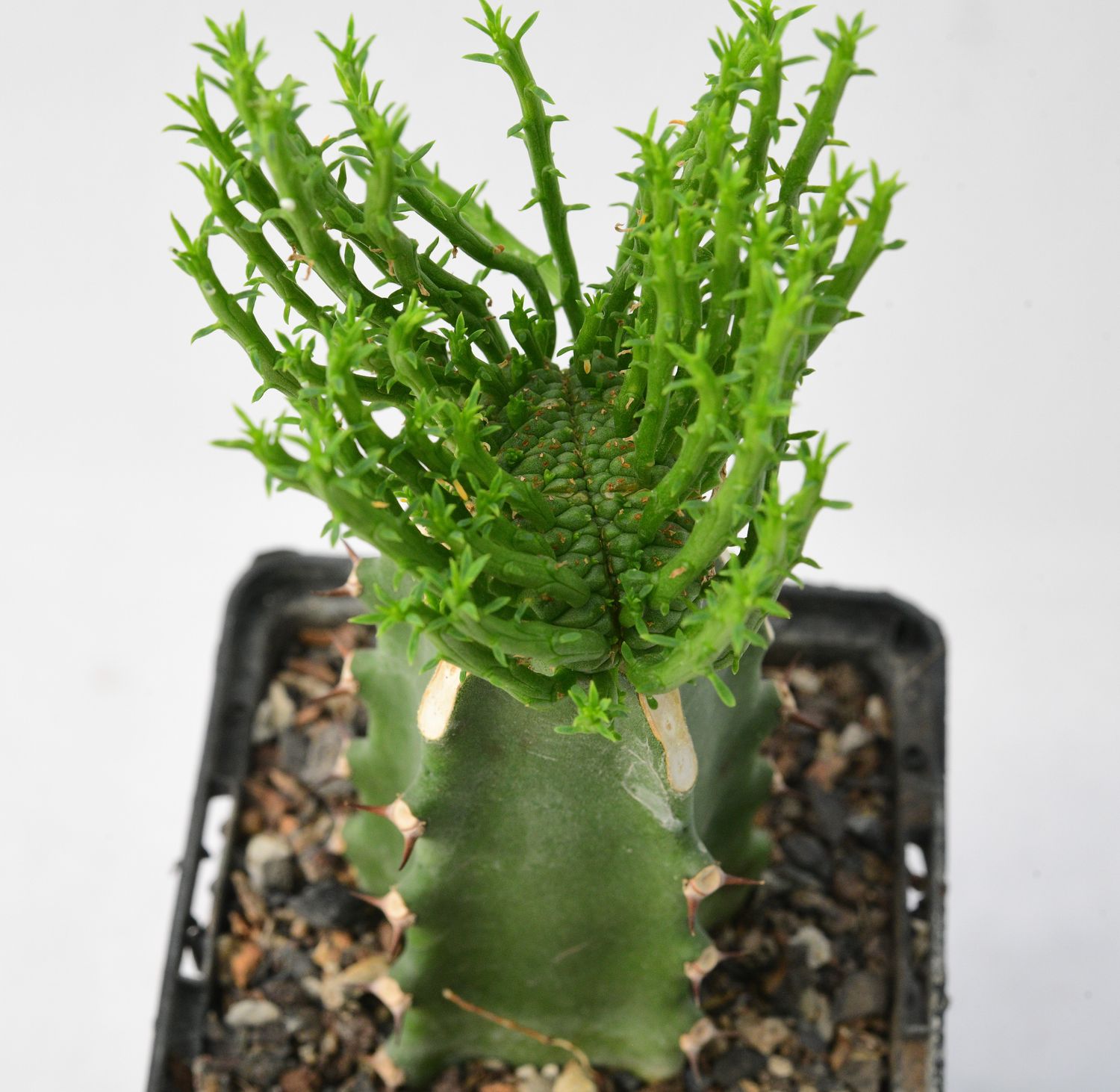
Euphorbia flanaganii crest " Stem Crest"
Product Details
Architectural Marvel: Euphorbia flanaganii f. cristata
A rare, sculptural masterpiece of botanical mutation, this crested form offers a unique, fan-shaped silhouette highly coveted by succulent collectors.
- Origin & History of Name The genus is named after Euphorbus, the Greek physician to King Juba II of Numidia (circa 50 BCE), who reportedly used the plant's caustic latex for medicinal purposes.
- Morphology The Euphorbia flanaganii crest exhibits a dramatic fasciated growth pattern.
- Habitat & Origin The base species, Euphorbia flanaganii, is native to the Eastern Cape Province of South Africa.
- Cultivation Profile
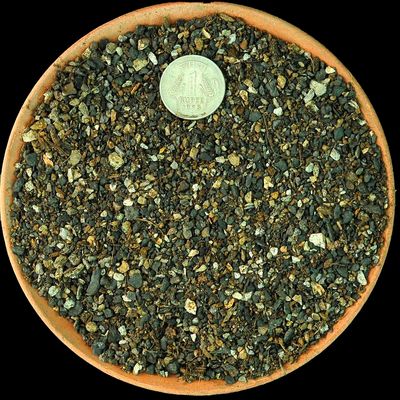
- Substrate: Use a strictly mineral-based mix. A ratio of 70% inorganic material (pumice, perlite, or crushed brick) to 30% organic matter is ideal to prevent root rot in humid Indian climates.
- Light: Thrives in bright, indirect sunlight. In the Indian subcontinent, provide afternoon shade during peak summer (April–June) to prevent epidermal scorching, while maximizing light during the monsoon.
- Water/Dormancy: Apply the "soak and dry" method. Water sparingly during the hot, humid monsoon. The plant enters a semi-dormant state in winter; reduce watering significantly to prevent fungal pathogens.
- Scientific/Historical Anecdote The genus Euphorbia is famous for its convergent evolution. While they often look like cacti, they are unrelated; Euphorbias evolved succulent features in Africa to survive arid conditions, paralleling the evolution of cacti in the Americas. A key scientific distinction is their "Cyathium"—a specialized pseudanthium (false flower) where several highly reduced male flowers surround a single female flower, a structure unique to the Euphorbiaceae family.
New

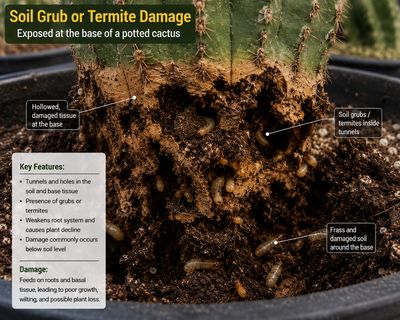
Monsoon Guardian Kit (5 in 1)
Monsoon Guardian Kit (5 in 1)
Complete 5-in-1 biological protection kit for cacti & succulents
SKU MNS024
₹850.00
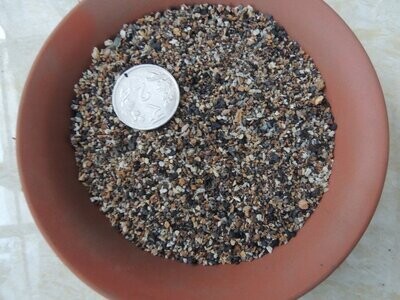
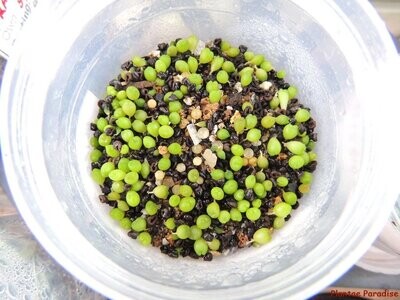
Cactus Seed Planting Mix
Cactus Seed Planting Mix
Sterile, Fine-Grain Media for Cactus & Succulent Seeds
SKU MNS005
₹74.85
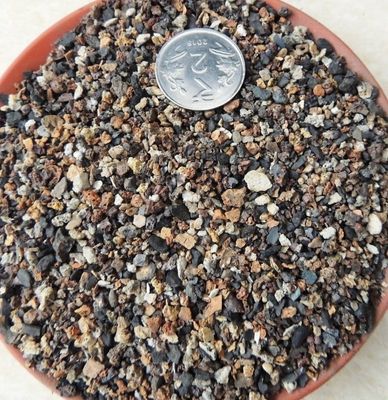
Cactus & Succulent Planting Mix FINE (aka Cactus Soil Mix or Succulent Soil Mix)
Cactus & Succulent Planting Mix FINE (aka Cactus Soil Mix or Succulent Soil Mix)
Fine-Grain Potting Mix for Cactus & Succulent Roots
SKU MNS001
₹39.85