Origin of Name
Euphorbia gymnocalycioides is a unique species whose name is derived from its resemblance to plants in the genus Gymnocalycium, indicated by the suffix '-oides', meaning 'resembling' in Latin. The prefix 'gymno-' comes from the Greek word for naked, alluding to the plant's bare, spineless appearance, which is a characteristic feature of Gymnocalycium but unusual for Euphorbias.
Technical Description of Plant
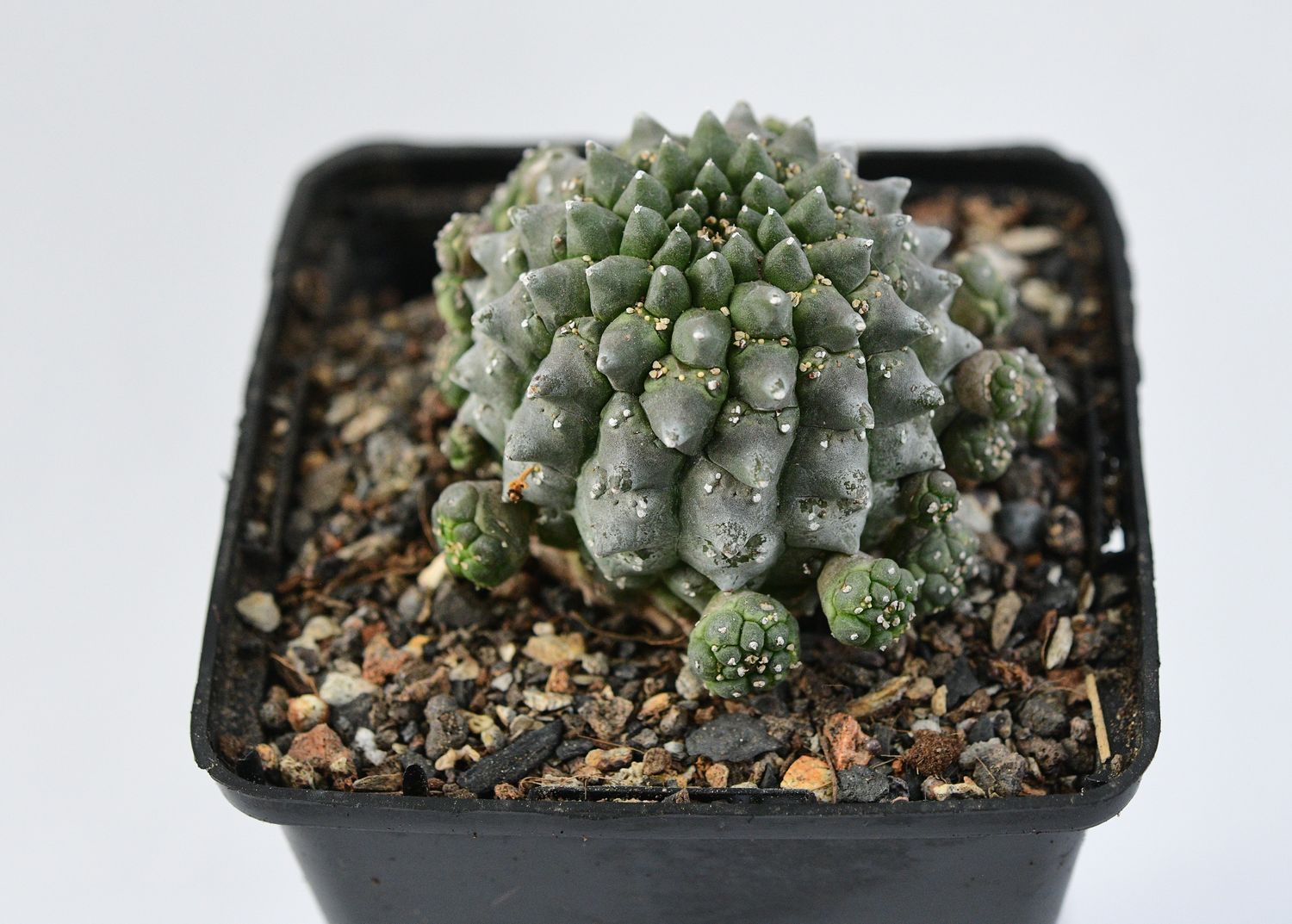
This Euphorbia species is notable for its spherical, deeply ribbed, and green to blue-green stem that resembles a spineless cactus. The plant's surface is smooth, and it lacks the typical spines or thorns found on many other Euphorbia species. Euphorbia gymnocalycioides can grow up to 15 cm in diameter and produces small, inconspicuous yellow flowers. The plant's overall appearance is strikingly cactus-like, making it a fascinating specimen for collectors.
Origin of Plant
Euphorbia gymnocalycioides is endemic to a limited region in Tanzania, Africa. It grows naturally in rocky, arid areas, adapting well to its environment with features that enable efficient water storage and conservation.
Conservation Status
Euphorbia gymnocalycioides is not listed on the IUCN Red List of Threatened Species. However, like many specialized plants with a limited natural habitat, it may face risks from habitat loss and environmental changes.
Care Instructions
To cultivate Euphorbia gymnocalycioides, plant it in well-draining cactus or succulent soil mix. This species prefers bright, indirect light but can tolerate some direct sunlight. Water moderately during the active growing season, allowing the soil to dry out completely between waterings. Reduce watering in the winter to mimic its natural dormancy period. This plant is not frost-tolerant and should be protected from extreme cold. Caution should be taken when handling this Euphorbia, as its sap can be irritating to the skin and eyes. Regular inspection for pests and removal of any dead material will help maintain the plant's health and appearance.