

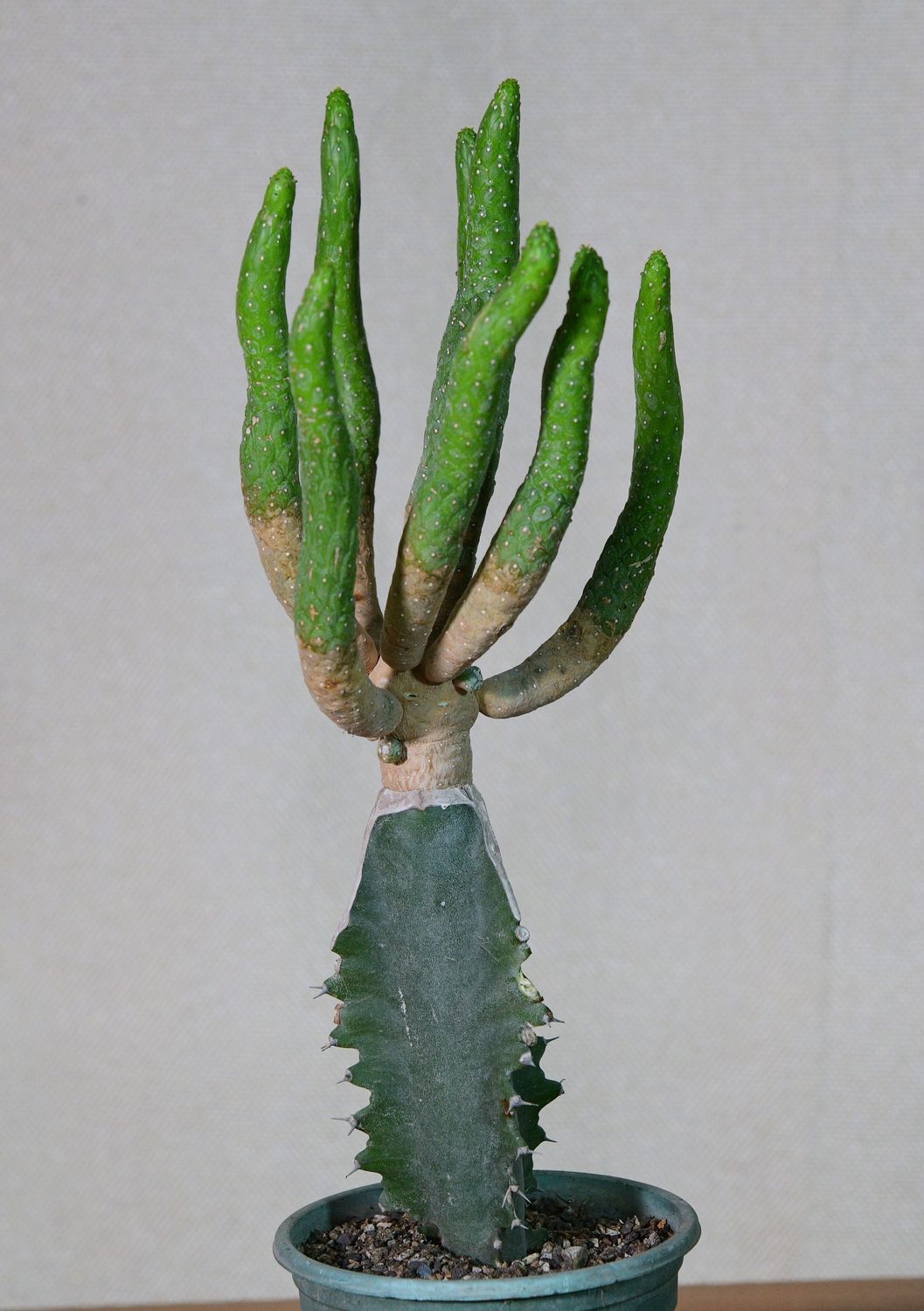
Euphorbia inermis
Product Details
A large grafted plant!
The Medusa’s Crown: Euphorbia inermis
A mesmerizing architectural marvel, this spineless succulent offers a sophisticated, serpent-like symmetry that elevates any rare plant collection.
- Origin & History of Name: The genus name Euphorbia honors Euphorbus, the Greek physician to King Juba II of Numidia, who reportedly used the caustic sap for medicinal purposes.
The specific epithet inermis is derived from Latin, meaning "unarmed" or "defenceless," referencing the notable absence of the sharp spines or thorns typically associated with many other members of this genus. - Morphology: This species is a classic "medusoid" euphorbia, featuring a thickened central subterranean or semi-exposed stem known as a caudex.
From this central hub, numerous radiating, cylindrical branches emerge. These branches are covered in hexagonal tubercles (small bumps) rather than ribs (costae), creating a textured epidermis that mimics snake scales. Unlike variegated cultivars, this plant maintains a consistent, deep matte-green hue. - Habitat & Origin: Euphorbia inermis is a wild species native to the Western and Eastern Cape provinces of South Africa.
It thrives in rocky, arid terrains. All specimens offered are propagated via sustainable horticultural practices to prevent the poaching of wild populations and ensure the preservation of its natural habitat. - Cultivation Profile:
- Substrate: A strictly mineral-based mix is essential.
Use a ratio of 70% inorganic material (pumice, crushed brick, or perlite) and 30% organic matter to prevent root rot. - Light: In the Indian subcontinent, provide bright, indirect sunlight. During peak summer months (April–June), use a 50% shade cloth to prevent the epidermis from scorching.
- Water/Dormancy: Water thoroughly only when the substrate is completely bone-dry. During the monsoon, significantly reduce frequency. In the mild Indian winter, the plant enters a semi-dormancy; water sparingly once a month to keep the caudex from shriveling.
- Substrate: A strictly mineral-based mix is essential.
- Scientific/Historical Anecdote: While the "Medusa" appearance is iconic today, these plants were a biological puzzle for early botanists. The convergent evolution between African Euphorbias and American Cacti is so striking that early explorers often misidentified them. However, Euphorbia inermis contains a milky white latex (succus) that is chemically distinct from cactus sap, acting as a sophisticated deterrent against herbivores in the South African veld.
Cactus Seed Planting Mix
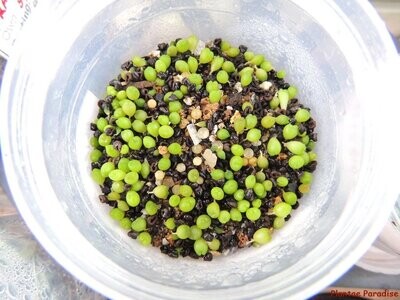
Cactus Seed Planting Mix
Sterile, Fine-Grain Media for Cactus & Succulent Seeds
SKU MNS005
₹74.85


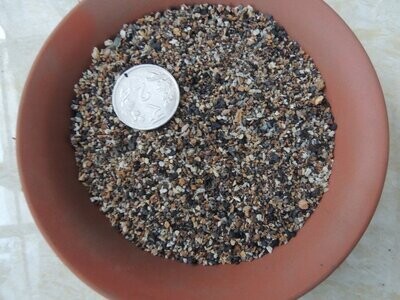
Cactus & Succulent Planting Mix COARSE (aka Cactus Soil Mix or Succulent Soil Mix)
Cactus & Succulent Planting Mix COARSE (aka Cactus Soil Mix or Succulent Soil Mix)
Washed, Free-Draining Mineral Mix for Cactus & Succulents
SKU MNS003
₹44.85
New
Monsoon Guardian Kit (5 in 1)
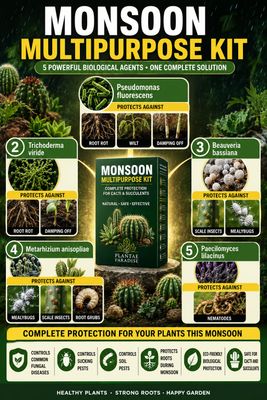
Monsoon Guardian Kit (5 in 1)
Complete 5-in-1 biological protection kit for cacti & succulents
SKU MNS024
₹850.00