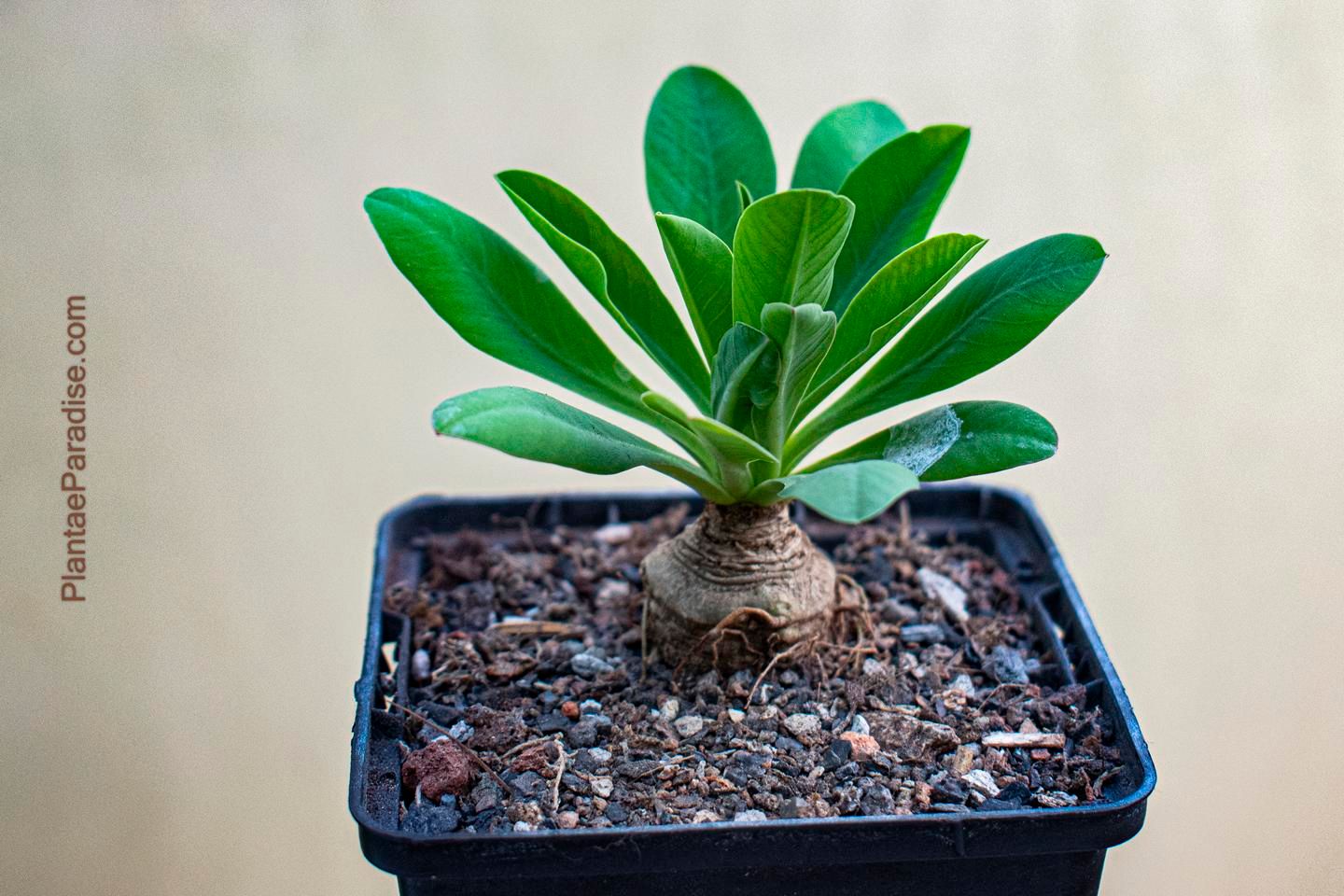
Plant as shown will be sent.
Synonyms:
None widely recognized.
Origin of Name:
The genus name "Euphorbia" is derived from Euphorbus, a Greek physician who reputedly used a plant from this group for medicinal purposes. The species name "itremensis" is derived from the locality of Itremo, a region in Madagascar where this species is found. The suffix "-ensis" indicates origin, thus defining the species as being native to the Itremo area.
Origin of Plant:
Euphorbia itremensis is endemic to Madagascar, particularly associated with the Itremo Massif, a region noted for its unique biodiversity and a variety of endemic plant species. It typically grows in dry, rocky areas and is adapted to the local arid climate, which features seasonal rainfall and significant temperature variations.
Short Description:
Euphorbia itremensis is a distinctive succulent characterized by its thick, fleshy stems and unique growth habit. The plant can exhibit a shrub-like appearance with branches that may develop a slight reddish hue. Its leaves are often small and sparsely arranged, with the plant's distinctiveness enhanced by the presence of a milky latex, a hallmark characteristic of many Euphorbia species. During its blooming period, Euphorbia itremensis produces clusters of small, attractive cyathia, which can vary in color.
Conservation Status:
Euphorbia itremensis is not currently classified as endangered; however, it is subject to habitat loss due to deforestation and human encroachment. As with many endemic species, its survival is closely tied to the conservation of its natural habitat. Our nursery-cultivated plants promote sustainable horticultural practices and aid in the preservation of natural populations.
Care Instructions:
Euphorbia itremensis thrives in well-draining soil, such as a cactus or succulent mix. It prefers bright, indirect sunlight, although it can tolerate full sun conditions. Water the plant sparingly, allowing the soil to dry out completely between waterings, with less frequent watering in the winter months when its growth slows. Fertilization with a diluted, balanced fertilizer can be applied during the active growing season to encourage healthy growth and flowering. While handling the plant, exercise caution due to the milky sap, which can be irritating to the skin and eyes.Regenerate