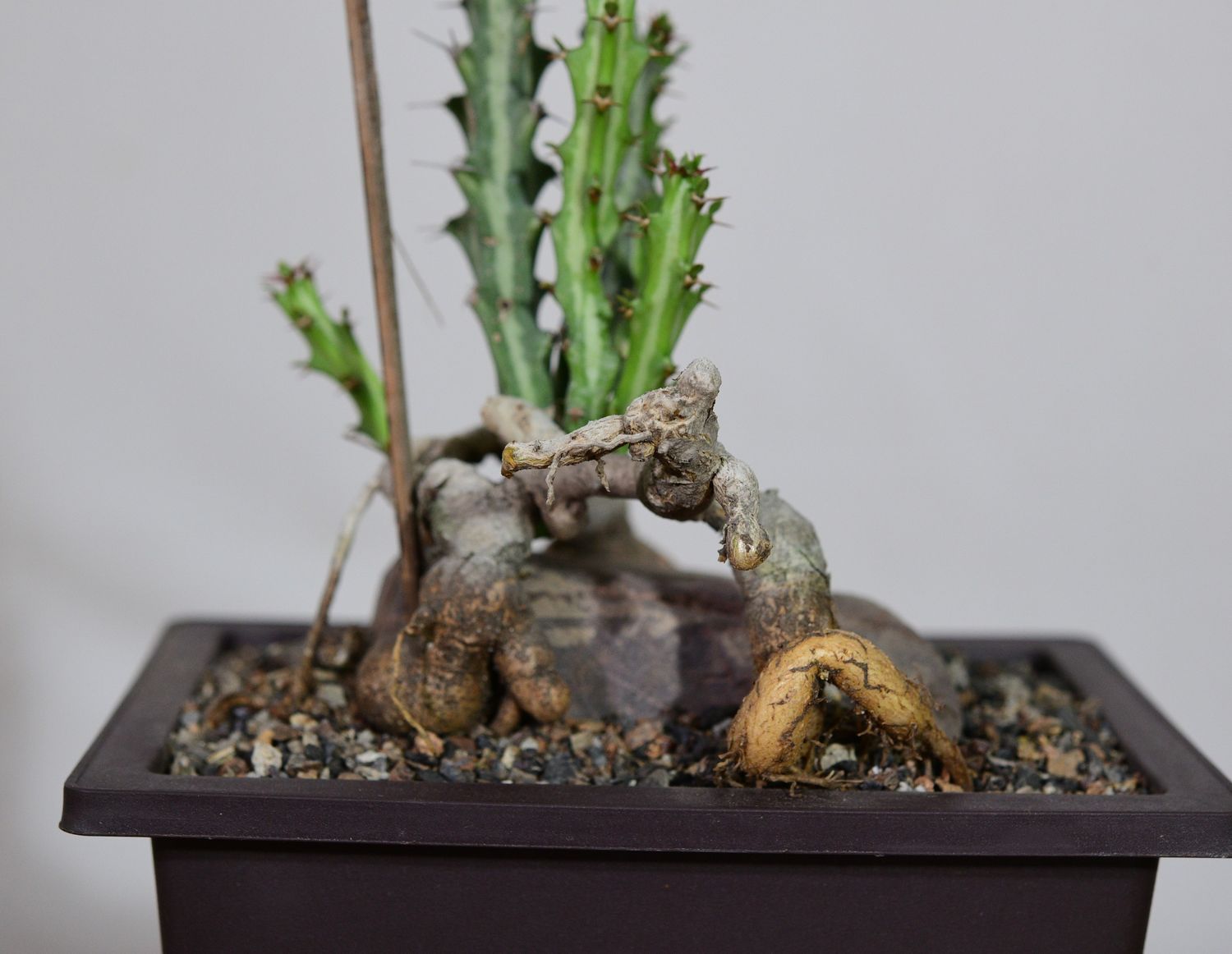
Plants with caudex as shown. Same plant will be sent.
Euphorbia knuthii
Origin of Name:
Euphorbia knuthii is named in honor of the distinguished German botanist Martin Knuth (1904–1994), who made significant contributions to the study of succulent flora in southern Africa throughout the mid-20th century. The species was officially described and named in 1955 by botanist Werner Rauh, as a tribute to Knuth’s extensive exploration and research of African succulents. The name recognizes Knuth’s pioneering work in documenting and collecting plants from the arid regions of southern Africa, cementing his legacy in botanical taxonomy.
Origin of Plant:
Euphorbia knuthii is native to southern Africa, especially found in rocky, semi-arid areas of South Africa and Namibia. It was likely first collected during expeditions in the early 20th century and described scientifically in 1955, reflecting the era of focused botanical exploration in Africa’s harsh environments.
Description:
Euphorbia knuthii is a hardy and visually striking succulent characterized by its thick, swollen caudex (stem base) that stores water efficiently. From this base, slender, branching stems extend upward, often reaching several feet in length. The stems are typically green with a textured surface, sometimes exhibiting faint ridges or subtle variegation. In bloom, it produces small, delicate, yellowish-green, cup-shaped flowers that appear at the tips of its stems, adding elegance to its robust form. Its unique architectural appearance makes it popular among collectors.
Conservation Status:
While currently not listed as threatened, it faces potential risks from habitat destruction and overcollection. Conservation efforts emphasizing habitat protection and responsible cultivation have become more critical since the mid-20th century to ensure its survival.
Care:
- Watering: Water sparingly; allow the soil to dry out completely between watering, especially during winter dormancy.
- Soil: Prefers well-draining cactus or succulent mix to prevent root rot.
- Light: Needs full sun or bright, indirect light to maintain its vibrant color and healthy growth.
- Temperature: Ideal conditions are warm, between 65°F to 85°F (18°C to 29°C). Protect from frost and cold temperatures, as it is sensitive to freezing.