

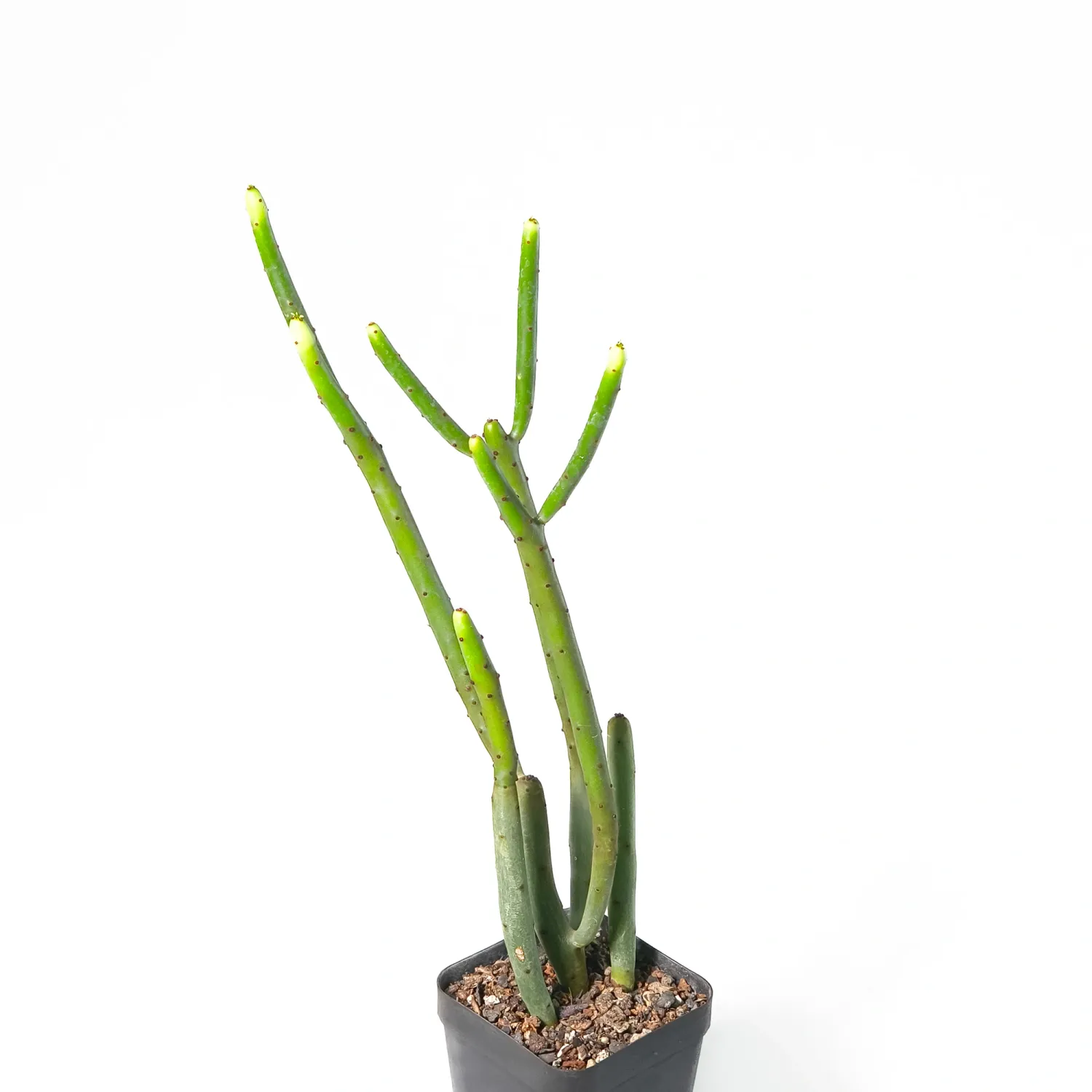
Euphorbia leucodendron
Product Details
Architectural Elegance: Euphorbia leucodendron
A structural masterpiece for the rare plant collector, prized for its minimalist, leafless silhouette.
- Origin & History of Name: The genus name Euphorbia honors Euphorbus, the Greek physician to King Juba II of Numidia, who reportedly used the milky sap of these plants medicinally.
The specific epithet leucodendron is derived from the Greek words leukos (white) and dendron (tree), directly referencing the pale, chalky appearance of its mature woody stems. - Morphology: This succulent is characterized by its cylindrical, photosynthetic stems that lack traditional foliage.
The epidermis features a smooth, glaucous texture with a pale green to silver hue. Its growth habit is upright and branching, with distinct nodes where tiny, vestigial leaves occasionally appear during the active growing season before quickly falling away to maintain its skeletal form. - Habitat & Origin: Euphorbia leucodendron is a wild species endemic to the arid regions of Madagascar. It has evolved to thrive in dry deciduous forests and rocky terrains. Our specimens are nursery-propagated via cuttings or seed to ensure the protection of wild populations and promote sustainable horticultural practices.
- Cultivation Profile:
- Substrate: Use a strictly mineral-based mix consisting of 70% inorganic material (pumice, perlite, or crushed brick) and 30% organic matter to prevent root rot.
- Light: Requires bright, indirect light.
In the Indian subcontinent, provide 4–6 hours of morning sun; protect from the harsh, direct afternoon heat of the Indian summer to avoid epidermal scorching. - Water/Dormancy: Water thoroughly only when the medium is completely dry. During the humid monsoon and cooler winter months, significantly reduce watering as the plant enters a semi-dormant state.
- Scientific/Historical Anecdote: Like many members of the Euphorbiaceae family, this species utilizes Crassulacean Acid Metabolism (CAM). This allows the plant to keep its stomata closed during the blistering day to conserve moisture, only "breathing" at night—a specialized biological adaptation that makes it a highly efficient survivor in extreme drought conditions.
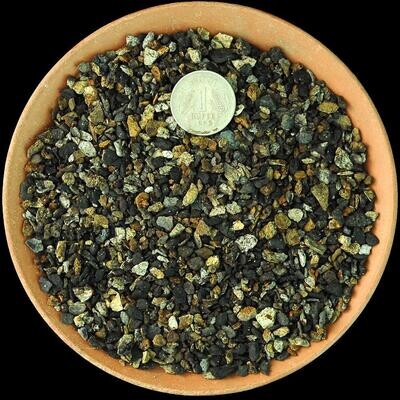
Cactus & Succulent Planting Mix COARSE (aka Cactus Soil Mix or Succulent Soil Mix)
Cactus & Succulent Planting Mix COARSE (aka Cactus Soil Mix or Succulent Soil Mix)
Washed, Free-Draining Mineral Mix for Cactus & Succulents
SKU MNS003
₹44.85


Cactus & Succulent Planting Mix FINE (aka Cactus Soil Mix or Succulent Soil Mix)
Cactus & Succulent Planting Mix FINE (aka Cactus Soil Mix or Succulent Soil Mix)
Fine-Grain Potting Mix for Cactus & Succulent Roots
SKU MNS001
₹39.85

