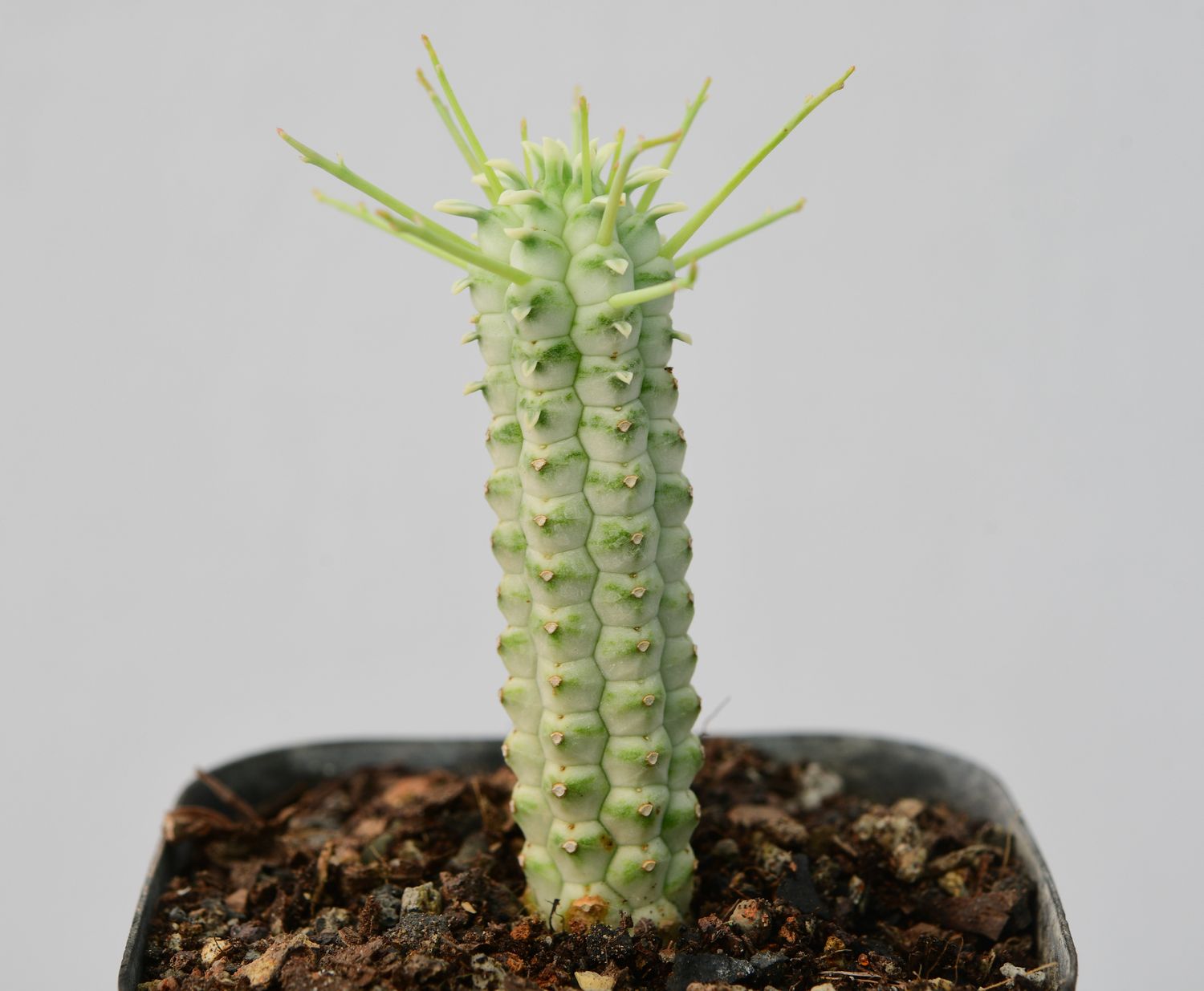
Also called the 'Variegated Corn Cob Cactus'.
Origin of Name
The genus "Euphorbia" is named after Euphorbus, the Greek physician to King Juba II of Numidia, who is believed to have used a certain species of the plant for medicinal purposes. The species name "mammillaris" derives from the Latin word 'mammilla', meaning nipple, referring to the nipple-like protrusions on the plant's surface. The term "forma variegata" indicates this plant's variegated form, characterized by the presence of multiple colors, usually in the form of stripes, spots, or patches, on the leaves or stems.
Technical Description of Plant
Euphorbia mammillaris forma ‘Variegata’ is an upright succulent shrublet with a ghostly white to green color, splotches of green and horizontal spines. Cold weather will cause the branch tips to flush a rosy pink color. Produces a clump of yellow cyathia, or ‘false flowers’, atop the cylindrical trunk.Euphorbia mammillaris forma variegata is distinguished by its cylindrical, tubular stems that grow vertically, forming a cluster that resembles a cob of corn. The variegation presents as patches or stripes of creamy white, yellow, or light green against the natural green backdrop of the stems. This color variation adds a decorative element to the plant's appearance. Like other Euphorbias, it produces a milky sap when cut or damaged. The plant may bloom with small, inconspicuous flowers, but its main appeal lies in the striking variegated pattern of its stems.
Origin of Plant
Euphorbia mammillaris is native to South Africa, where it thrives in arid, rocky environments. The variegated form, Euphorbia mammillaris forma variegata, has been cultivated for its ornamental value and does not occur widely in the wild.
Conservation Status
The conservation status of Euphorbia mammillaris forma variegata specifically has not been evaluated. However, like many specialized plants, habitat destruction and the illegal plant trade pose potential threats. Cultivating this plant in gardens and collections can help to mitigate pressure on wild populations by reducing the demand for wild-collected specimens.
Care Instructions
Euphorbia mammillaris forma variegata requires well-draining soil and prefers a sunny to partially sunny location to maintain its vibrant variegation. Water the plant thoroughly, allowing the soil to dry out completely between watering sessions, and reduce watering in the winter months. It is sensitive to overwatering, which can lead to root rot. This plant is not frost-tolerant and should be protected from cold temperatures. Handle with care to avoid contact with the milky sap, which can be irritating to the skin and eyes.