

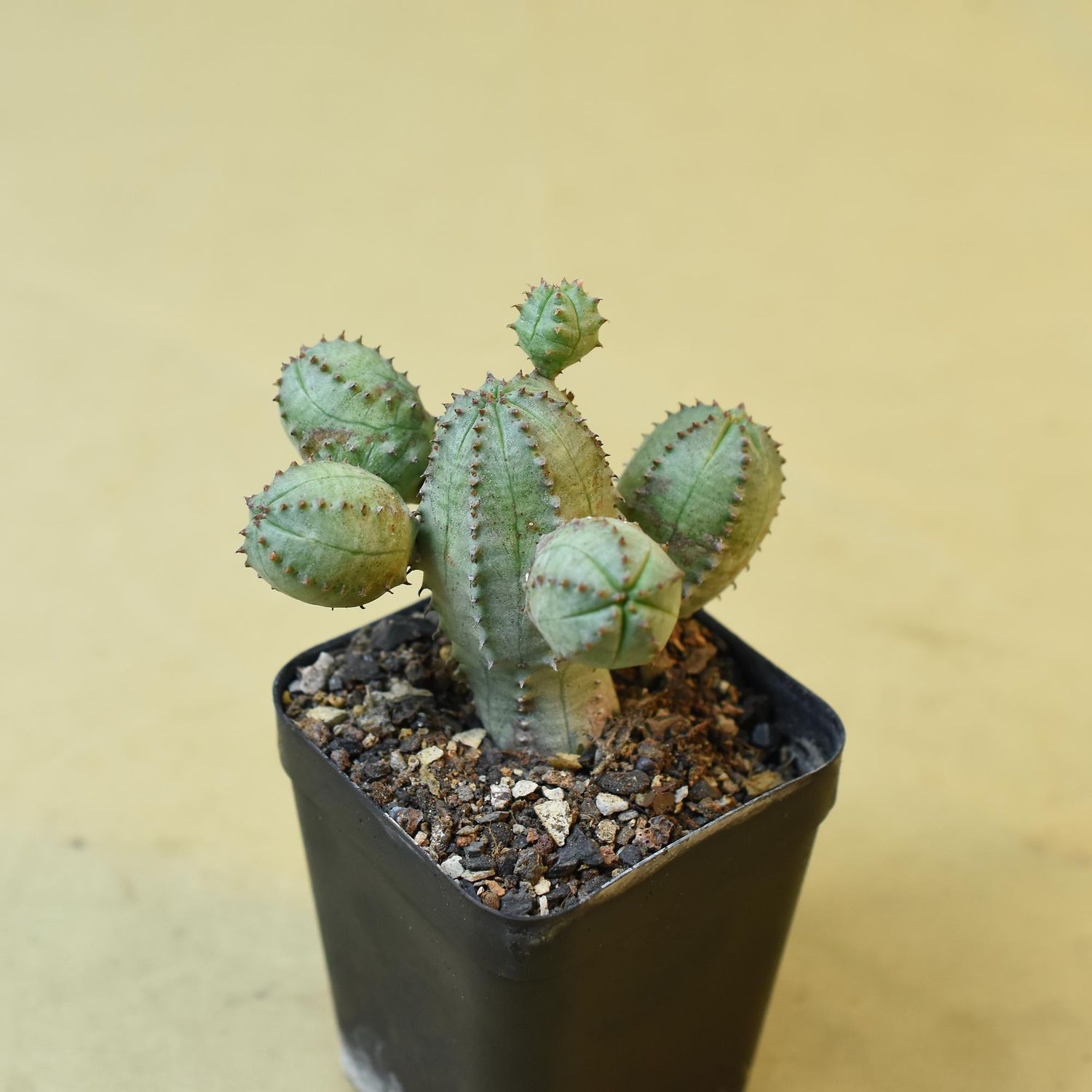
Euphorbia obesa X meloformis
Product Details
Symmetry in Bloom: Euphorbia obesa X meloformis
A high-contrast hybrid offering the structural perfection of a 'Baseball Plant' with the rugged ribbing of the 'Melon Spurge.'
- Origin & History of Name: The name Euphorbia honors Euphorbus, the Greek physician to King Juba II, who reportedly used the latex for medicinal purposes. Obesa translates from Latin to "fat" or "stout," referencing the globose shape, while meloformis means "melon-shaped." This specific hybrid combines two iconic South African species to stabilize a plant that retains a spherical form longer than its parents.
- Morphology: This hybrid displays a depressed-globose body with a thick, matte epidermis often decorated with fine transverse purple-brown banding. It features prominent costae (ribs) that are more pronounced than a pure E. obesa, inherited from the E. meloformis lineage. Unlike many succulents, it is dioecious, and its peduncles (flower stalks) are persistent, creating a unique "dried twig" crown as the plant matures.
- Habitat & Origin: This is a cultivated hybrid (cultivar) produced through selective hand-pollination. Both parent species originate from the Karoo region of South Africa. Breeding this hybrid in nurseries reduces the demand for wild-harvested specimens, making it a highly sustainable choice for collectors focused on conservation.
- Cultivation Profile:
- Substrate: Use a strictly mineral-based mix (70% grit/pumice/perlite, 30% organic matter) to prevent root rot in humid Indian climates.
- Light: Thrives in bright, indirect sunlight. In Indian summers, provide 50% shade-net protection to avoid scorching the apex.
- Water/Dormancy: Water thoroughly only when the body feels slightly soft. Maintain a dry dormancy during the monsoon and peak winter to mimic its arid natural cycle.
- Scientific/Historical Anecdote: Euphorbia obesa was once so over-collected in its native habitat that it nearly faced extinction in the early 20th century. It was saved by the global nursery trade; today, there are more E. obesa (and its hybrids like this one) on windowsills and in botanical gardens than there are in the wild.
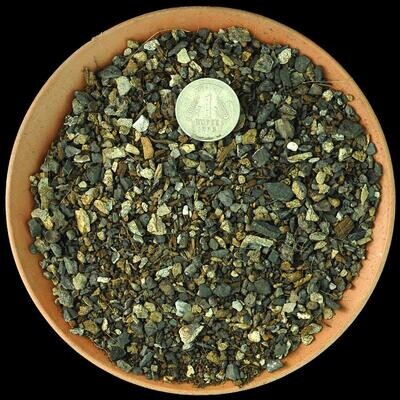
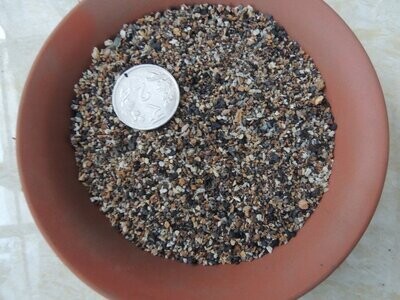
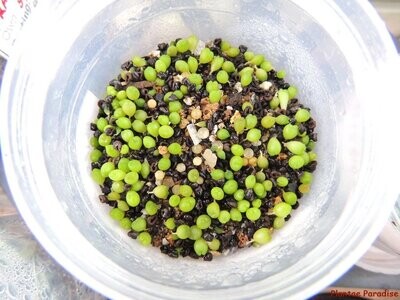
Cactus Seed Planting Mix
Cactus Seed Planting Mix
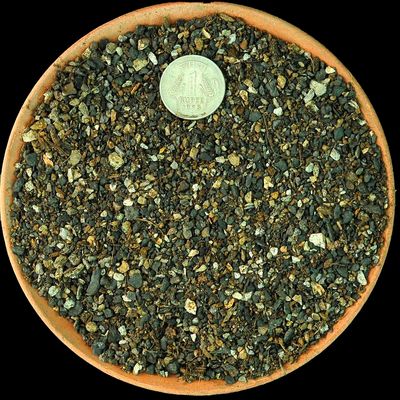
Sterile, Fine-Grain Media for Cactus & Succulent Seeds
SKU MNS005
₹74.85
New

Monsoon Guardian Kit (5 in 1)
Monsoon Guardian Kit (5 in 1)
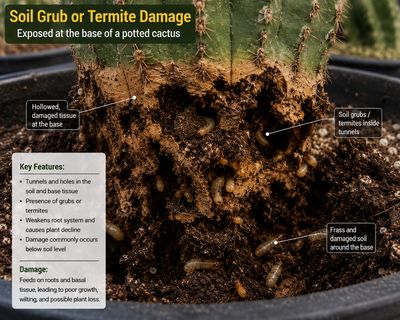
Complete 5-in-1 biological protection kit for cacti & succulents
SKU MNS024
₹850.00