

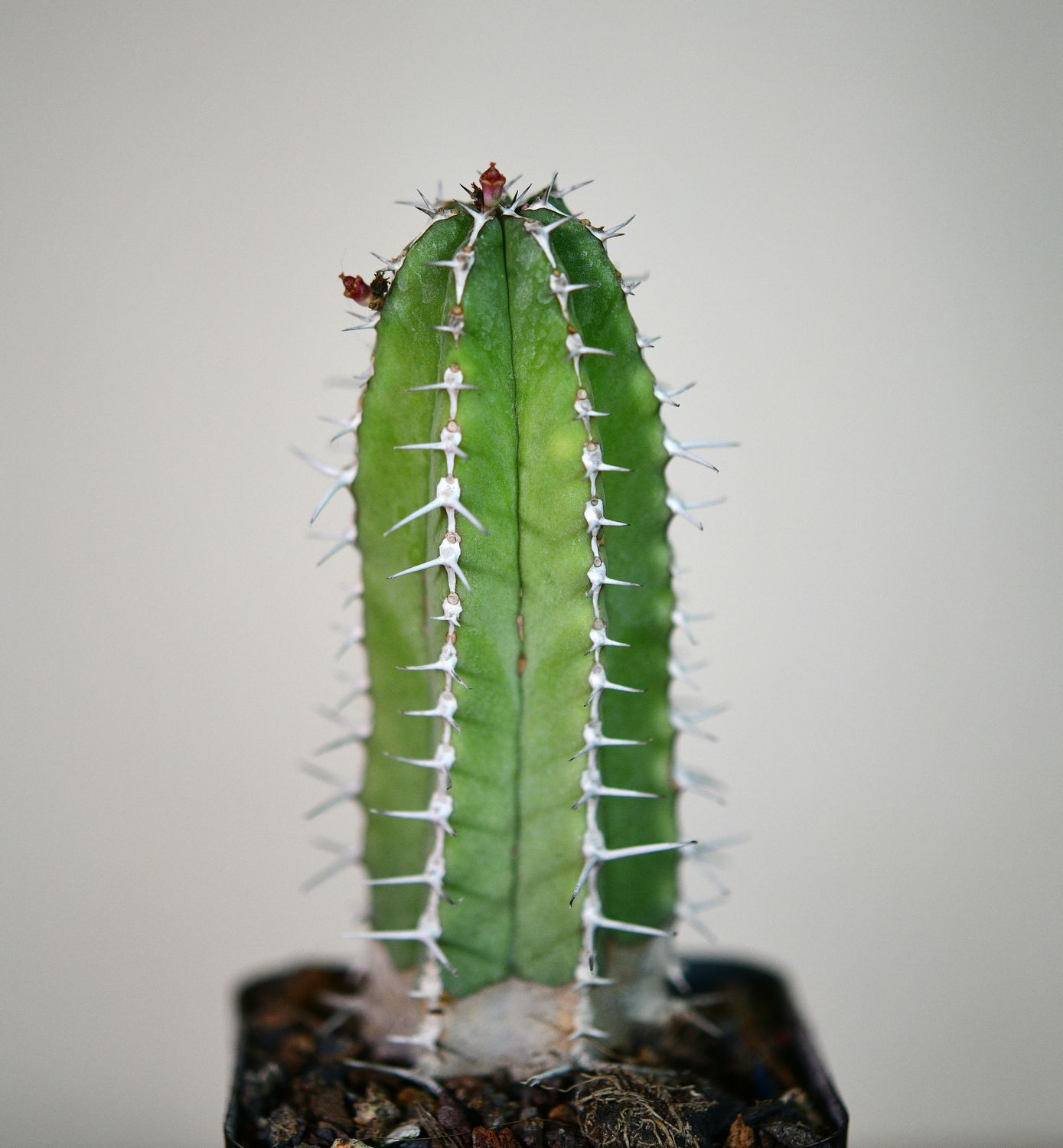
Euphorbia officinarum ssp. echinus
Product Details
The Architectural Icon: Euphorbia officinarum ssp. echinus
A living sculpture of geometric precision, this Moroccan native is a high-impact centerpiece for the discerning succulent collector.
- Origin & History of Name: The genus is named after Euphorbus, the Greek physician to King Juba II of Numidia (c. 50 BC), who reportedly used the plant's caustic latex for medicinal purposes. The specific epithet officinarum refers to its historical use in "apothecary shops." The subspecies name echinus is derived from the Greek echinos, meaning "hedgehog" or "sea urchin," a direct reference to its densely spined, rounded growth habit.
- Morphology: This succulent shrub is characterized by its compact, multi-branched form. Its costae (ribs) are prominent and vertical, typically numbering 5 to 8 per stem. The epidermis is a matte glaucous green, contrasted by dark, paired spines emerging from distinct areoles along the margins. Unlike many succulents, its "leaves" are reduced to spines to minimize transpiration, creating a striking, rib-heavy silhouette.
- Habitat & Origin: This is a wild species native to the arid regions of Southern Morocco and the Western Sahara. It thrives in rocky, limestone-rich crevices. The specimens offered are nursery-propagated, ensuring the preservation of wild populations and adherence to sustainable horticultural practices.
- Cultivation Profile:
- Substrate: Use a strictly mineral-based mix (60% grit such as pumice or perlite, 40% coarse sand/loam). In the Indian climate, avoid peat-heavy mixes to prevent root rot during high humidity.
- Light: Requires full sun to bright indirect light. In North Indian summers, provide slight afternoon shading to prevent epidermal scorching.
- Water/Dormancy: Water deeply only when the medium is completely dry. In India, reduce watering significantly during the monsoon and winter dormancy. Ensure the pot has excellent drainage to combat tropical humidity.
- Scientific/Historical Anecdote: Members of the Euphorbia genus produce a milky white sap known as latex. Historically, this "Euphorbium" was one of the most famous drugs in antiquity, mentioned by Pliny the Elder. Interestingly, while the sap is a chemical defense against herbivores, the plant's evolution mirrors that of cacti in the Americas—a phenomenon known as convergent evolution, where unrelated species develop similar traits to survive in identical environments.
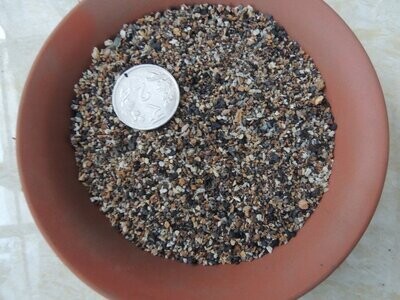
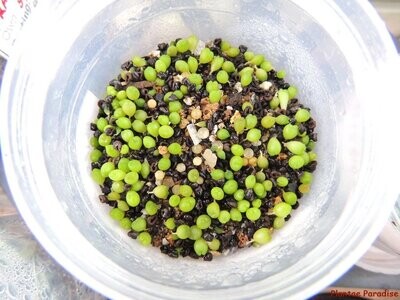
Cactus Seed Planting Mix
Cactus Seed Planting Mix
Sterile, Fine-Grain Media for Cactus & Succulent Seeds
SKU MNS005
₹74.85
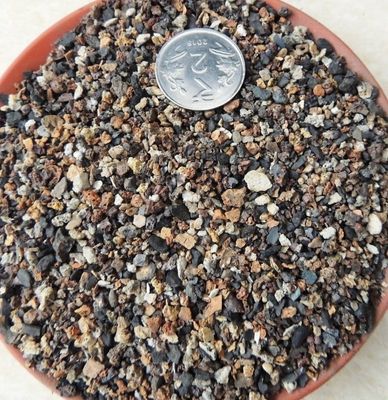

Cactus & Succulent Planting Mix FINE (aka Cactus Soil Mix or Succulent Soil Mix)
Cactus & Succulent Planting Mix FINE (aka Cactus Soil Mix or Succulent Soil Mix)
Fine-Grain Potting Mix for Cactus & Succulent Roots
SKU MNS001
₹39.85
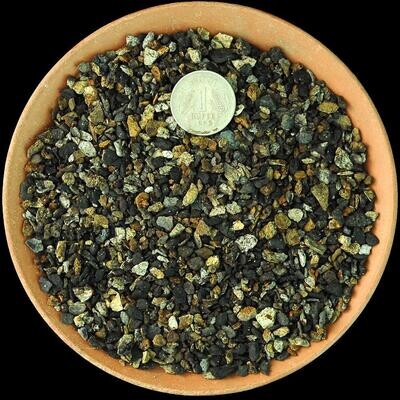
Cactus & Succulent Planting Mix COARSE (aka Cactus Soil Mix or Succulent Soil Mix)
Cactus & Succulent Planting Mix COARSE (aka Cactus Soil Mix or Succulent Soil Mix)
Washed, Free-Draining Mineral Mix for Cactus & Succulents
SKU MNS003
₹44.85
New
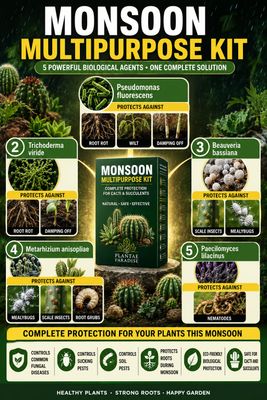
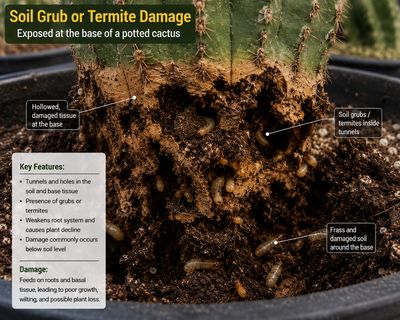
Monsoon Guardian Kit (5 in 1)
Monsoon Guardian Kit (5 in 1)
Complete 5-in-1 biological protection kit for cacti & succulents
SKU MNS024
₹850.00