Euphorbia poissonii variegated
Product Details
Architectural Rarety: Euphorbia poissonii f. variegata
A sculptural masterpiece of desert evolution, this variegated selection offers a striking contrast of cream and emerald for the discerning collector.
- Origin & History of Name The genus name Euphorbia honors Euphorbus, the Greek physician to King Juba II of Numidia, who reportedly used the sap for medicinal purposes.
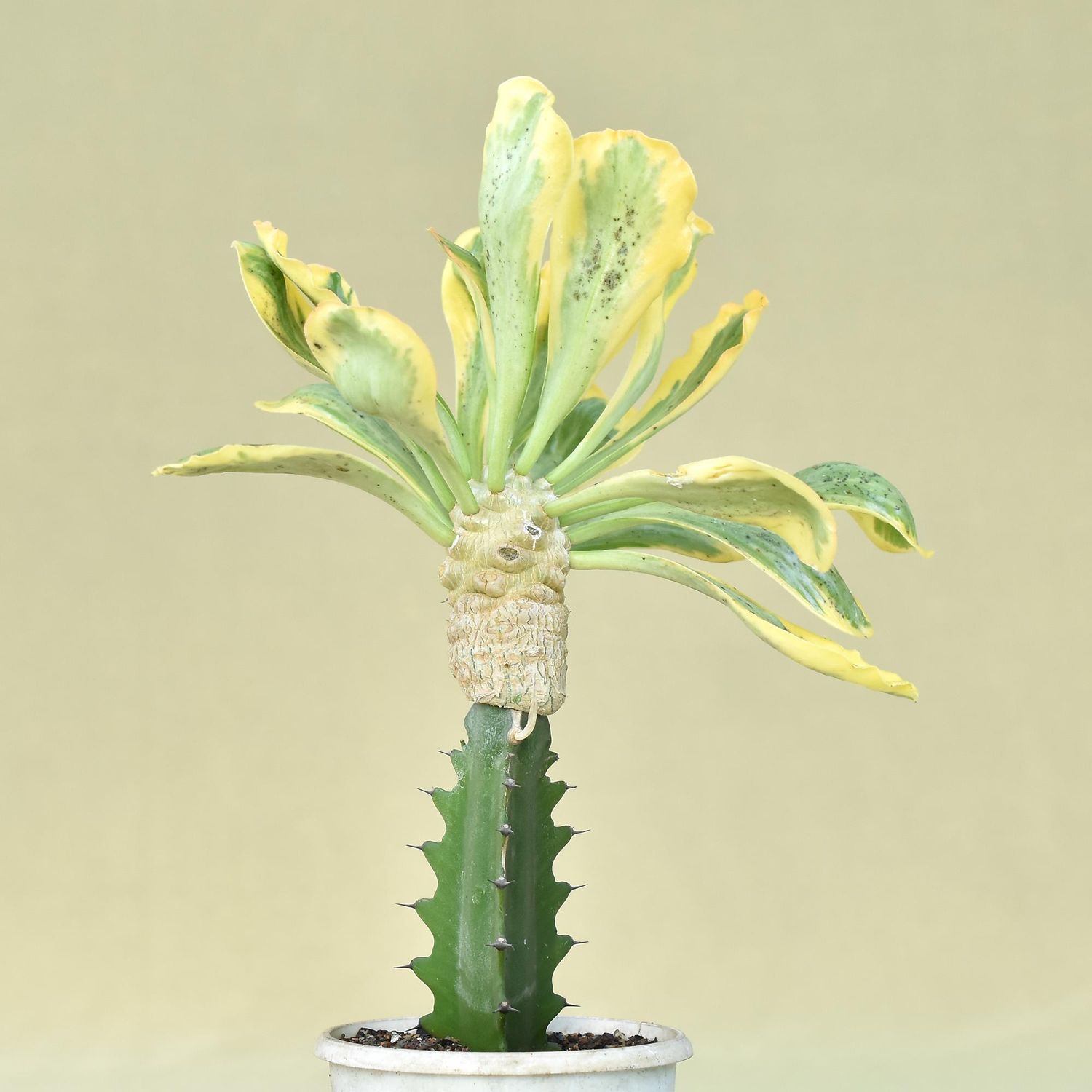
The specific epithet poissonii was designated in 1902 to honor Henri Louis Poisson, a French botanist known for his extensive research on the flora of West Africa and Madagascar. The term "variegata" denotes the genetic mutation causing a lack of chlorophyll in specific zones of the plant tissue. - Morphology This succulent shrub features a cylindrical, pachycaul (thick) stem characterized by a smooth, glaucous epidermis. Unlike many succulents, it produces large, obovate leaves from the apex during the growing season. The variegation manifests as unstable, creamy-white chimera sectors against a deep green base. The stem surface is marked by distinct, spirally arranged leaf scars rather than prominent costae (ribs), giving it a minimalist, totemic appearance.
- Habitat & Origin The base species is native to the rocky, arid regions of West Africa, specifically Northern Nigeria and Cameroon.
However, the variegated form is a cultivated mutation (cultivar) maintained through careful vegetative propagation. Our specimens are sourced from nurseries committed to sustainable practices, ensuring no wild populations are disturbed for commercial trade. - Cultivation Profile
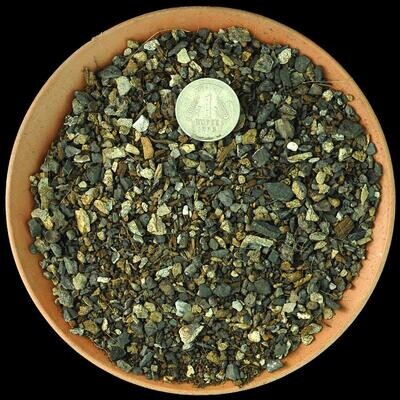
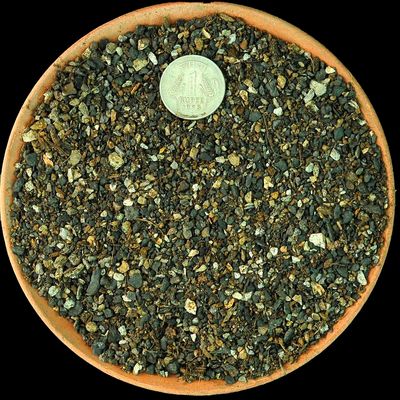
- Substrate: Requires a strictly mineral-based mix. Combine 60% inorganic matter (pumice, perlite, or crushed leca) with 40% coarse sand and a minimal amount of coco-peat.
- Light: High-intensity filtered light is essential. In the Indian climate, provide 4–6 hours of morning sun. Protect from harsh midday summer sun to prevent scorching the sensitive variegated tissue.
- Water/Dormancy: Follow a "soak and dry" method during the hot months. During the Indian monsoon and winter, the plant enters dormancy and may drop its leaves; reduce watering significantly to prevent root rot.
- Scientific/Historical Anecdote Euphorbia poissonii is chemically notable for its highly potent latex, which contains resiniferatoxin (RTX).
While dangerous to handle without gloves, this compound is of significant interest to modern pharmacology; it is currently being researched as a targeted analgesic to treat chronic pain by desensitizing specific heat-sensing neurons without affecting other sensory functions.
New
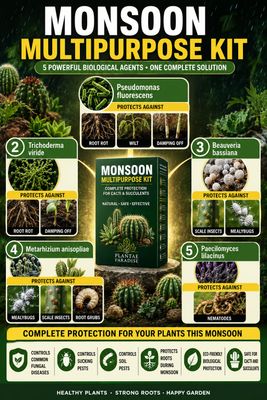
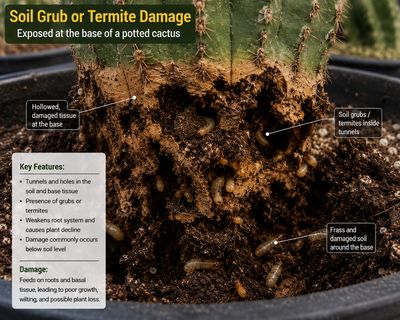
Monsoon Guardian Kit (5 in 1)
Monsoon Guardian Kit (5 in 1)
Complete 5-in-1 biological protection kit for cacti & succulents
SKU MNS024
₹850.00

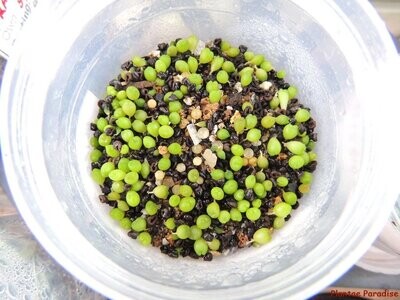
Cactus Seed Planting Mix
Cactus Seed Planting Mix
Sterile, Fine-Grain Media for Cactus & Succulent Seeds
SKU MNS005
₹74.85