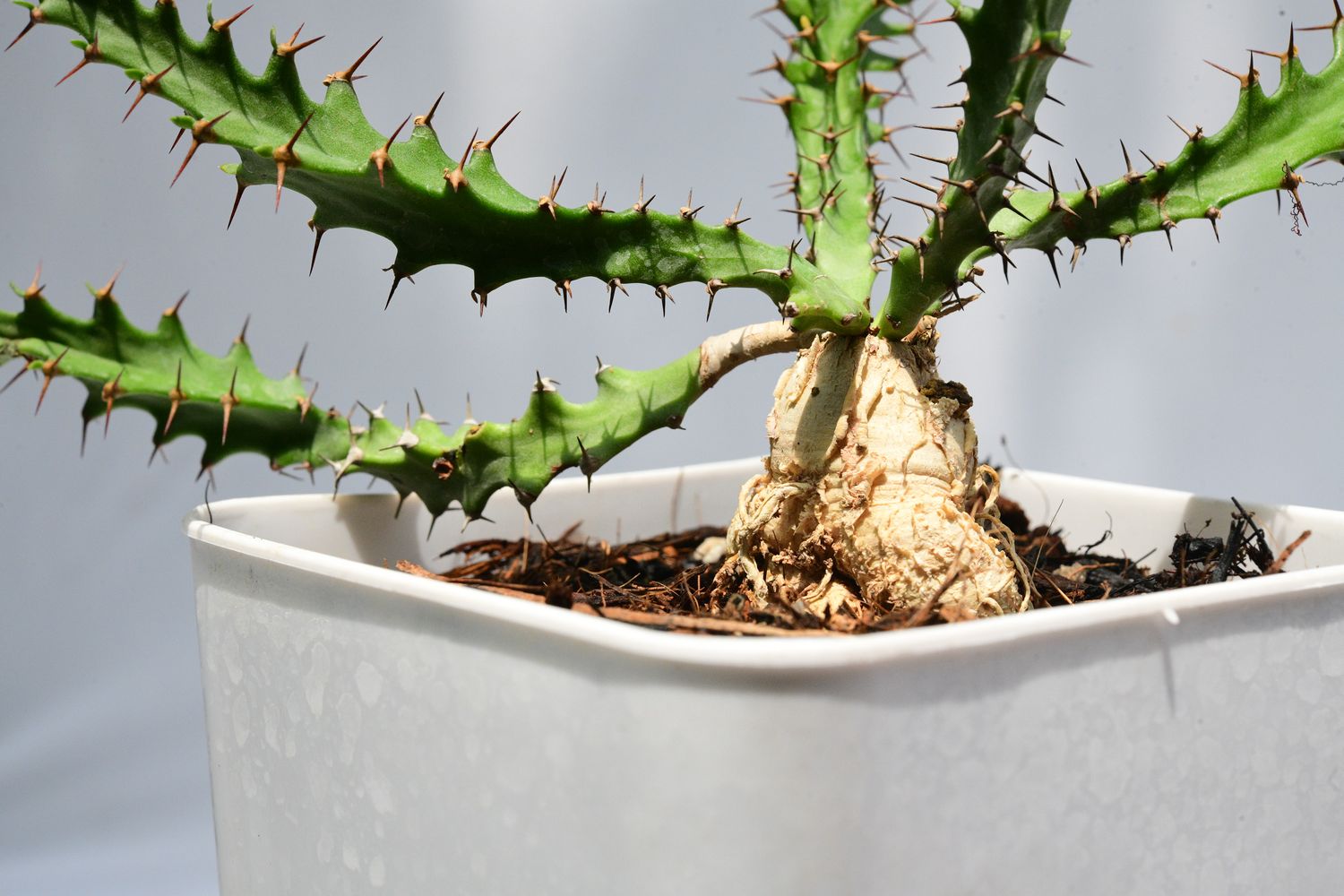
Euphorbia squarrosa - well settled plant in active growth. SEED GROWN WITH CAUDEX
Origin of Name:
The genus "Euphorbia" honors the ancient physician Euphorbus, who reputedly used the plant for medicinal purposes. The species name "squarrosa" is derived from Latin, meaning “scaly” or “rough,” likely referring to the plant's textured appearance or leaf arrangement.
Origin of Plant:
Euphorbia squarrosa is native to southern parts of Africa, where it typically grows in rocky hillsides and arid bushland. This region's harsh climate has shaped the plant's robust, succulent nature.
Short Description:
Euphorbia squarrosa is a distinctive succulent characterized by its clumping growth habit and rough, scaly surface. The cylindrical stems are adorned with small, spirally arranged leaves that fall off to leave a textured surface. The plant produces tiny, inconspicuous yellow-green cyathia, which are grouped together and offer a subtle ornamental appeal.
Conservation Status:
Euphorbia squarrosa currently does not face any major threats in its natural habitat, although environmental changes can impact its local populations. Our plants are propagated in nurseries to support sustainable cultivation practices without impacting wild populations.
Care Instructions:
This species requires a well-draining soil mix, ideally one suited for cacti and succulents. Euphorbia squarrosa thrives in a location with bright, indirect light but can tolerate some direct sunlight. Watering should be done sparingly; allow the soil to dry out completely before re-watering, especially during its dormant winter period. Fertilize occasionally with a balanced fertilizer during the active growing season. Use caution when handling, as its sap is toxic and can cause skin irritation. Pruning may be necessary to maintain the desired shape and remove any dead or damaged stems.