

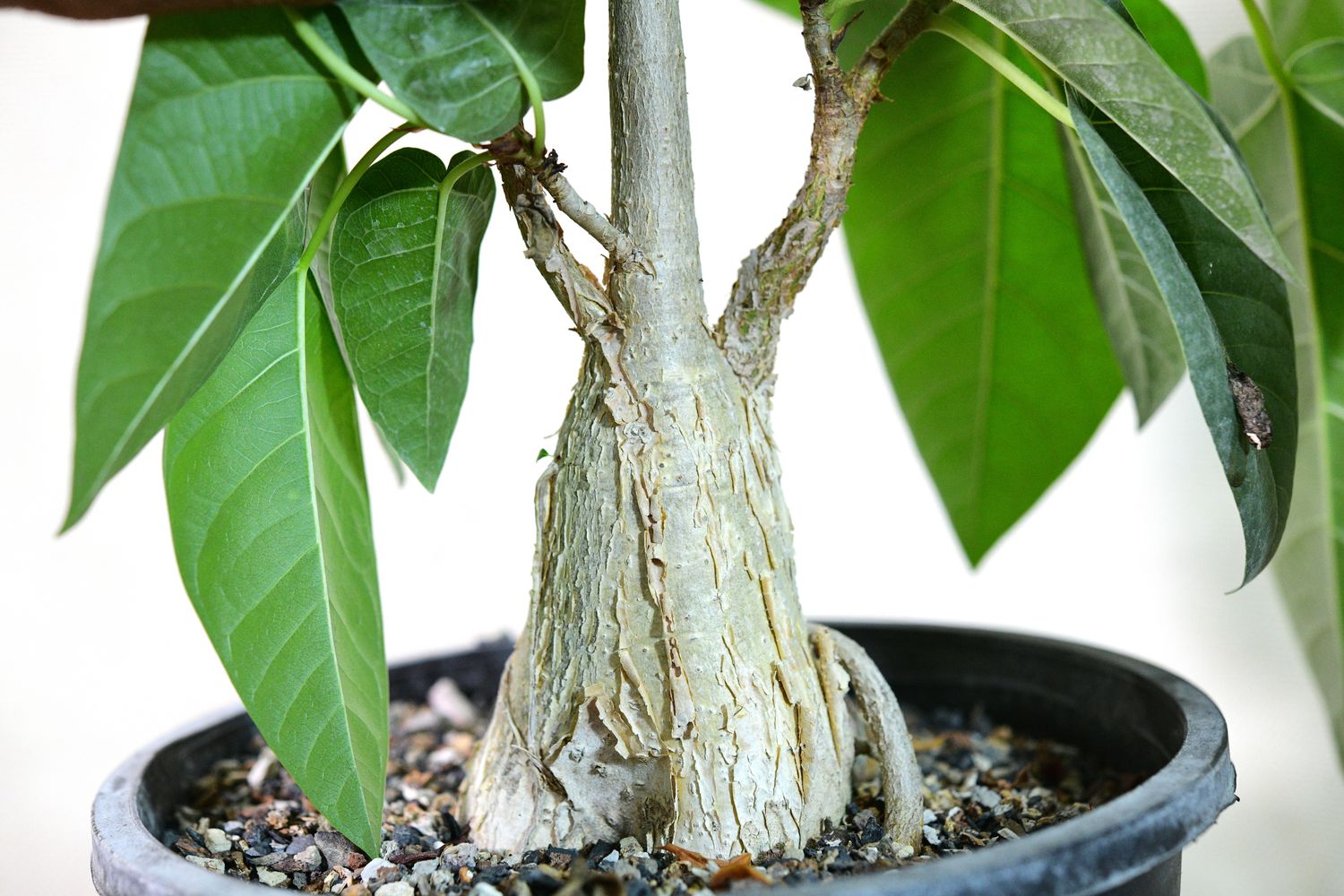
Ficus palmerii
Product Details
The Sculptural Titan: Ficus palmerii
A rare, rock-splitting masterpiece for collectors seeking a natural bonsai aesthetic.
- Origin & History of Name: The genus name Ficus is the classical Latin term for the edible fig. This specific species was named in 1887 by botanist Sereno Watson to honor Edward Palmer, an prolific British-American self-taught botanist and archaeologist. Palmer collected the type specimen in Baja California during his extensive mid-to-late 19th-century expeditions across the North American Southwest.
- Morphology: Known as the "Rock Fig," this species is famous for its caudiciform base—an enlarged, succulent trunk that stores water.
Its epidermis (outer skin) is a striking creamy white to yellowish-tan, which often exfoliates in thin, papery flakes. The leaves are broadly ovate and leathery, featuring prominent venation where the central midrib and lateral veins provide a structural, ribbed appearance. - Habitat & Origin: This is a wild species native to the arid, rocky regions of Baja California and Sonora, Mexico.
In its natural habitat, it is a lithophyte, often found growing directly out of vertical cliff faces. Our specimens are ethically propagated via seeds or cuttings to ensure the preservation of wild desert populations. - Cultivation Profile (Indian Context):
- Substrate: Use a strictly mineral-based mix. A ratio of 70% inorganic material (pumice, perlite, or crushed brick) and 30% organic matter (coco-peat or compost) is ideal to prevent root rot during monsoon.
- Light: Requires full sun to bright indirect light. In the Indian subcontinent, it thrives on south-facing balconies but may need 25% shade cloth during the peak heat of May and June.
- Water/Dormancy: Water deeply when the substrate is completely dry. During the high-humidity monsoon, reduce frequency. In winter, the plant may drop leaves and enter dormancy; keep it nearly dry during this period to mimic its native desert cycle.
- Scientific/Historical Anecdote: Ficus palmerii is renowned for its lithophytic strength. In the wild, its roots produce a specialized acid that allows them to dissolve limestone and minerals, literally "eating" into rock crevices to anchor the tree. This evolutionary trait makes it one of the few trees capable of surviving on sheer, vertical canyon walls where no other competition can take root.