Miniature Mosaic: Gasteria bicolor caespitosa 'Variegata'
A highly collectible, clump-forming succulent distinguished by its rare, creamy-yellow variegation and compact, architectural growth habit.
Origin & History of Name: The genus name Gasteria was established by French physician Henri Auguste Duval in 1809, derived from the Greek word gaster (stomach or belly), referencing the unique, swollen base of the plant's curved flowers. The specific epithet bicolor refers to the two-tone coloration of the flowers (red and green), while caespitosa is Latin for "turf-like" or "tufted," describing its habit of growing in dense, low clusters.
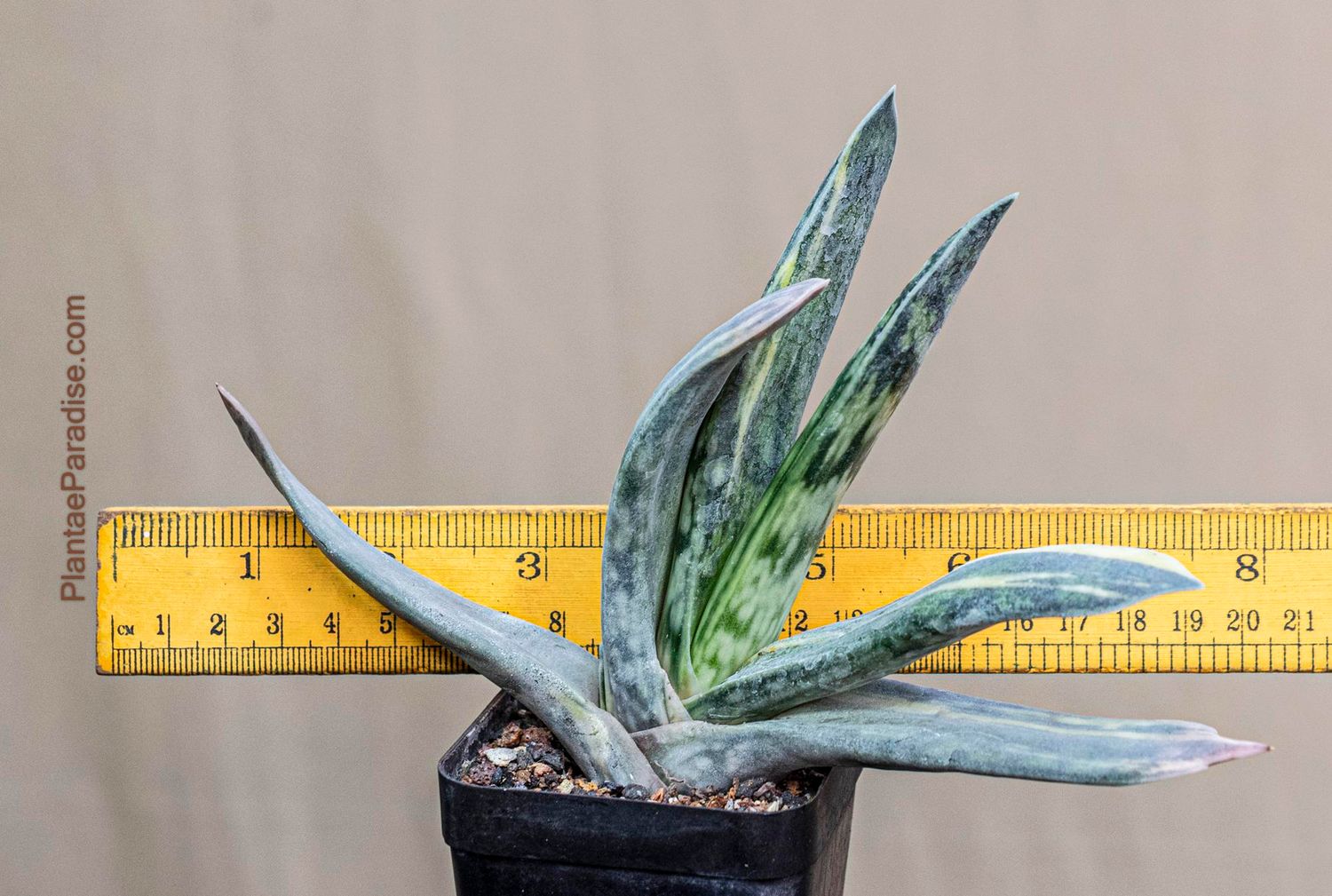
Morphology: This variegated cultivar exhibits fleshy, strap-shaped (ligulate) leaves arranged in a distichous (two-ranked) or spiraling rosette pattern. The epidermis is smooth yet firm, famously speckled with white tubercles (spots). The defining feature of this form is its chimeral variegation—longitudinal striations of yellow or cream lacking chlorophyll—contrasting sharply against the deep green leaf surface. As the name implies, it proliferates via axillary offsets, rapidly forming a dense mat.
Habitat & Origin: The botanical species Gasteria bicolor is native to the Eastern Cape of South Africa, typically found thriving in the dappled shade of thicket vegetation. However, this variegated form is an exclusively horticultural cultivar. It does not occur naturally in the wild and is sustainably propagated in nurseries through vegetative division to preserve the unstable genetic mutation.
Cultivation Profile:
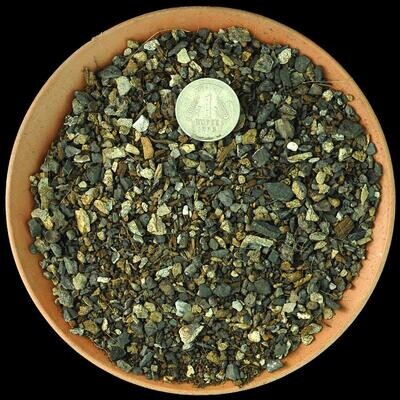
- Substrate: Requires a porous, well-draining medium (e.g., 50% pumice/perlite mixed with high-quality succulent soil).
- Light: Thrives in bright, indirect light or partial shade. Unlike many succulents, it is sensitive to direct midday sun which can scorch the variegated tissue.
- Water/Dormancy: Water thoroughly when the substrate is dry to the touch. Reduce frequency significantly during summer dormancy (in very hot climates) and winter.
Scientific/Historical Anecdote: Gasteria flowers are a prime example of evolutionary adaptation for ornithophily (bird pollination). Unlike their close relatives, the Haworthias (which are insect-pollinated), the pendulous, stomach-shaped reddish flowers of Gasteria are specifically designed to accommodate the curved beaks of South African sunbirds, who feed on the nectar while perched on the sturdy flower stalks.