

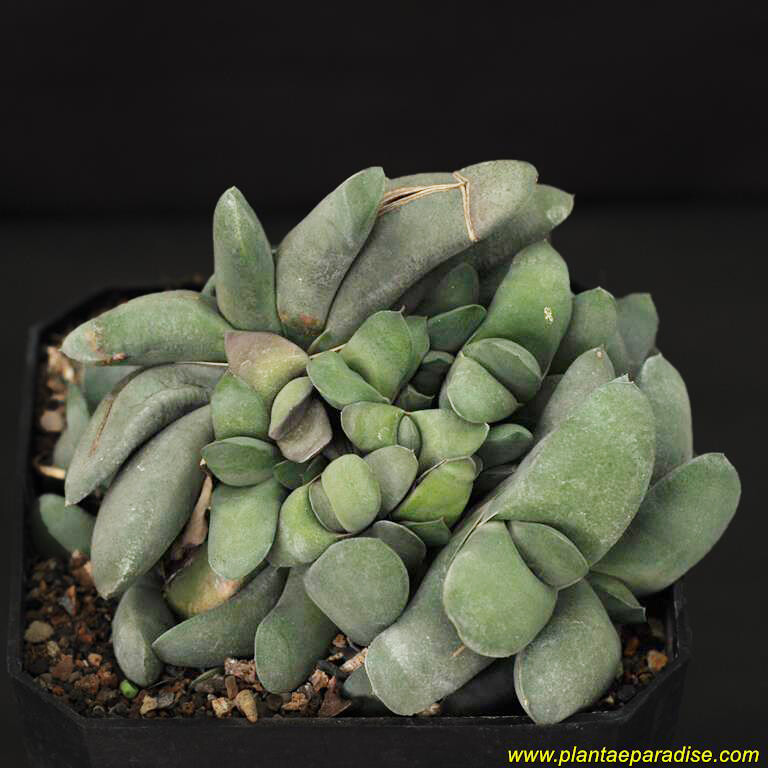
Gasteria Glomerata (Kouga Gasteria)
Product Details
Architectural Elegance: Gasteria Glomerata (Kouga Gasteria)
A rare South African gem prized for its compact, sculptural form and glaucous, stone-like texture.
- Origin & History of Name The genus name Gasteria is derived from the Greek word gaster, meaning "stomach," referencing the swollen, pot-bellied shape of the individual flowers.
The specific epithet glomerata is Latin for "clustered into a rounded head," accurately describing the plant's unique growth habit of forming dense, globose clumps. It was first formally described by botanist Ernst van Jaarsveld in 1991 after its discovery in the rugged Kouga River region. - Morphology Gasteria glomerata is a slow-growing succulent distinguished by its thick, "tongue-shaped" (linguate) leaves.
The epidermis features a distinct matte, blue-grey glaucous coating, which serves as a natural sunscreen. Unlike many other Gasteria, this species maintains a compact, distichous (two-ranked) leaf arrangement that eventually offsets into tight clusters. Its inflorescence produces curved, bicolored flowers that are reddish-pink at the base and green at the tips. - Habitat & Origin This is a true wild species, not a cultivar. It is endemic to the Kouga River Dam in the Eastern Cape of South Africa.
In its native habitat, it grows on vertical, shady quartzitic sandstone cliffs. Our specimens are nursery-propagated via offsets or seeds to ensure the protection of wild populations and ecological sustainability. - Cultivation Profile (Indian Context)
- Substrate: Requires a highly porous, mineral-based mix.
Use a ratio of 70% inorganic grit (pumice, perlite, or fine expanded clay) to 30% organic matter to prevent root rot during high-humidity monsoons. - Light: Thrives in bright, indirect light. In India, it should be protected from the harsh midday summer sun (12 PM – 4 PM), which can scorch the epidermis; an east-facing balcony or a shaded green net is ideal.
- Water/Dormancy: Water deeply only when the substrate is completely dry. In most parts of India, growth slows during the peak of summer and winter. Reduce watering significantly during the monsoon to account for high atmospheric moisture.
- Substrate: Requires a highly porous, mineral-based mix.
- Scientific/Historical Anecdote For decades, this species remained undiscovered because it grows exclusively on near-vertical cliff faces accessible only by specialized climbing or boat. When Ernst van Jaarsveld first encountered it, he noted its remarkable "neotenic" quality—it retains its juvenile, two-ranked leaf form throughout its life, whereas most other Gasteria species eventually transition into a spiral rosette as they mature.
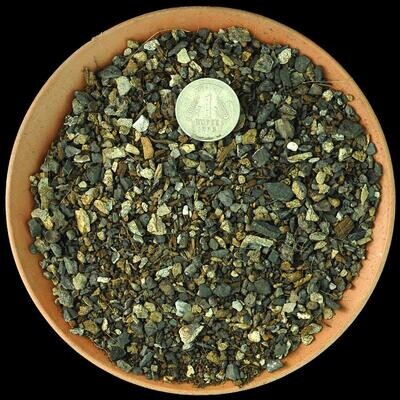
Cactus Seed Planting Mix
Cactus Seed Planting Mix
Sterile, Fine-Grain Media for Cactus & Succulent Seeds
SKU MNS005
₹74.85
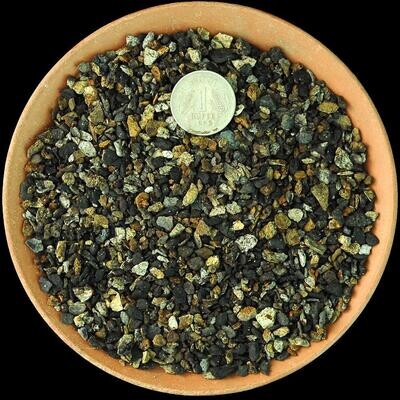
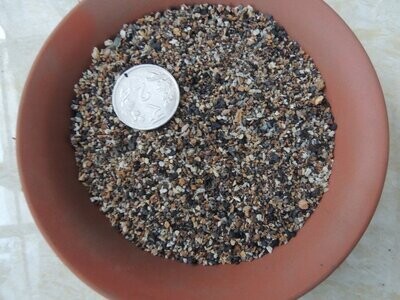
Cactus & Succulent Planting Mix COARSE (aka Cactus Soil Mix or Succulent Soil Mix)
Cactus & Succulent Planting Mix COARSE (aka Cactus Soil Mix or Succulent Soil Mix)
Washed, Free-Draining Mineral Mix for Cactus & Succulents
SKU MNS003
₹44.85
New
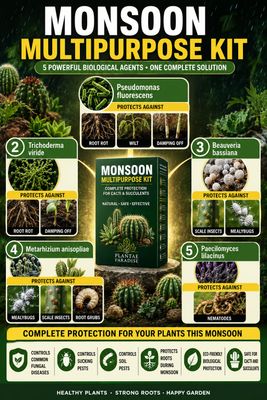
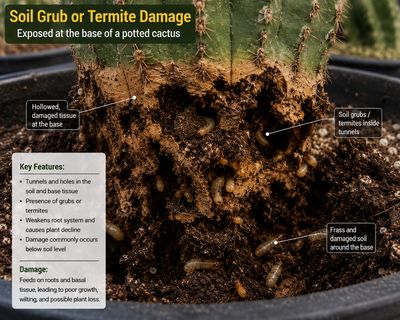
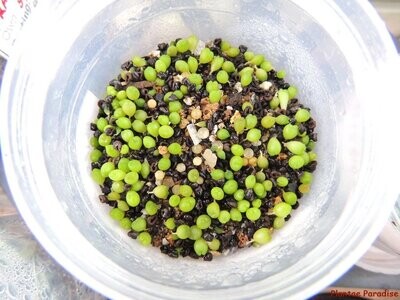
Monsoon Guardian Kit (5 in 1)
Monsoon Guardian Kit (5 in 1)
Complete 5-in-1 biological protection kit for cacti & succulents
SKU MNS024
₹850.00