

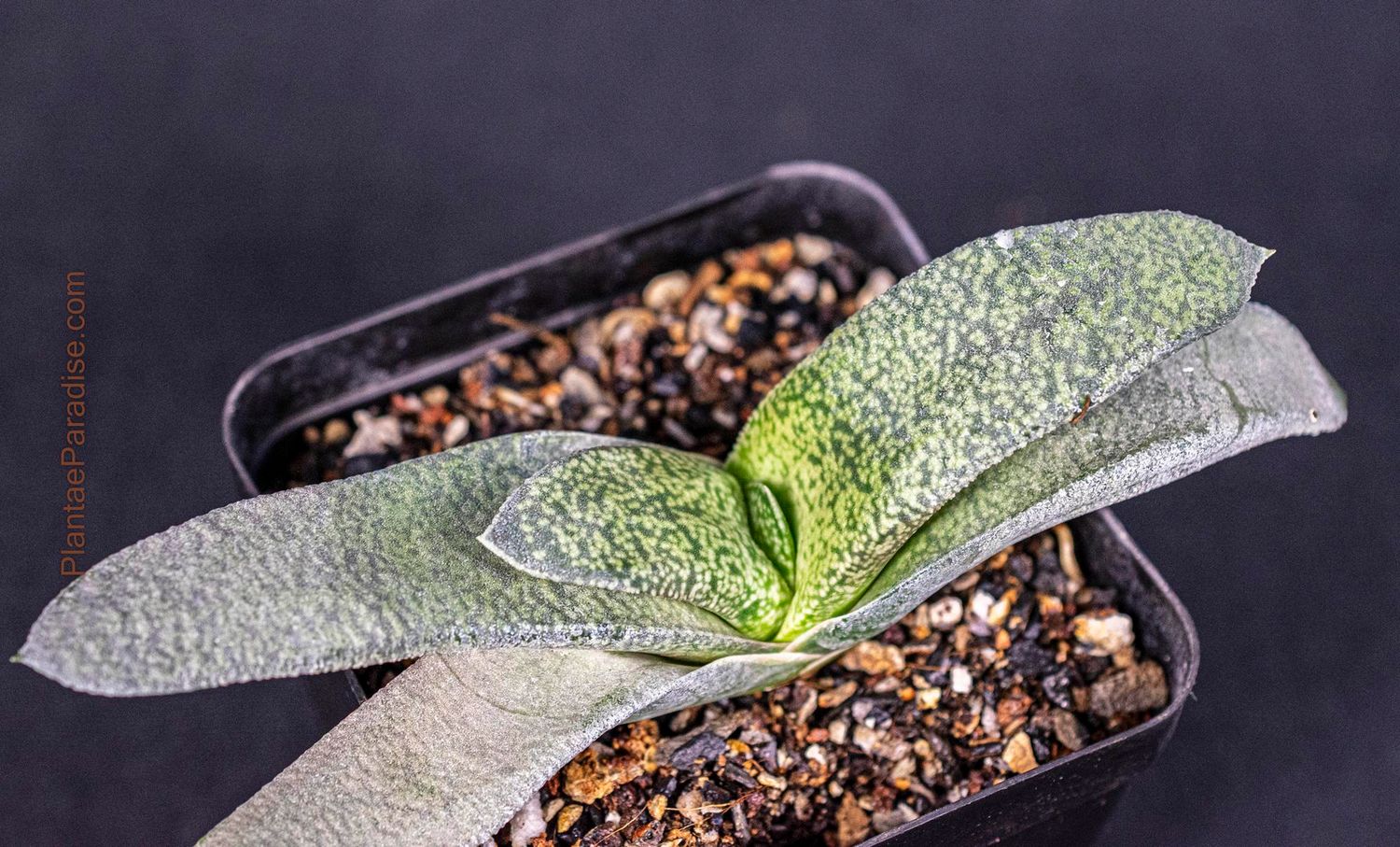
Gasteria nitida var. armstrongii (Pointed Leaf Clone)
Product Details
Architectural Elegance: Gasteria nitida var. armstrongii (Pointed Leaf Clone)
A connoisseur’s treasure, this rare clone features the iconic "tongue-leaf" geometry refined into sharp, sculptural points.
- Origin & History of Name The genus name Gasteria is derived from the Greek gaster, meaning "stomach," referring to the swollen, pouch-like base of the flowers.
The variety is named in honor of William Armstrong, a plant collector who first brought the species to the attention of botanists in the early 20th century. This specific "Pointed Leaf Clone" is a horticultural selection distinguished from the typical rounded-leaf form of G. armstrongii to highlight its more aggressive, lanceolate leaf tips. - Morphology This slow-growing succulent is characterized by a distichous (two-ranked) growth habit that eventually forms a rosette.
Its epidermis is thick, leathery, and dark glaucous green, often appearing nearly black under high light. The leaf surface is covered in fine, tubercular bumps, providing a sandpaper-like texture. Unlike the standard variety, this clone develops elongated, acute leaf apexes (pointed tips) rather than the blunt, truncated ends typical of the species. - Habitat & Origin This is a selected clone of a wild species native to the Eastern Cape Province of South Africa. In nature, G. nitida var. armstrongii is restricted to a very small range near the Gamtoos River.
This particular clone is produced via sustainable nursery propagation (offsets or leaf cuttings) to prevent the poaching of wild populations, which are currently threatened in their native habitat. - Cultivation Profile
- Substrate: Use a strictly mineral-based mix. A ratio of 70% inorganic material (pumice, perlite, or crushed leca) to 30% organic matter (cocopeat) is ideal for the Indian climate to prevent root rot.
- Light: Bright indirect light. In India, provide 40–50% green net shading during peak summer. Morning sun is beneficial, but harsh afternoon sun will scorch the epidermis.
- Water/Dormancy: Follow a "soak and dry" method. Water thoroughly when the substrate is bone dry. During the peak monsoon humidity and the high heat of May/June, reduce watering significantly as the plant enters a semi-dormant state.
5. Scientific/Historical Anecdote For decades, Gasteria armstrongii was classified as a distinct species. However, DNA sequencing and intermediate forms found in the wild led botanists to reclassify it as a variety of Gasteria nitida. Interestingly, in its native habitat, the plant grows almost entirely buried in the soil with only the leaf tips exposed, a survival strategy called "cryptic growth" to hide from herbivores and survive intense heat.

New
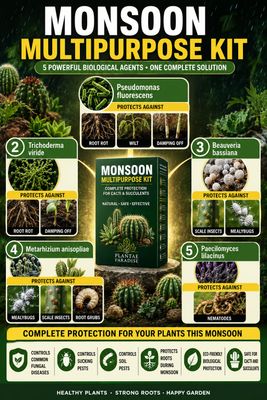
Monsoon Guardian Kit (5 in 1)
Monsoon Guardian Kit (5 in 1)
Complete 5-in-1 biological protection kit for cacti & succulents
SKU MNS024
₹850.00

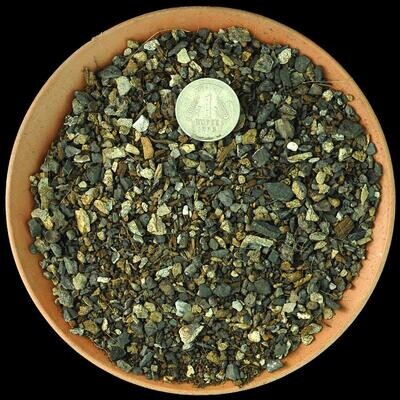
Cactus Seed Planting Mix
Cactus Seed Planting Mix
Sterile, Fine-Grain Media for Cactus & Succulent Seeds
SKU MNS005
₹74.85