Gymnocalycium gibbosum
1. Origin of Name:
The name "Gymnocalycium" derives from Greek, where "gymno" means "naked" and "calycium" refers to the "calyx", indicating the plant’s distinctive feature of having a smooth, exposed flower cup without a prominent outer skin. The species "gibbosum" comes from Latin, meaning "humped" or "swollen", describing the plant's characteristic, rounded, and tuberculated body. This species was first scientifically described by the German botanist Alfred Cayzer in 1936, who was renowned for his work on South American cacti. The name reflects both its unique structure and the botanical significance of its flower arrangement.
2. Origin of Plant:
Gymnocalycium gibbosum is native to northern Argentina and southern Bolivia, thriving in semi-arid regions characterized by rocky soils and dry conditions. It was first collected during early 20th-century expeditions focused on South American cacti, specifically in the Patagonia region. Its adaptation to rocky slopes and open plains makes it a resilient species well-suited to xeriscaping and cactus collections, showcasing the diverse flora of the South American pampas and highlands.
3. Description:
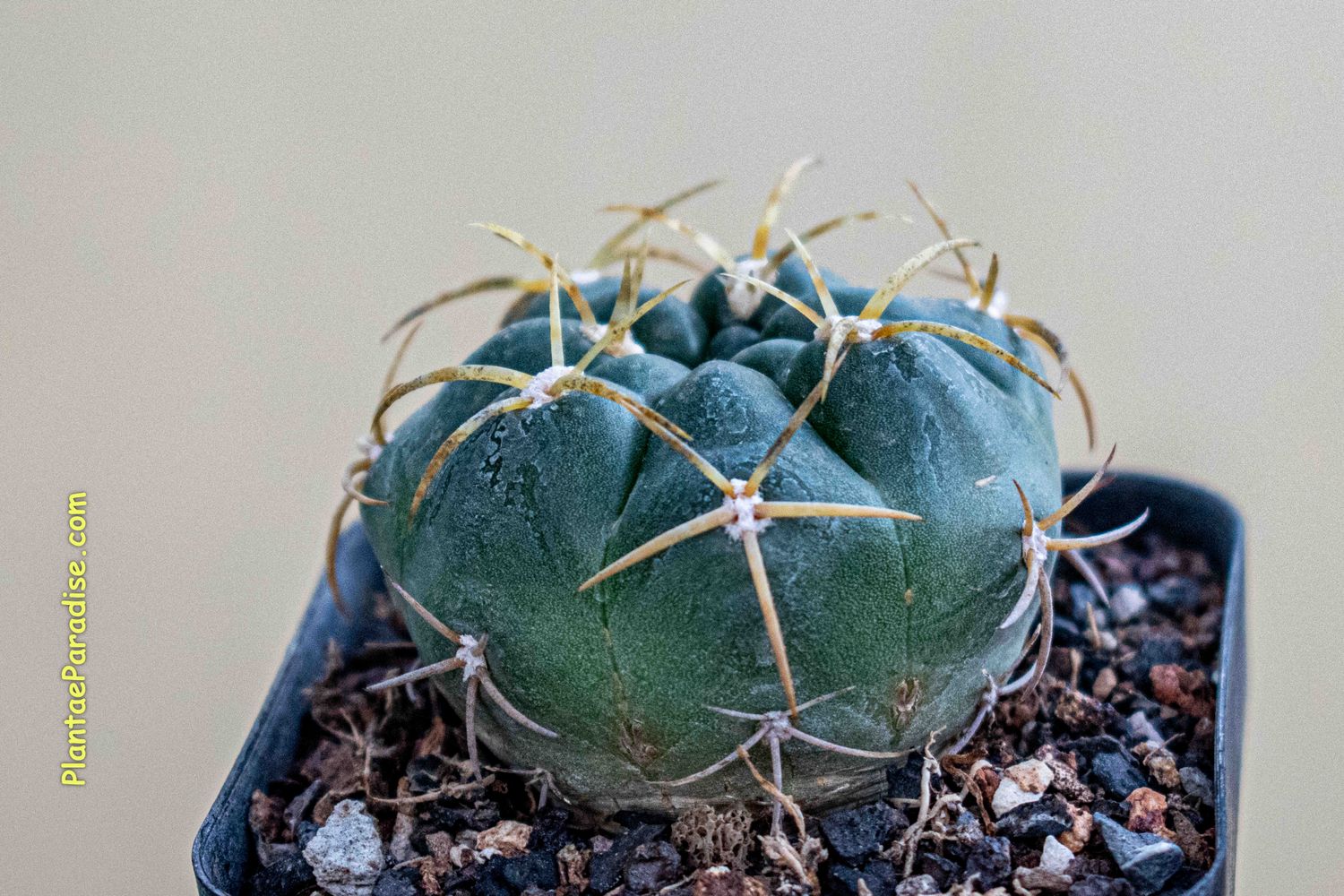
This captivating cactus is a globular to slightly cylindrical plant, typically reaching 4-8 inches in diameter and about 4 inches tall. It features a ribbed body with pronounced tubercles that give it a distinctive, warty texture. The coloration ranges from bluish-green to grayish-green, often with a subtle gloss. The plant produces show-stopping, large, funnel-shaped flowers that emerge in spring, showcasing vivid pink to reddish blooms with a darker throat—an exquisite contrast that draws the eye. The flowers can reach up to 2 inches across and often appear prominently atop the plant's body, creating a striking aesthetic. Its ornamental appeal is enhanced by its interesting tubercled form and vibrant flowers, making it an adored species among cactus enthusiasts.
4. Conservation Status:
Gymnocalycium gibbosum is currently not listed as endangered, but habitat loss and over-collection of wild specimens have made it vulnerable in its native range. Responsible cultivation and propagation in nurseries have helped improve its conservation outlook. Supporting sustainable practices is encouraged to preserve natural populations and their ecological habitats.
5. Care:
- Watering: Water sparingly, allowing the soil to dry out completely between waterings. Reduce watering during the plant’s winter dormancy. Overwatering can lead to root rot.
- Soil: Use a well-draining cactus or succulent mix enriched with coarse sand or perlite; rocky or mineral-rich soil best mimics its natural environment.
- Light: Requires full sun for optimal growth and flowering; at least 6 hours of direct sunlight daily is ideal.
- Temperature: Prefers warm conditions between 60°F and 85°F (16°C to 29°C). Protect from frost and especially cold drafts, as it is not frost-hardy.
- Additional Tips: Handle with care as the spines can be sharp. Regular pruning of offsets encourages bushier growth and flower production.