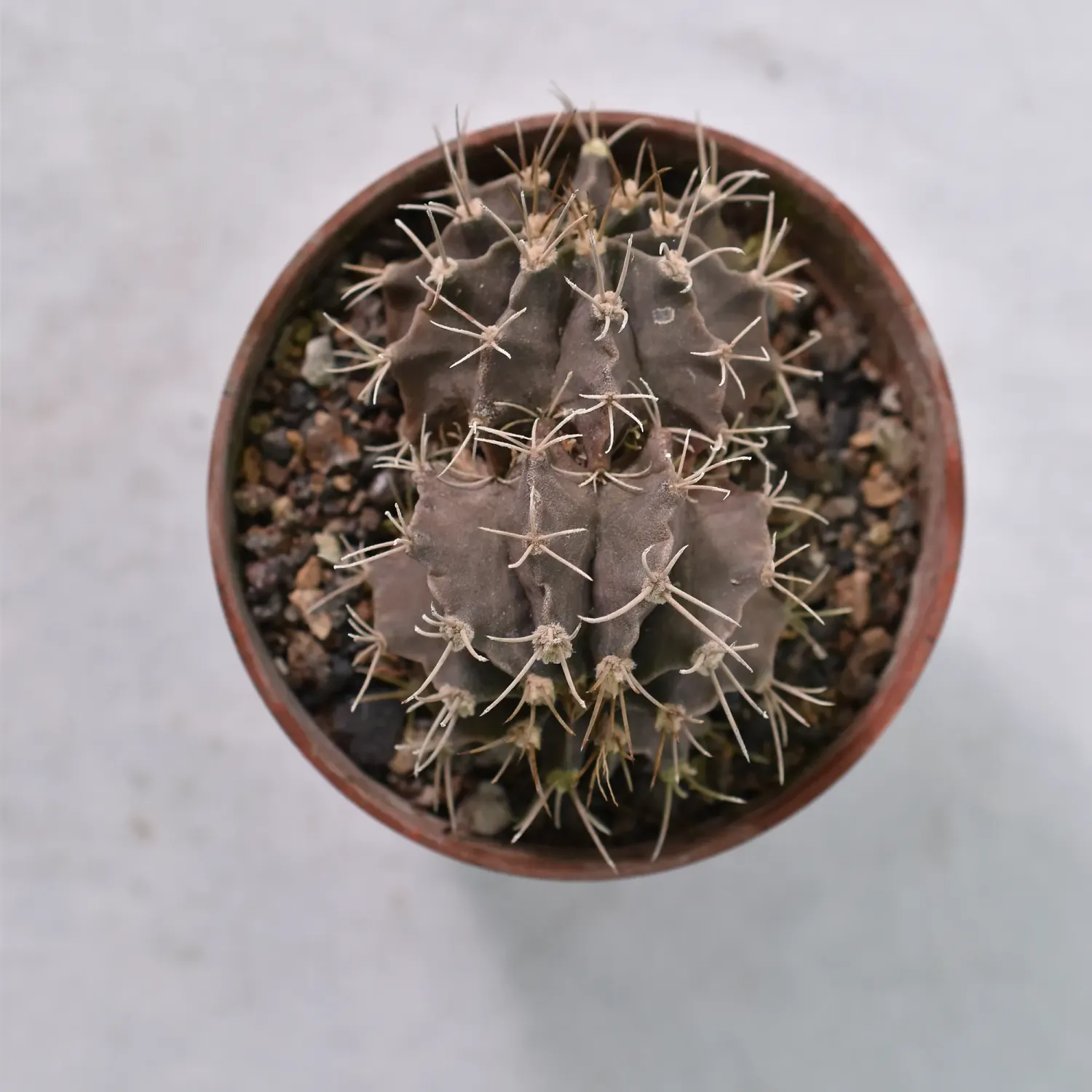
Gymnocalycium Mihanovichii Var Friedrichii
Product Details
Neon Splendor: Gymnocalycium mihanovichii var. friedrichii
A striking collector’s gem prized for its intense purplish-red epidermis and architectural ribbing.
- Origin & History of Name: The genus name Gymnocalycium is derived from the Greek gymnos (naked) and kalyx (bud), referring to the flower buds that lack hair or spines.
- Morphology: This solitary globose cactus is distinguished by its prominent costae (ribs) that feature sharp, transverse bands. Unlike many cacti, its epidermis contains high levels of anthocyanins, giving it a range of colors from brownish-red to deep burgundy. The areoles are spaced along the ridges, sprouting slightly curved, greyish spines that contrast sharply against the dark body.
- Habitat & Origin: This is a wild variety native to the Chaco region of Paraguay. While the famous "Moon Cactus" (the bright red or yellow grafts) are lab-bred mutants, the var. friedrichii offered here is a naturally occurring form. Our specimens are nursery-propagated to ensure the protection of wild populations in South America.
- Cultivation Profile:
- Substrate: Use a strictly mineral-based mix (70% grit/pumice/perlite, 30% organic matter). Avoid standard garden soil which retains too much moisture in humid Indian climates.
- Light: Thrives in bright, indirect light.
- Water/Dormancy: Water thoroughly only when the medium is bone-dry. During the monsoon, withhold water entirely if humidity is high. In winter, enter a dry dormancy period to encourage spring flowering.
- Scientific/Historical Anecdote: The friedrichii variety is the biological "parent" of the world-famous colorful grafted Gymnocalycium. In 1941, Japanese cultivators discovered a few red mutant seedlings among a batch of friedrichii seeds. Because these mutants lacked chlorophyll, they could only survive by being grafted onto a green host plant (Hylocereus), sparking a global horticultural phenomenon.
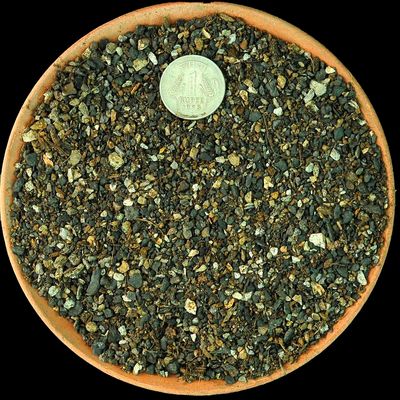
Cactus & Succulent Planting Mix FINE (aka Cactus Soil Mix or Succulent Soil Mix)
Cactus & Succulent Planting Mix FINE (aka Cactus Soil Mix or Succulent Soil Mix)
Fine-Grain Potting Mix for Cactus & Succulent Roots
SKU MNS001
₹39.85
New

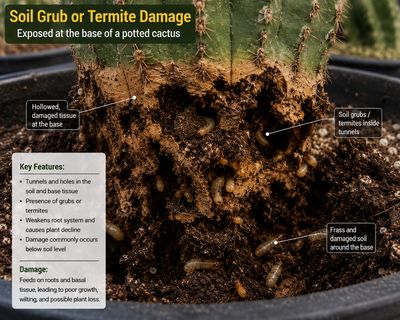
Monsoon Guardian Kit (5 in 1)
Monsoon Guardian Kit (5 in 1)
Complete 5-in-1 biological protection kit for cacti & succulents
SKU MNS024
₹850.00
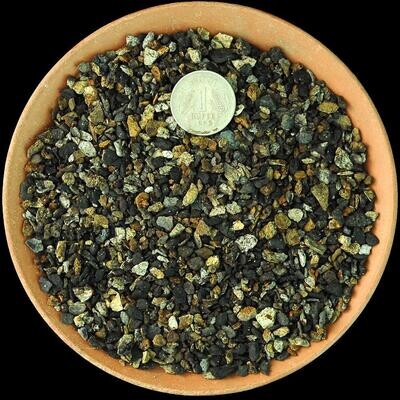
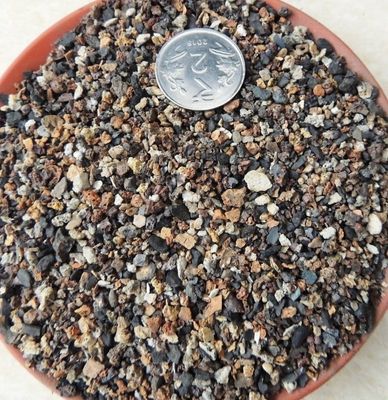
Cactus & Succulent Planting Mix COARSE (aka Cactus Soil Mix or Succulent Soil Mix)
Cactus & Succulent Planting Mix COARSE (aka Cactus Soil Mix or Succulent Soil Mix)
Washed, Free-Draining Mineral Mix for Cactus & Succulents
SKU MNS003
₹44.85