

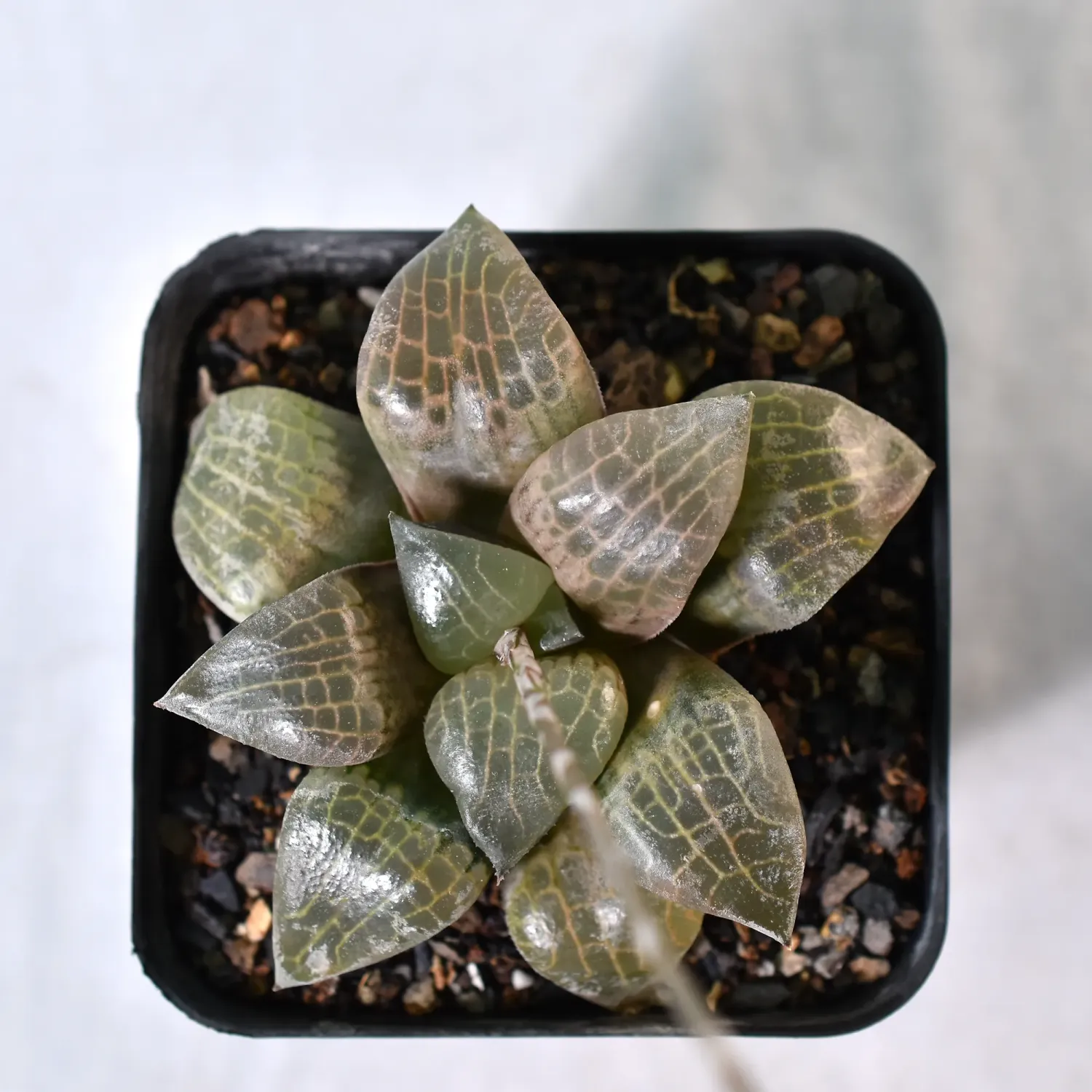
Haworthia bayerii hybrid
Product Details
Jewel of the Karoo: Haworthia bayerii Hybrid
A masterwork of geometric perfection and crystalline clarity, this hybrid represents the pinnacle of succulent "window" aesthetics.
- Origin & History of Name: The species name honors Bruce Bayer, a prolific South African botanist and founder of the Karoo Desert National Botanical Garden, who dedicated his life to the taxonomy of the genus. The Latin suffix -ii denotes its dedication to him. As a "hybrid," this plant is the result of selective cross-breeding, often involving H. bayerii (formerly H. emelyae var. comptoniana) to enhance its signature leaf opacity and reticulated patterns.
- Morphology: This plant features a compact rosette of thick, truncate leaves. Its most striking feature is the epidermis on the leaf face, which acts as a translucent "window" (fenestration). Light passes through these windows to reach internal photosynthetic tissues. The surface often displays reticulation—a network of silver or reddish veins—and a "matte" texture known as scabrid skin, which distinguishes it from its glossier cousins.
- Habitat & Origin: While the parent species H. bayerii is native to the Little Karoo region of South Africa, this specific plant is a cultivar. It was produced in a controlled greenhouse environment through hand-pollination. This nursery-bred origin ensures the plant is sustainable, as it prevents the poaching of endangered wild populations from their specialized rocky niches.
- Cultivation Profile:
- Substrate: Use a strictly mineral-based mix (70% inorganic). In the Indian climate, a blend of pumice, lava rock, and perlite with only 20-30% organic compost prevents root rot during humid monsoons.
- Light: Requires bright, indirect light. In the Indian subcontinent, provide 40-60% green shade net protection. Direct midday sun in April or May will scorch the epidermis and cause permanent scarring.
- Water & Dormancy: Water thoroughly when the substrate is bone-dry. In India, these plants often enter a semi-dormancy during the peak summer heat (May–June) and the cold of January; reduce watering significantly during these periods to avoid fungal issues.
- Scientific/Historical Anecdote: Haworthia were once classified within the same genus as Aloe due to their similar flowering structures. However, in the late 20th century, phylogenetic testing revealed they are genetically distinct. Unlike Aloes, which use bright flowers to attract birds, Haworthia evolved small, white, inconspicuous flowers, suggesting a specialized relationship with specific insect pollinators in the scrublands of the Cape Floristic Region.
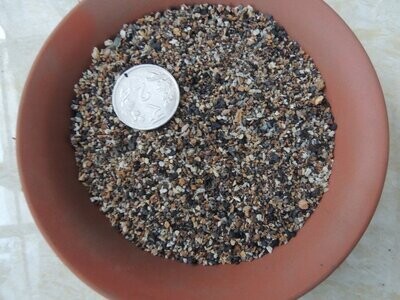
Cactus Seed Planting Mix
Cactus Seed Planting Mix
Sterile, Fine-Grain Media for Cactus & Succulent Seeds
SKU MNS005
₹70.51

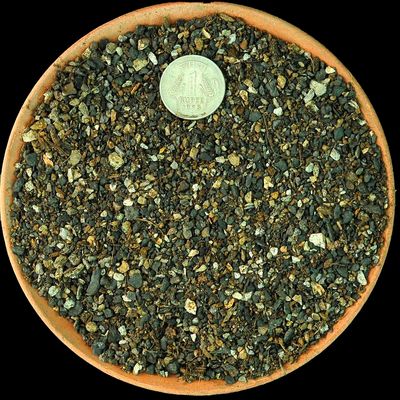
Cactus & Succulent Planting Mix FINE (aka Cactus Soil Mix or Succulent Soil Mix)
Cactus & Succulent Planting Mix FINE (aka Cactus Soil Mix or Succulent Soil Mix)
Fine-Grain Potting Mix for Cactus & Succulent Roots
SKU MNS001
₹35.51
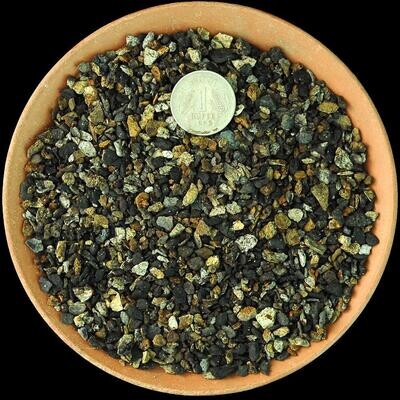
Cactus & Succulent Planting Mix COARSE (aka Cactus Soil Mix or Succulent Soil Mix)
Cactus & Succulent Planting Mix COARSE (aka Cactus Soil Mix or Succulent Soil Mix)
Washed, Free-Draining Mineral Mix for Cactus & Succulents
SKU MNS003
₹40.51