

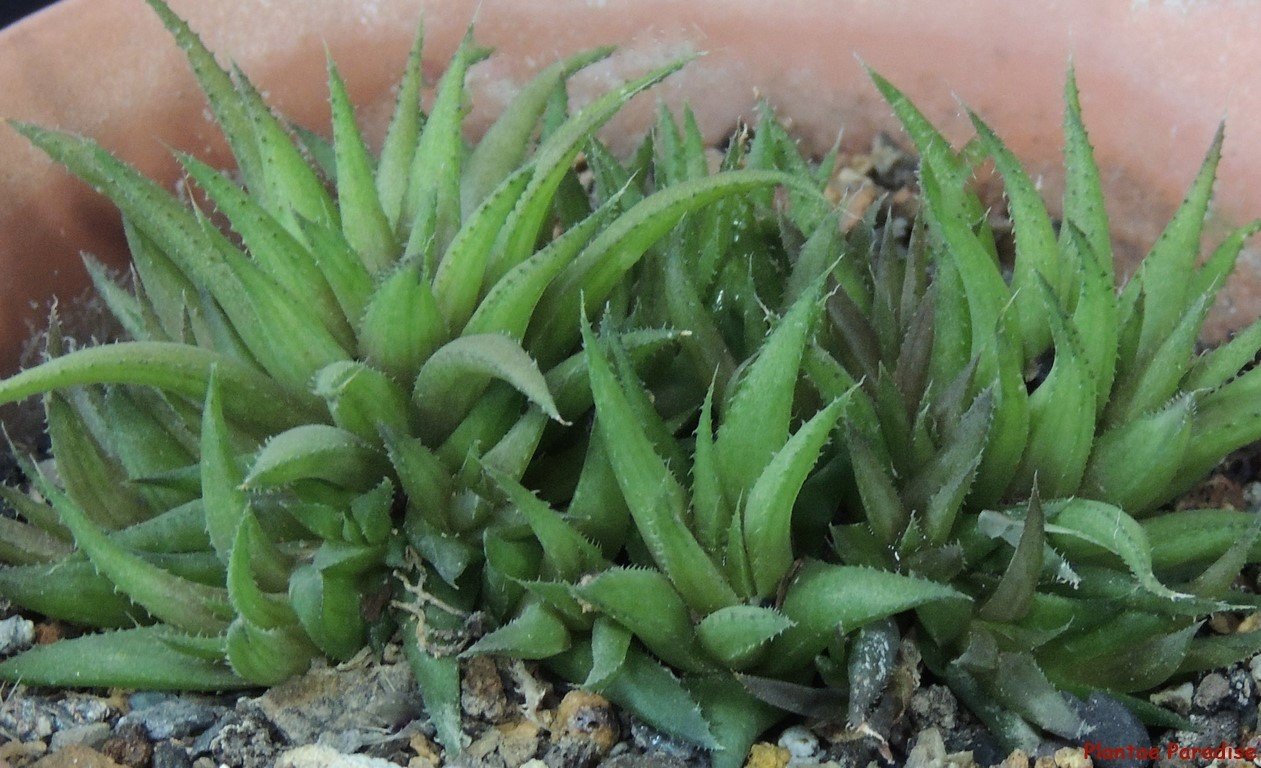
Haworthia chloracantha v. denticulifera
Product Details
Haworthia chloracantha var. denticulifera — Sculpted Green Haworthia with Tooth‑Edge Leaves; architectural, low‑maintenance, and perfect for minimalist pots or rock gardens.
- Origin of Name
- Etymology: The genus name Haworthia honors Adrian Hardy Haworth (1767–1833), an English botanist and entomologist. The species epithet chloracantha is from Greek/Latin roots: “chloro-” (chloros) meaning green and “-acantha” (akantha) meaning thorn or spine — together suggesting a green, spiny plant. The varietal name denticulifera derives from Latin denticulus (small tooth) + -fera (bearing), meaning “bearing small teeth,” which describes the fine tooth‑like marginal projections on the leaves.
- Naming history & notes: Haworthia chloracantha was described from South African material and has several recognized varieties reflecting differences in leaf shape, tuberculation, and marginal dentition. Var. denticulifera highlights the distinctive toothed leaf margins and is used in horticulture to denote clones or populations with this trait. As with many Haworthia taxa, historical horticultural names and regional variants exist; modern taxonomic treatments sometimes adjust ranks, but varietal names remain useful for growers.
- Origin of Plant
- Natural habitat & geography: Native to South Africa (primarily the Eastern Cape and nearby regions), H. chloracantha grows on shale and rocky outcrops, in crevices and thin soils where drainage is excellent. Varietal forms reflect microhabitat adaptations — leaf thickness, tubercle development, and marginal teeth can vary with local exposure, soil, and moisture.
- Discovery history: Collected by botanists and plant enthusiasts during 19th–20th century surveys of South African flora, distinctive local variants like denticulifera were noted, propagated, and circulated among specialist growers and nurseries.
- Description
- Habit & size: A compact, clumping succulent forming rosettes typically 2–6 inches (5–15 cm) across depending on clone and age. It offsets to form attractive clusters over time.
- Leaves & texture: Leaves are fleshy, somewhat elongated to triangular, and arranged in neat rosettes. Var. denticulifera is characterized by fine denticulate (tooth‑like) projections along the leaf margins; these small teeth give the plant a serrated silhouette when viewed from the side. Leaf surfaces may be smooth to lightly tubercled, with color ranging from fresh green to gray‑green; under strong light leaves may take on subtle reddish or brownish flushes.
- Flowers: Produces slender flower stalks with small tubular white to pale pink flowers, usually in late winter to spring. Flowers are delicate; the foliage is the main ornamental feature.
- Ornamental traits: The refined serrated margins and calm green tones make this variety an elegant choice for minimalist displays, crevice plantings, rockeries, and mixed succulent bowls where subtle leaf detail is appreciated.
- Conservation Status
- Wild status: Many Haworthia species and varieties are not globally listed as critically endangered, but localized populations can be vulnerable due to habitat loss, land conversion, and over‑collection. Specific assessments for var. denticulifera depend on documented wild populations and local pressures.
- Conservation notes: Buy from reputable nurseries that propagate plants (offsets or tissue culture). Cultivation by growers and hobbyists reduces demand for wild collection; supporting habitat protection in South Africa aids long‑term conservation.
- Care
- Light: Bright, indirect light or morning sun. Avoid prolonged harsh afternoon sun which can scorch leaves. Moderate to bright filtered light enhances leaf form and subtle color tones.
- Water: Soak‑and‑dry watering: water thoroughly, then allow the potting mix to dry before watering again. Reduce watering in winter when growth slows. Overwatering increases risk of root rot.
- Soil & drainage: Use a fast‑draining cactus/succulent mix amended with coarse sand, pumice, or perlite (aim for ~50% mineral content). Excellent drainage and a shallow, gritty medium mimic its native crevice habitat.
- Temperature & humidity: Prefers 55–85°F (13–29°C). Protect from frost and sustained temperatures below ~40°F (4–5°C). Average indoor humidity is acceptable.
- Fertilizer & maintenance: Light feeding during the active growth period (spring–early fall) with a diluted balanced fertilizer monthly is adequate. Propagate by separating offsets when large enough; repot every 2–3 years if crowded.
- Pests & issues: Monitor for mealybugs and scale; maintain good airflow and allow drying periods between waterings to reduce pests and fungal problems.
- Anecdote / Historical Note Collectors value subtle regional differences in Haworthia—tiny traits like marginal teeth often signaled a distinct local population to early collectors and nurserymen. Varieties such as denticulifera remind growers of the close link between microhabitat and plant form: the small marginal teeth are a delicate adaptation visible only when plants are studied up close, a trait that made Haworthias favorites for Victorian cabinet displays and modern collector shelves alike.
New

Monsoon Guardian Kit (5 in 1)
Monsoon Guardian Kit (5 in 1)
Complete 5-in-1 biological protection kit for cacti & succulents
SKU MNS024
₹850.00


Cactus & Succulent Planting Mix COARSE (aka Cactus Soil Mix or Succulent Soil Mix)
Cactus & Succulent Planting Mix COARSE (aka Cactus Soil Mix or Succulent Soil Mix)
Washed, Free-Draining Mineral Mix for Cactus & Succulents
SKU MNS003
₹44.85


Cactus & Succulent Planting Mix FINE (aka Cactus Soil Mix or Succulent Soil Mix)
Cactus & Succulent Planting Mix FINE (aka Cactus Soil Mix or Succulent Soil Mix)
Fine-Grain Potting Mix for Cactus & Succulent Roots
SKU MNS001
₹39.85