

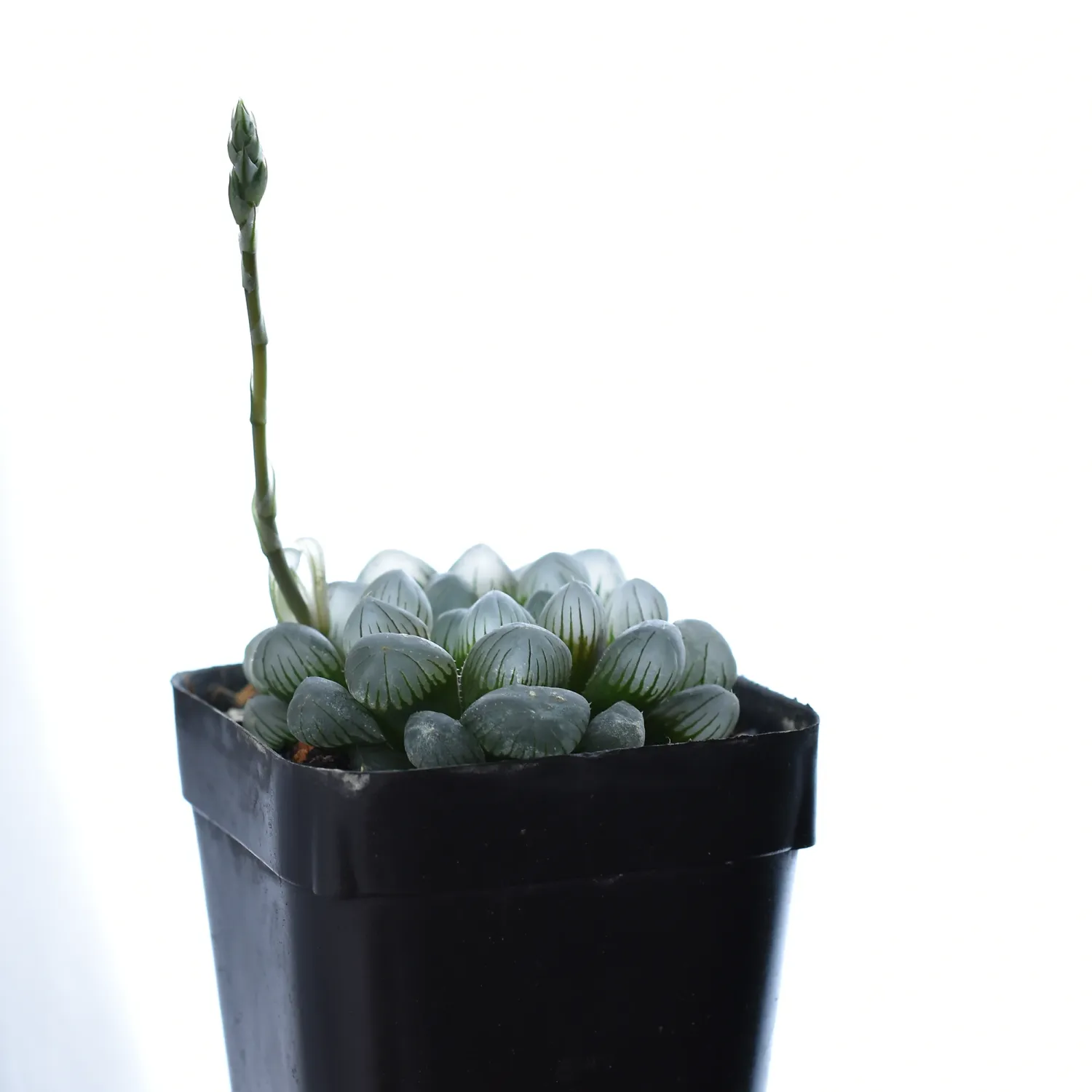
Haworthia cooperi var. truncata
Product Details
The Living Emerald: Haworthia cooperi var. truncata
A translucent masterpiece of nature, these globe-like windows offer a rare glimpse into the delicate artistry of succulent evolution.
- Origin & History of Name: The genus honors British botanist Adrian Hardy Haworth (1767–1833), a pioneer in succulent classification.
- Morphology: This succulent is distinguished by its compact, globular rosette of fleshy leaves.
- Habitat & Origin: This is a wild variety native to the Eastern Cape Province of South Africa. It typically grows wedged between rocks or buried in the soil with only the transparent tips exposed to the elements. Our specimens are ethically nursery-propagated via offset separation to ensure wild populations remain undisturbed and sustainable.
- Cultivation Profile:
- Substrate: Use a strictly mineral-based mix (70% inorganic). Combine pumice, crushed leca, or perlite with a small amount of coarse sand and minimal cocopeat. In the Indian climate, high drainage is non-negotiable to prevent root rot.
- Light: Bright, indirect light or filtered morning sun. In the Indian subcontinent, protect from harsh afternoon sun (12:00 PM – 4:00 PM), which can scorch the translucent windows.
- Water/Dormancy: Water thoroughly only when the substrate is completely bone-dry.
- Scientific/Historical Anecdote: Haworthia were once classified within the same family as Aloe and Lilies (Liliaceae) due to their similar flower structures. However, DNA sequencing eventually moved them to the Asphodelaceae family. Their "window" mechanism is so efficient that scientists have studied them as biological models for fiber optics, as the leaves effectively channel light to subterranean cells while filtering out harmful UV radiation.
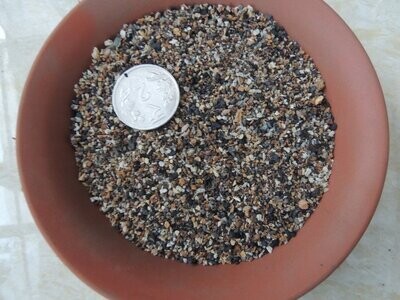
Cactus Seed Planting Mix
Cactus Seed Planting Mix
Sterile, Fine-Grain Media for Cactus & Succulent Seeds
SKU MNS005
₹66.35
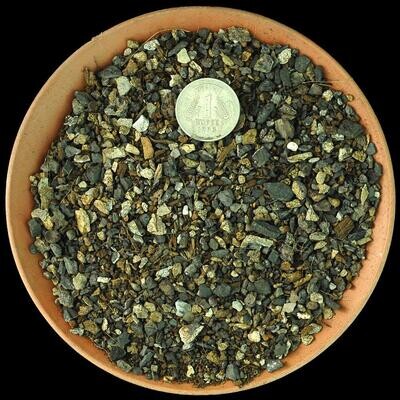
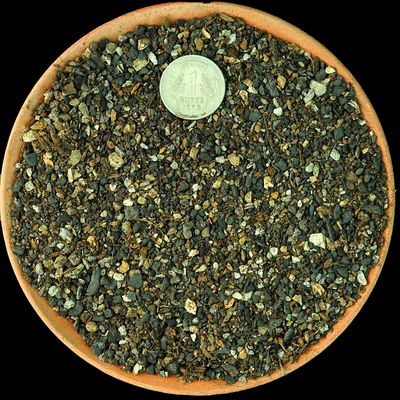
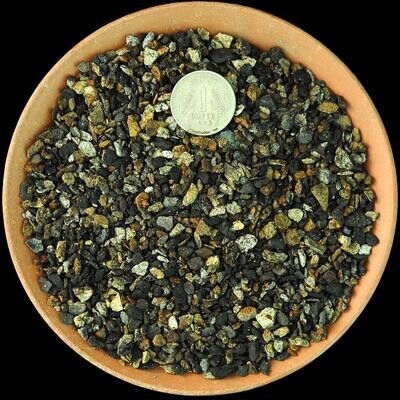
Cactus & Succulent Planting Mix COARSE (aka Cactus Soil Mix or Succulent Soil Mix)
Cactus & Succulent Planting Mix COARSE (aka Cactus Soil Mix or Succulent Soil Mix)
Washed, Free-Draining Mineral Mix for Cactus & Succulents
SKU MNS003
₹38.74