

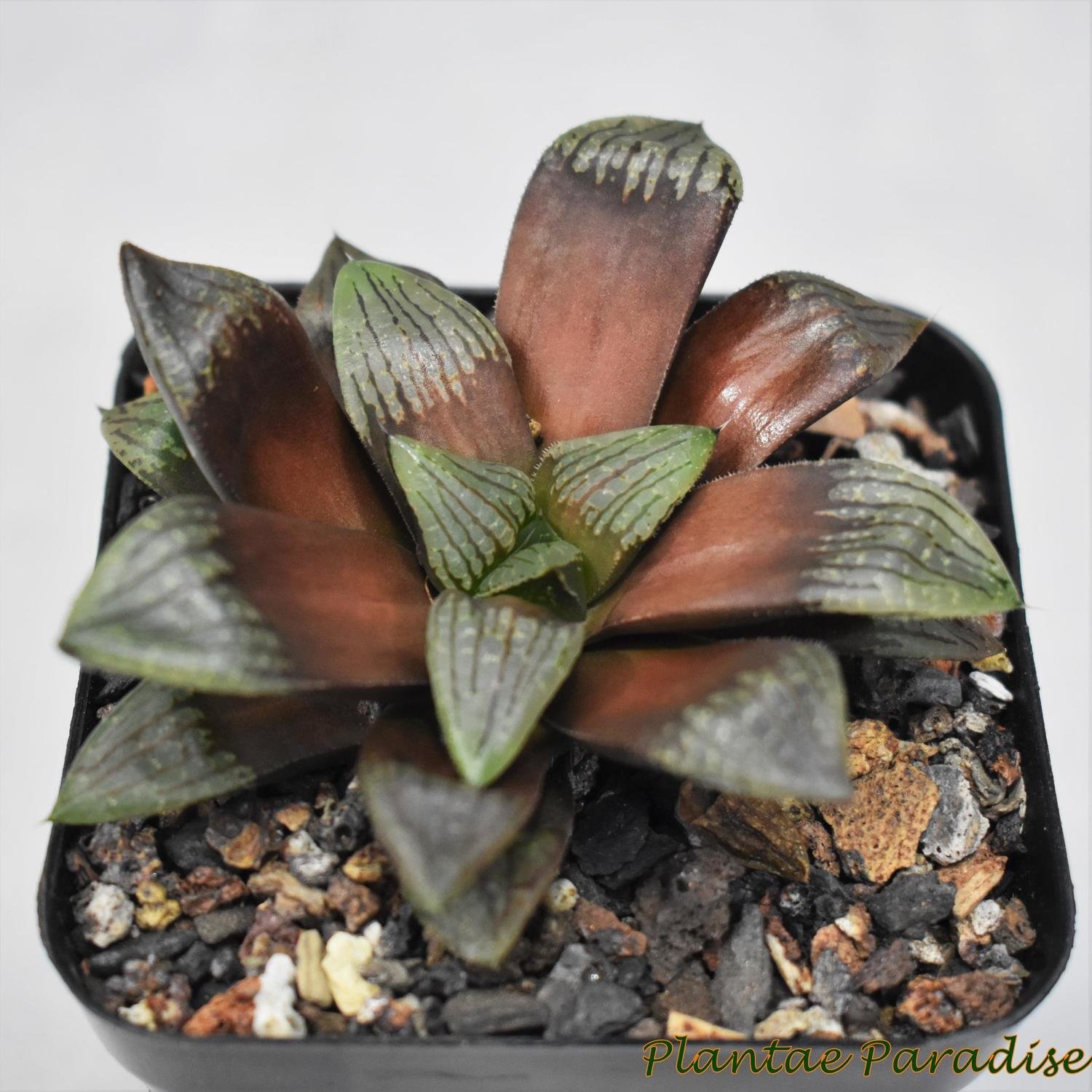
Haworthia cv Chocolate (glabrous)
Product Details
Haworthia cv. “Chocolate” (glabrous) — Rich Chocolate‑Toned Haworthia; sleek, smooth‑leaved rosettes with warm brown hues that deepen in bright light—ideal for collectors and chic containers. Colur intensity changes with season and intensity of light.
- Origin of Name
- Etymology: The genus name Haworthia honors English botanist Adrian Hardy Haworth (1767–1833). The cultivar epithet “Chocolate” is a horticultural trade name describing the plant’s distinctive chocolate‑brown to mahogany coloration under strong light or mild stress. “Glabrous” (from Latin glaber) means smooth or hairless and indicates the clone’s relatively smooth leaf surface compared with tubercled Haworthia.
- Naming history & notes: Cultivar names like “Chocolate” arise in nursery and collector circles to market visually striking clones. This is a horticultural name (cv.) rather than a botanical species name; provenance typically traces to selected nursery stock or a named clone from specialist growers rather than a wild taxon.
- Origin of Plant
- Natural habitat & geography: Haworthia species are native to South Africa (primarily the Eastern Cape region), where they grow in rocky crevices and well‑drained slopes. The “Chocolate” clone is a selected, nursery‑propagated form—its origin is horticultural selection and propagation rather than a separate wild population.
- Cultivation history: Named and distributed by succulent growers for its unusual coloration and smooth foliage, this cultivar is maintained in collections and propagated via offsets and tissue culture.
- Description
- Habit & size: A small, clumping succulent forming neat rosettes that typically measure 2–6 inches (5–15 cm) across depending on clone and conditions. It slowly produces offsets to form attractive clusters.
- Leaves & coloration: Leaves are fleshy, smooth (glabrous), and arranged in tight rosettes. The signature trait is a warm chocolate‑brown to deep mahogany overlay that develops in bright light or with mild drought stress, usually over a green or gray‑green base. The smooth surface and rich color give a polished, sculptural look. Leaf tips are blunt to slightly pointed depending on the clone.
- Flowers: Produces thin, wiry inflorescences with small tubular white to pale pink flowers in late winter to spring. Flowers are modest; foliage color and form are the main display features.
- Ornamental traits: The unusual chocolate tones and sleek texture make this cultivar a standout in mixed arrangements, minimalist pots, and collector displays. Colors are most dramatic in bright, filtered light.
- Conservation Status
- Wild status: As a named cultivar maintained in cultivation, Haworthia cv. “Chocolate” is propagated by growers and not a wild taxon. Many wild Haworthia species face local pressures; favor nursery‑propagated plants to avoid driving wild collection.
- Conservation notes: Purchase from reputable growers who propagate by offsets or tissue culture.
- Care
- Light: Bright, indirect light or morning sun. Strong filtered light enhances chocolate tones; avoid prolonged hot afternoon sun to prevent scorching.
- Water: Soak‑and‑dry method—water thoroughly, then allow the soil to dry before watering again. Reduce frequency in winter. Overwatering leads to root rot.
- Soil & drainage: Use a fast‑draining cactus/succulent mix amended with pumice, perlite, or coarse sand (aim for ~50% mineral content). Excellent drainage is essential.
- Temperature & humidity: Prefers 55–85°F (13–29°C). Protect from frost and sustained temps below ~40°F (4–5°C). Typical indoor humidity is acceptable.
- Fertilizer & maintenance: Light feeding during active growth (spring–early fall) with diluted balanced fertilizer monthly. Repot every 2–3 years or when crowded. Propagate easily by separating offsets.
- Pests & issues: Monitor for mealybugs and scale; ensure good airflow and drying intervals to reduce pests and fungal issues.
- Anecdote / Historical Note Grower‑named color clones like “Chocolate” reflect modern succulent culture: small shifts in light and water reveal dramatic color changes that collectors prize. The smooth, glabrous surface paired with rich brown tones evokes polished stone—a quality that made such clones popular in contemporary minimalist and boutique nursery displays.
New

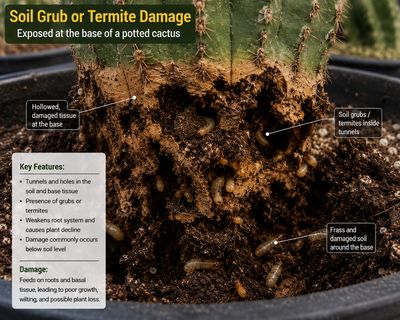
Monsoon Guardian Kit (5 in 1)
Monsoon Guardian Kit (5 in 1)
Complete 5-in-1 biological protection kit for cacti & succulents
SKU MNS024
₹850.00


Cactus Seed Planting Mix
Cactus Seed Planting Mix
Sterile, Fine-Grain Media for Cactus & Succulent Seeds
SKU MNS005
₹74.85


Cactus & Succulent Planting Mix COARSE (aka Cactus Soil Mix or Succulent Soil Mix)
Cactus & Succulent Planting Mix COARSE (aka Cactus Soil Mix or Succulent Soil Mix)
Washed, Free-Draining Mineral Mix for Cactus & Succulents
SKU MNS003
₹44.85