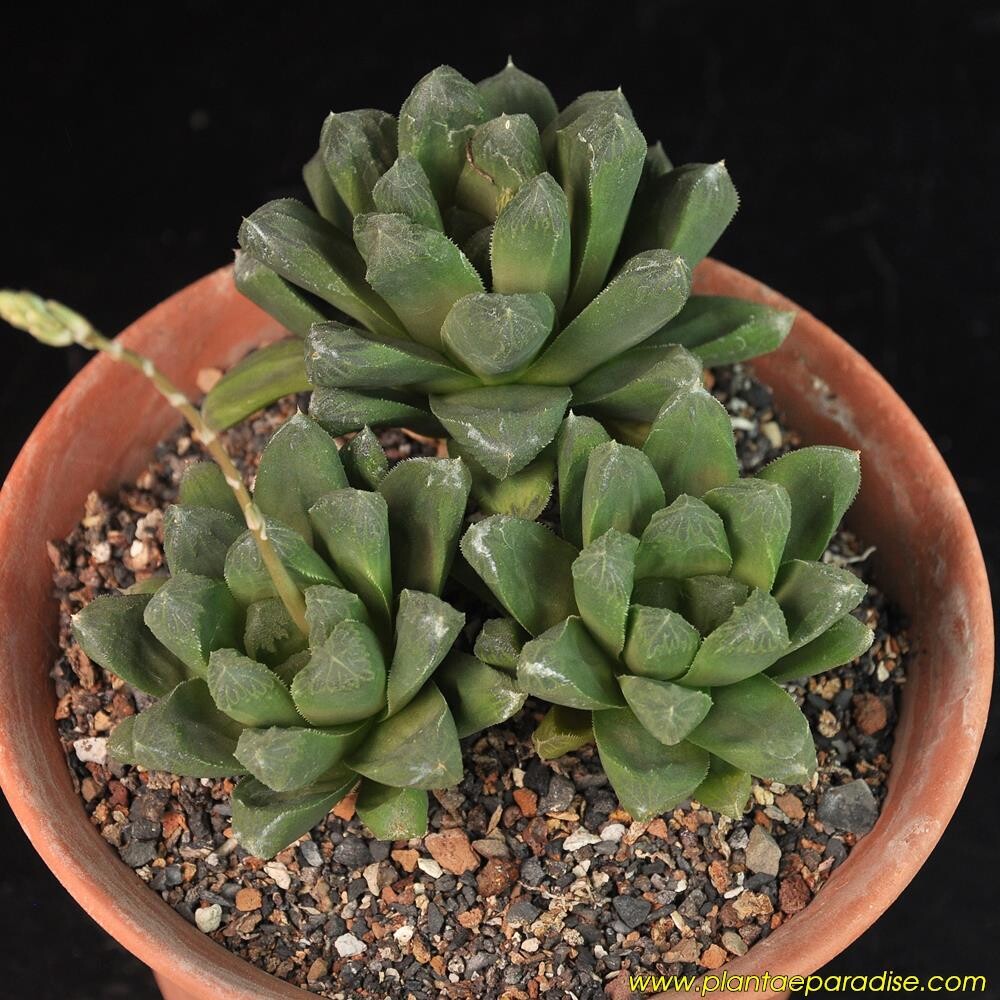
When plant is well fed the leaves end in a trangular pyramidical window with a spine on top.
1. Origin of Name:
The genus "Haworthia" honors Adrian Hardy Haworth (1767–1833), an influential English botanist renowned for his work on succulents and cacti. The hybrid name “maughanii x cooperi” indicates a crossbreeding between Haworthia maughanii and Haworthia cooperi, two well-known species from South Africa. The parent species' names pay tribute to early botanists: "maughanii" honors Sir William Maughan, a 19th-century botanist and collector, while "cooperi" commemorates Sir Graham Cooper, a horticulturist and botanist. The "x" signifies hybridization—melding traits from both parent plants. This particular hybrid showcases the best features of both species, especially the triangular, pyramid-like leaf tips with a spine on top, which has earned it a descriptive nickname as the "Pyramid Window Haworthia."
2. Origin of Plant:
This hybrid originated in cultivated gardens and horticultural nurseries, where enthusiasts and breeders combined Haworthia maughanii’s distinctive, robust leaf structure with the delicate, translucent windows of Haworthia cooperi. It is a product of intentional hybridization to enhance ornamental appeal. The plant is thought to have been developed in South Africa or elsewhere in the global succulent community, aiming to produce a striking, architectural succulent that embodies the best traits of both parent species.
3. Description:
Haworthia maughanii x cooperi features compact rosettes of fleshy, green leaves that culminate in sharply pointed, triangular, pyramid-shaped windows. When well-fed and healthy, the leaves end in a well-defined, pyramid-like window with a prominent spine or spike on the top, adding a dramatic, spiny silhouette. The transparent "windows" are designed to allow sunlight to penetrate deep into the leaf tissue while reducing water loss—an adaptation to arid environments. These leaves often form dense clusters, creating an architectural, almost sculptural display. During flowering, slender stalks carry tiny white flowers, but the main attraction remains its bold, geometric leaves.
4. Conservation Status:
As a cultivated hybrid, Haworthia maughanii x cooperi is widely propagated and not considered threatened in the wild. Its popularity in the succulent trade ensures a steady supply through nurseries and hobbyist growers. Responsible cultivation and propagation practices are encouraged to preserve this hybrid's distinct appearance and reduce wild collection.
5. Care:
- Lighting: Bright, direct sunlight or filtered sunlight; ideal for accentuating leaf coloration and window transparency.
- Watering: Water thoroughly during the growing season, allowing the soil to dry completely between waterings. Reduce watering in winter.
- Soil: Use a well-draining cactus or succulent mixture with added coarse sand or pumice to prevent excess moisture retention.
- Temperature: Prefers warm temperatures between 65°F and 85°F (18°C to 29°C). Protect from frost—bring indoors or provide frost cover in colder climates.
- Additional Tips: Overwatering can be harmful; ensure good drainage and avoid letting the plant sit in water. Fertilize mildly during active growth with a diluted cactus fertilizer.
6. Interesting Anecdote:
This hybrid's unique, spiny, pyramid-shaped leaves have inspired many as a symbol of strength and architectural elegance in the succulent world. Growers often share stories of its dramatic appearance, likening it to tiny, living monuments or geometric sculptures. Its intriguing form not only captivates the eye but also symbolizes resilience and creativity, echoing the adaptiveness of desert plants in extreme conditions.