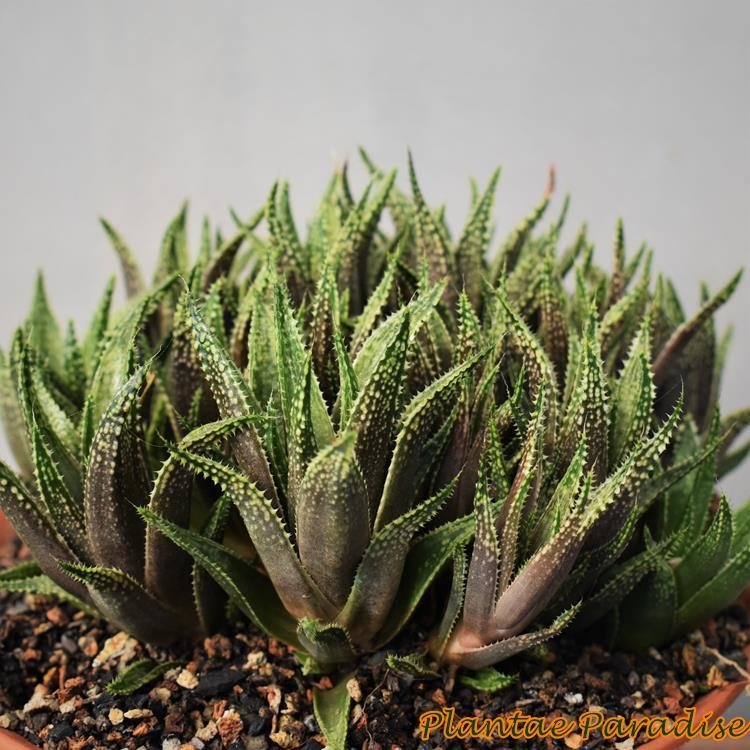
Haworthia reticulata v. guttata is a captivating succulent renowned for its intricate, reticulated leaf pattern and textured "windows." Its delicate appearance and unique markings make it a treasured addition for succulent enthusiasts and collectors alike.
1. Origin of Name:
The genus "Haworthia" honors Adrian Hardy Haworth (1767–1833), a celebrated English botanist known for his work on succulents and cacti. The species name "reticulata" refers to the network or net-like pattern on the leaves, derived from Latin meaning "reticulated" or "netted." The variety "guttata" means "spotted" in Latin, highlighting the plant’s distinctive dotted markings. The plant’s full name, Haworthia reticulata var. guttata, emphasizes its reticulated leaf pattern with dotted "windows," creating an elegant, lace-like appearance that has earned it admiration among succulent connoisseurs.
2. Origin of Plant:
Haworthia reticulata v. guttata is native to South Africa, specifically in rocky, arid regions such as the Western Cape. It naturally grows on steep cliffs, rocky slopes, and in crevices where water drains quickly and sunlight is intense. Discovered during early botanical explorations, it has adapted to withstand drought and extreme sunlight, with its net-like pattern and dotted windows serving as essential adaptations for water conservation and light filtration in its rugged habitat.
3. Description:
This variety features small, rosette-shaped clusters of thick, fleshy leaves that display a striking reticulated (net-like) pattern across their surfaces. The leaves are triangular or elongated, with translucent "windows" dotted with small speckles or spots, which help maximize light entry while minimizing water loss—key for survival in harsh environments. The reticulated pattern resembles fine lacework or a net overlay, giving the plant a delicate, intricate appearance. During flowering, tiny white flowers emerge on slender stalks, but its main allure is the captivating, patterned foliage.
4. Conservation Status:
Due to its limited native range and high demand among collectors, wild populations can be vulnerable to overcollection. However, Haworthia reticulata v. guttata is widely propagated in nurseries and cultivated collections around the world, helping to reduce pressure on wild populations. Responsible cultivation and propagation practices are crucial for conserving this species’s natural habitat.
5. Care:
- Lighting: Bright, indirect sunlight; direct morning sun is beneficial, but intense afternoon sun should be avoided to prevent leaf burn.
- Watering: Water sparingly, allowing the soil to dry out completely between waterings. Reduce watering during winter dormancy.
- Soil: Use a fast-draining cactus or succulent mix, combined with coarse sand or pumice for optimal drainage.
- Temperature: Prefers warm temperatures between 65°F and 80°F (18°C to 27°C). Protect from frost—bring indoors or apply frost covers in colder weather.
- Additional Tips: Proper drainage is essential. Overwatering can cause root rot, so water cautiously and fertilize lightly during active growth with a balanced cactus fertilizer.
6. Interesting Anecdote:
Native South Africans regard Haworthia reticulata v. guttata as a symbol of fine craftsmanship—its netted, dotted leaves reminiscent of delicate handcrafted lacework. Many believe its intricate patterns are a sign of patience and artistry, inspiring local artisans and modern designers alike. Its miniature, lace-like appearance has also earned it the nickname "Desert Lace," symbolizing beauty and resilience under extreme conditions of drought and sun, and serving as a tiny testament to nature’s delicate artistry.
Add the lace-like, reticulated elegance of Haworthia reticulata v. guttata to your collection and enjoy a miniature masterpiece of natural lacework—delicate, intricate, and resilient!