

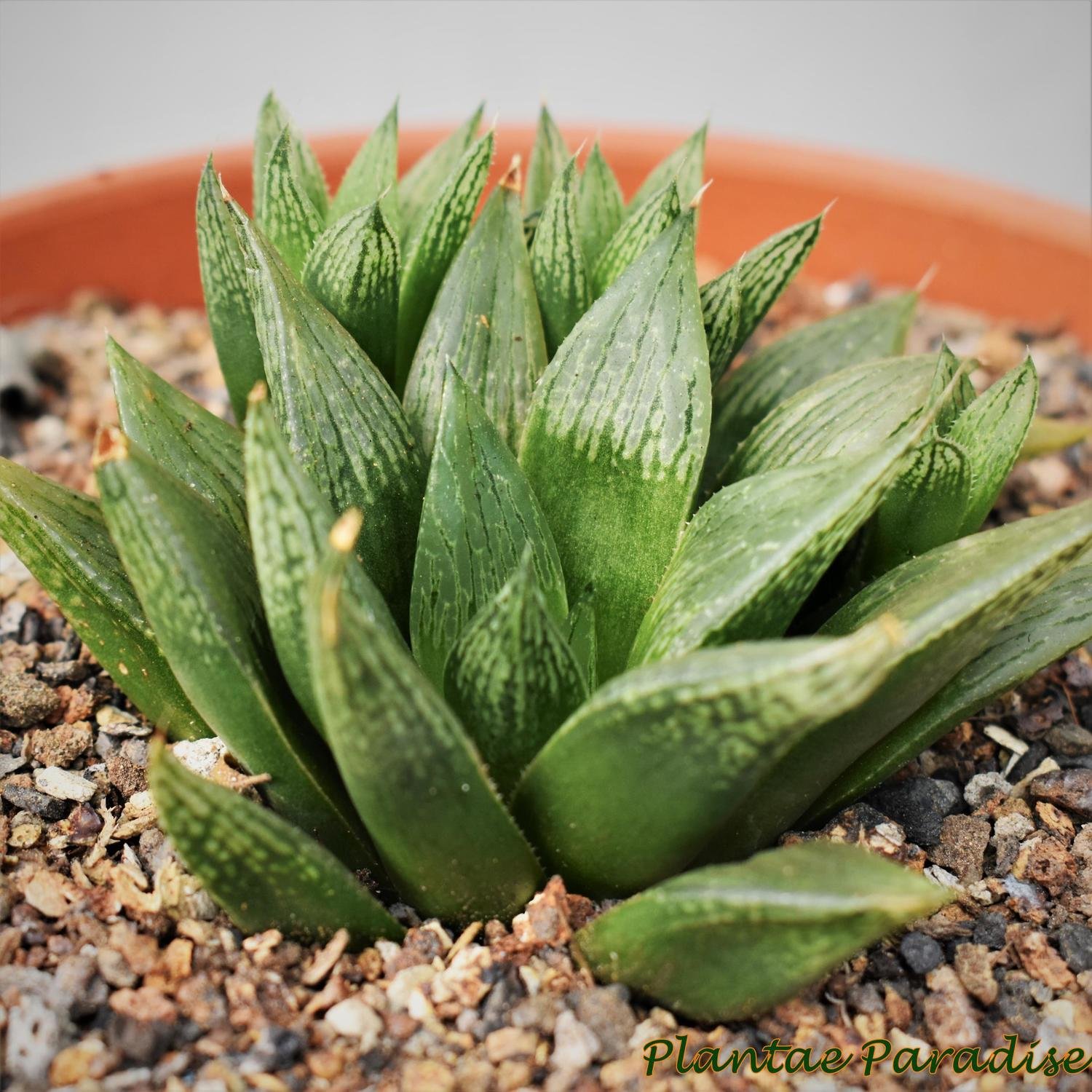
Haworthia maculata
Product Details
Haworthia maculata — Spotted Pearl Haworthia; elegant rosettes patterned with pale spots, perfect for bright windowsills and mixed succulent displays.
- Origin of Name
- Etymology: The genus name Haworthia honors Adrian Hardy Haworth (1767–1833), an English botanist and entomologist noted for early work on succulents. The species epithet maculata is from Latin maculatus, meaning “spotted” or “stained,” referencing the plant’s characteristic pale spots or markings on the leaf surfaces.
- Naming history & taxonomic notes: Haworthia maculata was described as a distinct taxon based on its spotted leaf pattern and other morphological traits. Haworthia taxonomy has a complex history with many described species, varieties, and horticultural clones; some names have been revised or treated as synonyms by different authors. Growers use H. maculata to denote plants with the classic spotted pattern that distinguishes them from closely related Haworthia species.
- Origin of Plant
- Natural habitat & geography: Haworthia maculata is native to South Africa (Eastern Cape region and nearby areas), where many Haworthia species occur. In the wild it favors rocky outcrops, shale slopes, and crevices with excellent drainage, often growing in partial shade beneath shrubs or grasses.
- Discovery history: Like many Haworthias, H. maculata entered cultivation through 19th–20th century plant collecting and botanical exchanges. Local variants and clones with pronounced spotting became favorites among growers and were propagated widely by nurseries and hobbyists.
- Description
- Habit & size: A compact, rosette-forming succulent that slowly offsets to form small clusters; typical rosette diameter is about 2–5 inches (5–12 cm) depending on clone and age.
- Leaves & markings: Leaves are fleshy, triangular to oblong, and arranged in neat rosettes. The defining trait is conspicuous pale spots, flecks, or bands on a green to gray-green leaf background; patterns range from dense, evenly spaced dots to larger irregular patches, giving a “spotted” or “pearl-dusted” appearance. Leaf texture is smooth to lightly textured depending on the clone.
- Flowers: Produces slender, wiry inflorescences bearing small tubular white to pale pink flowers, usually in late winter to spring. The flowers are modest; the spotted foliage is the primary ornamental draw.
- Ornamental traits: The delicate spotted pattern and compact habit make H. maculata ideal for small pots, dish gardens, terrariums (open style), and as an accent in mixed succulent arrangements. It pairs beautifully with plain or dark pots that highlight its speckled leaves.
- Conservation Status
- Wild status: Specific conservation assessments vary by species and locality. Many Haworthia species are not globally critically endangered but can face localized threats from habitat loss, land conversion, and illegal collection. Exact status for H. maculata depends on verified wild populations and taxonomic treatment.
- Conservation notes: Purchase from reputable nurseries that propagate plants by offsets or tissue culture. Cultivated propagation by growers helps reduce pressure on wild populations.
- Care
- Light: Bright, indirect light or morning sun is ideal. Avoid prolonged harsh afternoon sun which can scorch leaves and fade spots. In bright filtered light the leaf contrast and spotting become more pronounced.
- Water: Use the soak-and-dry method—water thoroughly, then let the potting mix dry before watering again. Reduce watering in winter when growth slows. Overwatering causes root rot.
- Soil & drainage: Plant in a well-draining cactus/succulent mix amended with pumice, coarse sand, or perlite (aim for a gritty mix ~50% mineral content). Excellent drainage is essential.
- Temperature & humidity: Prefers 55–85°F (13–29°C). Protect from frost and sustained temperatures below ~40°F (4–5°C). Average indoor humidity is fine.
- Fertilizer & maintenance: Light feeding during the active growth period (spring–early fall) with a diluted balanced fertilizer once a month. Repot every 2–3 years if crowded. Propagate easily by offsets; seed propagation is slower.
- Pests & issues: Monitor for mealybugs and scale; good airflow and dry intervals reduce pest and fungal problems.
- Anecdote / Historical Note Haworthias have long been prized by collectors for subtle pattern and texture variations. Varieties with spotted leaves like H. maculata were especially admired in Victorian and early 20th‑century collections for their delicate, jewel‑like markings — small, patterned plants meant to be viewed up close in glasshouses and dish gardens. That same intimacy makes H. maculata a favorite today for collectors and design-conscious growers.
New


Monsoon Guardian Kit (5 in 1)
Monsoon Guardian Kit (5 in 1)
Complete 5-in-1 biological protection kit for cacti & succulents
SKU MNS024
₹850.00
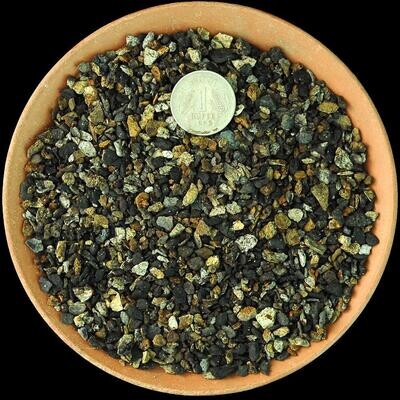
Cactus & Succulent Planting Mix COARSE (aka Cactus Soil Mix or Succulent Soil Mix)
Cactus & Succulent Planting Mix COARSE (aka Cactus Soil Mix or Succulent Soil Mix)
Washed, Free-Draining Mineral Mix for Cactus & Succulents
SKU MNS003
₹44.85

