Origin of Name
Haworthia retusa gets its name from the Latin word 'retusus', meaning 'blunt' or 'notched'. This refers to the distinctive shape of the plant's leaves, which are notably rounded and appear as if they have been truncated or notched at the tips.
Technical Description of Plant
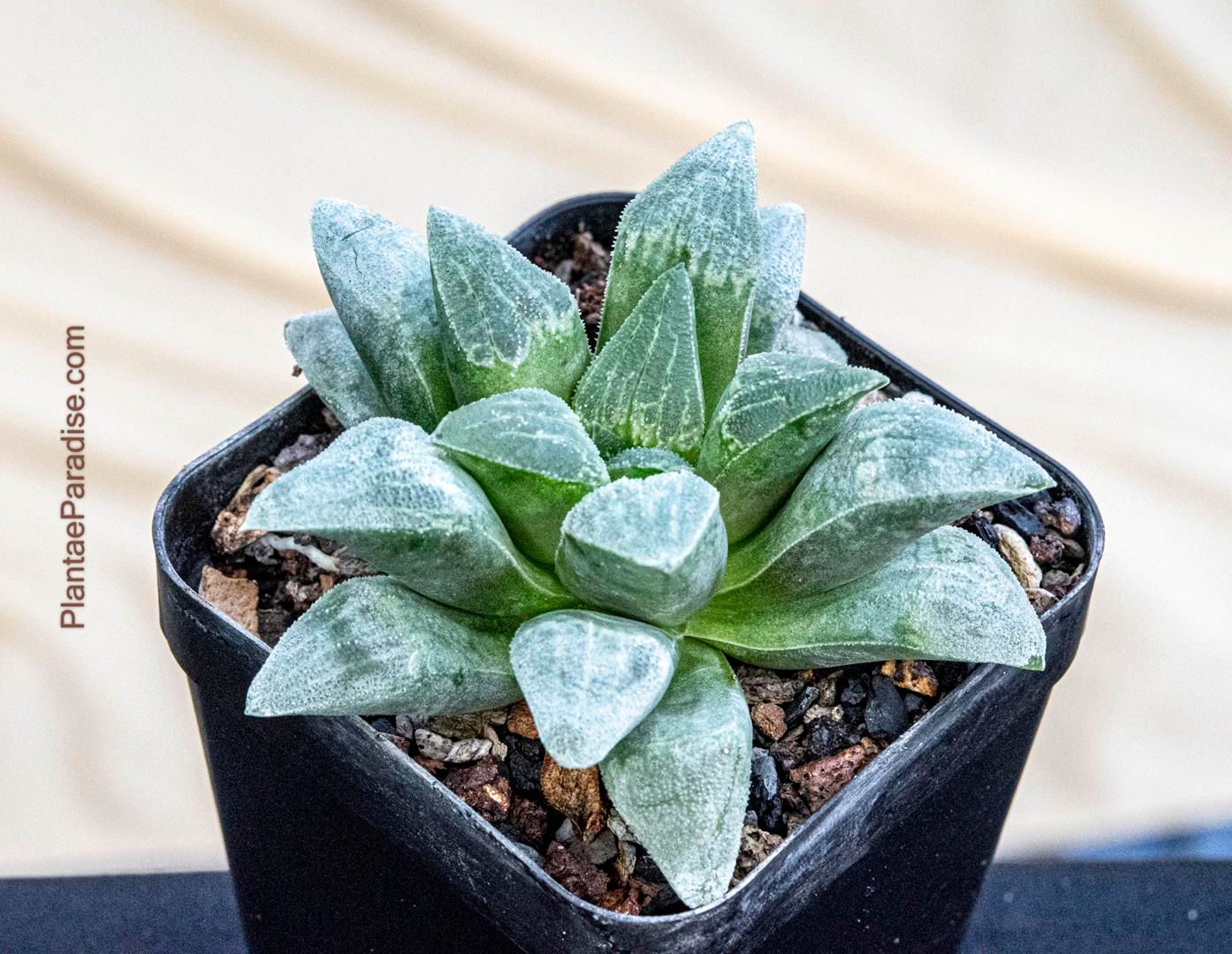
Haworthia retusa is a small, rosette-forming succulent known for its distinctive, star-shaped arrangement of leaves. The plant typically grows up to 3-5 inches in height and diameter. Its thick, fleshy leaves are a deep green, often with a translucent, window-like area at the tip, allowing light into the interior of the leaf. This feature is an adaptation to the plant's natural growing conditions, allowing it to photosynthesize efficiently while partially buried in the ground. The leaves are smooth, with no spines or ridges. Haworthia retusa blooms in late spring or early summer, producing small, inconspicuous white flowers on long, slender stems.
Origin of Plant
Haworthia retusa is native to South Africa, particularly the Western Cape Province. It is often found growing in sandy soils or rocky areas, where it is adapted to semi-arid conditions. The plant typically grows under the shade of other vegetation or rocks, which influences its light requirements when cultivated.
Conservation Status
As of the latest information, Haworthia retusa is not listed as an endangered species. However, like many succulent species, it is vulnerable to habitat loss and over-collection. Sustainable cultivation and trade of these plants are essential for their conservation.
Care Instructions
Haworthia retusa is a relatively easy plant to care for, making it a good choice for beginners. It prefers bright, indirect light but should be protected from the harsh afternoon sun, which can scorch the leaves. This succulent requires well-draining soil and should be watered moderately, allowing the soil