Origin of Name
Haworthia retusa derives its name from the botanical classification system. The genus 'Haworthia' honors Adrian Hardy Haworth, an acclaimed British botanist known for his extensive work with succulents. The species name 'retusa' is Latin for 'blunt' or 'abruptly cut off', describing the distinct shape of the plant's leaves which have a truncated or retuse appearance, giving them a unique window-like aspect.
Technical Description of Plant
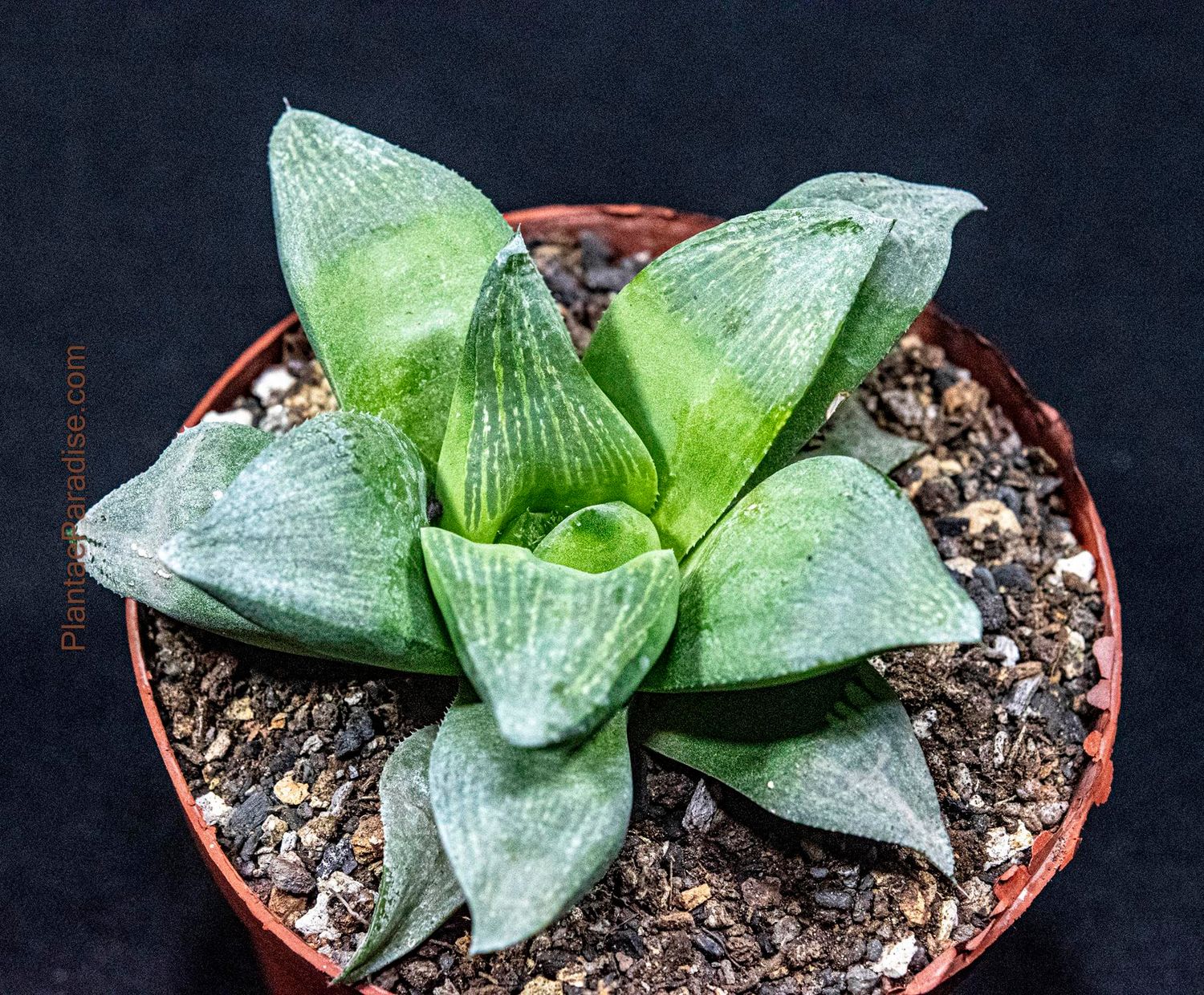
Haworthia retusa is renowned for its compact, symmetrical rosette of thick, fleshy leaves. The leaves are a deep, translucent green, allowing light to penetrate through their windowed tips. This adaptation is thought to aid in photosynthesis in low-light conditions under the soil or leaf litter. The leaves are generally triangular, with the retuse tips creating a distinctive star-shaped pattern when viewed from above. Haworthia retusa blooms sporadically, producing small, inconspicuous white flowers on thin, wiry stems that can extend several inches above the foliage.
Origin of Plant
Haworthia retusa is native to the Western Cape Province of South Africa. It is typically found in semi-arid regions, growing in well-drained soils often among rocks or in the shade of larger vegetation. This natural habitat has influenced its unique growth form and adaptation to low light conditions.
Conservation Status
As of the latest information, Haworthia retusa is not classified as an endangered species. However, like many succulent plants, it faces pressures from habitat loss and illegal collection in its native habitat. Cultivation in nurseries and responsible trade practices play a crucial role in its conservation.
Care Instructions
Haworthia retusa prefers bright, indirect sunlight. Direct sun exposure should be limited as it can scorch the leaves. It thrives in well-draining succulent soil mixtures. Water moderately, allowing the soil to dry out completely between waterings, and reduce watering in the winter months. This plant is not frost-tolerant and should be protected from freezing temperatures. Fertilization is not essential but can be done sparingly with a diluted succulent fertilizer during the active growing season.