

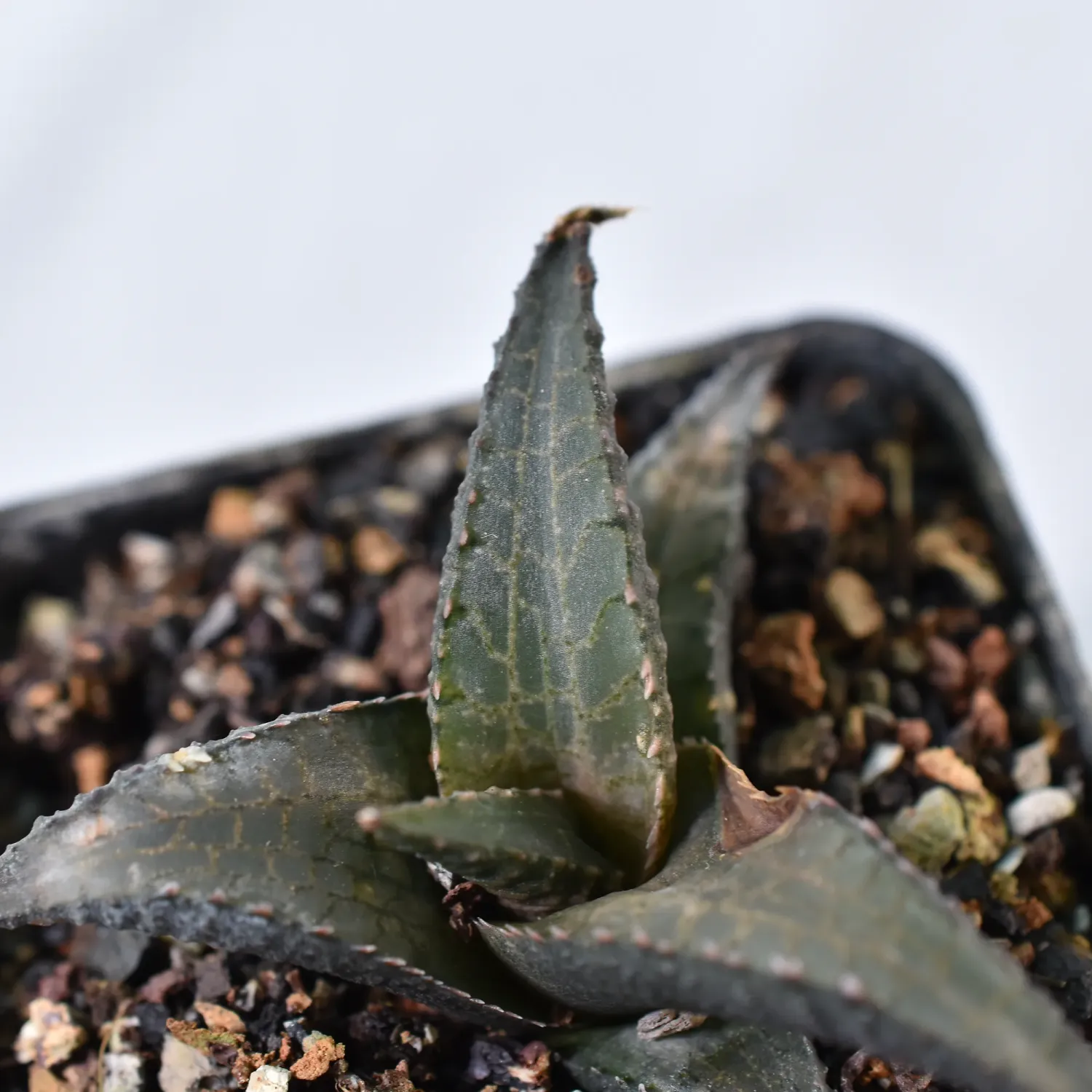
Haworthia venosa subsp. tessellata (Thick skin)
Product Details
Geometric Perfection: Haworthia venosa subsp. tessellata (Thick Skin)
An architectural marvel for the connoisseur, featuring translucent windowed leaves that mimic a reptilian mosaic.
- Origin & History of Name: The species name venosa derives from the Latin venosus (veined), while the subspecies tessellata means "tiled" or "checkered," referring to the distinct square pattern on the leaf surface. It was first formally described by Prince Salm-Dyck in the early 19th century, a nobleman botanist who was obsessed with succulent classification.
- Morphology: This "Thick Skin" variety is characterized by a remarkably firm, leathery epidermis. The leaves are deltoid and recurved, featuring a "windowed" upper surface (fenestrate) with longitudinal lines and transverse veinlets forming a tessellated pattern.
- Habitat & Origin: This is a wild species naturally occurring across a vast range in Southern Africa, including Namibia and the Northern Cape of South Africa. Our specimens are nursery-propagated via offsets or tissue culture to ensure the protection of wild populations and adhere to sustainable horticultural practices.
- Cultivation Profile:
- Substrate: Use a strictly mineral-based mix (70% grit such as pumice, crushed brick, or perlite and 30% organic matter) to prevent root rot in humid Indian climates.
- Light: Thrives in bright, indirect light. In India, provide morning sun but shade from the harsh 12:00 PM – 4:00 PM summer heat to prevent leaf scorching.
- Water/Dormancy: Water thoroughly only when the medium is bone-dry. During the peak of the Indian Monsoon (high humidity) and the peak of Summer (semi-dormancy), reduce watering frequency significantly.
- Scientific/Historical Anecdote: Haworthia species are often called "living stones," but tessellata is particularly unique for its survival mechanism. In habitat, the plant often grows almost entirely buried in the soil; the translucent "windows" on the leaf tips act as fiber-optic cables, channeling sunlight down to the chlorophyll-rich interior of the plant for photosynthesis while remaining protected from the sun's heat.


Cactus Seed Planting Mix
Cactus Seed Planting Mix
Sterile, Fine-Grain Media for Cactus & Succulent Seeds
SKU MNS005
₹74.85
New
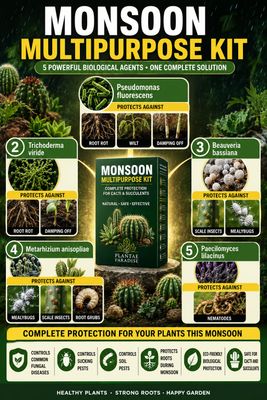
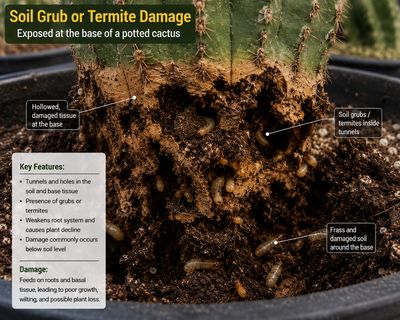
Monsoon Guardian Kit (5 in 1)
Monsoon Guardian Kit (5 in 1)
Complete 5-in-1 biological protection kit for cacti & succulents
SKU MNS024
₹850.00

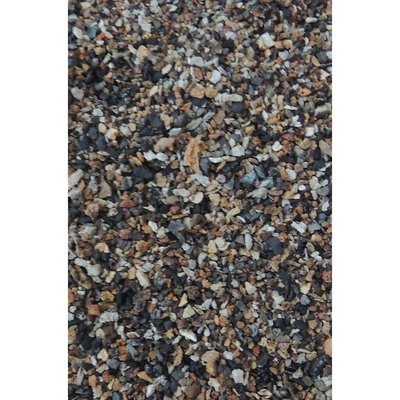
Cactus & Succulent Planting Mix FINE (aka Cactus Soil Mix or Succulent Soil Mix)
Cactus & Succulent Planting Mix FINE (aka Cactus Soil Mix or Succulent Soil Mix)
Fine-Grain Potting Mix for Cactus & Succulent Roots
SKU MNS001
₹39.85
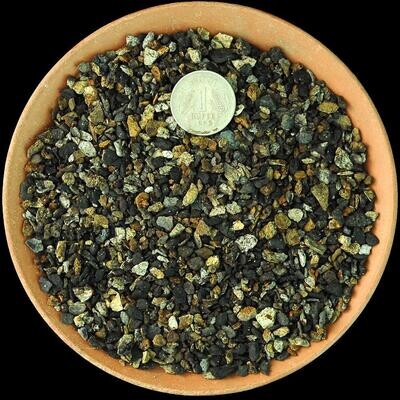
Cactus & Succulent Planting Mix COARSE (aka Cactus Soil Mix or Succulent Soil Mix)
Cactus & Succulent Planting Mix COARSE (aka Cactus Soil Mix or Succulent Soil Mix)
Washed, Free-Draining Mineral Mix for Cactus & Succulents
SKU MNS003
₹44.85