

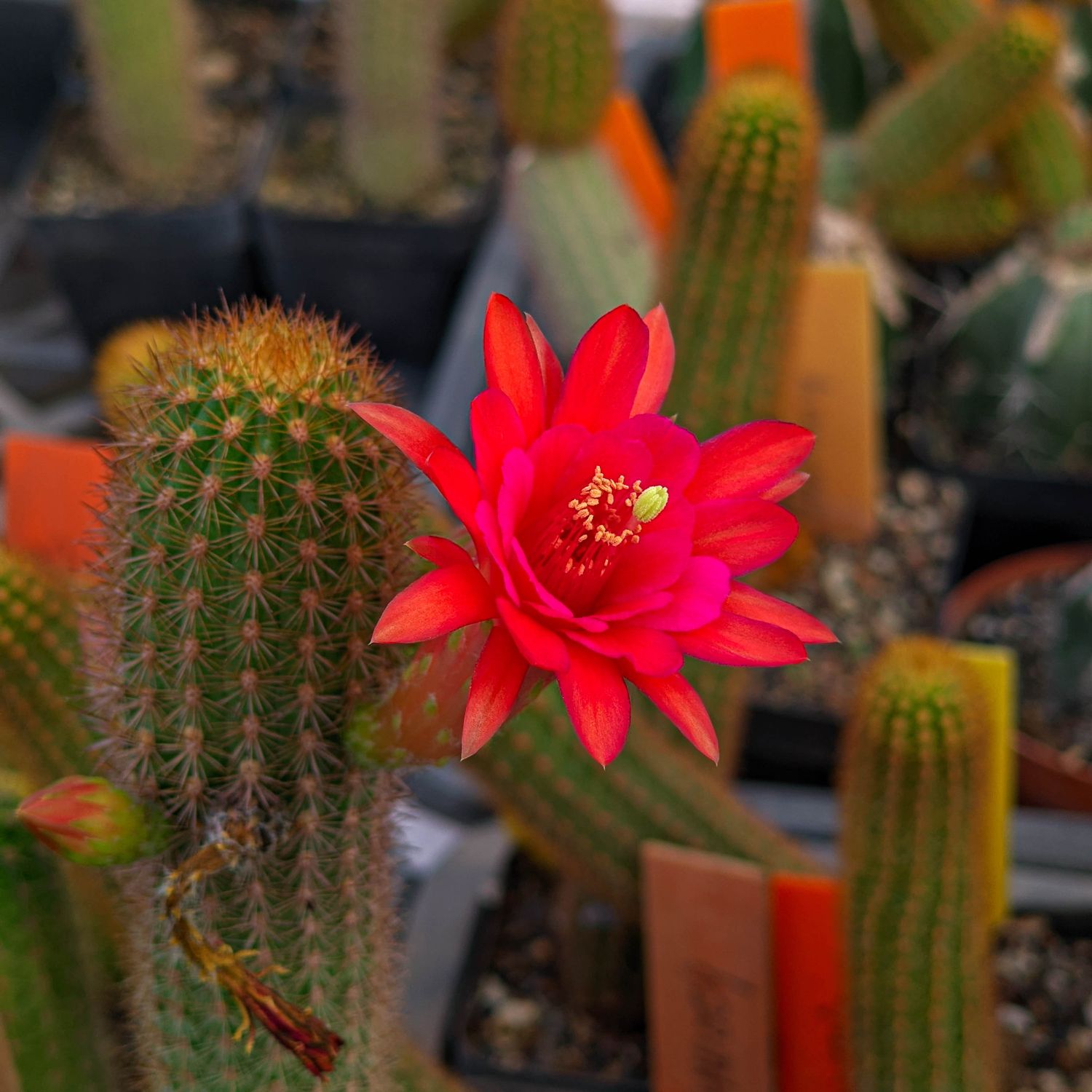
Hildewintera hybrid AMETHYST
Product Details
Radiant Rare Bloom: Hildewintera hybrid 'AMETHYST'
A prized collector's gem featuring breathtaking violet-pink blooms and a cascading growth habit.
- Origin & History of Name: The genus Hildewintera (now often classified under Cleistocactus) was named by Friedrich Ritter in honor of his sister, Hildegard Winter.
The cultivar name 'AMETHYST' is derived from the Greek amethystos, referring to the semi-precious gemstone, specifically chosen to describe the deep, crystalline purple-pink hues of its multi-petaled flowers. - Morphology: This hybrid is a lithophytic cactus characterized by elongated, cylindrical stems (pendulous branches) covered in dense, soft golden-yellow spines. Its epidermis is light green, though largely obscured by the spines. The most striking feature is its zygomorphic flower—a multi-layered bloom where the inner petals transition from a deep amethyst purple to a soft violet at the tips.
- Habitat & Origin: Hildewintera 'AMETHYST' is a man-made cultivar, not a wild species.
It was developed through selective breeding within the Hildewintera genus, which is native to the rocky cliffs of Bolivia. This plant is produced via sustainable nursery propagation, ensuring no wild populations are disturbed for the horticultural trade. - Cultivation Profile:
- Substrate: Use a highly porous, mineral-based mix consisting of 70% inorganic material (pumice, perlite, or crushed brick) and 30% organic matter. Avoid standard potting soil which retains too much moisture in humid Indian climates.
- Light: Requires bright, filtered sunlight. In India, provide morning sun but protect from the harsh afternoon "Loo" winds and direct overhead summer sun to prevent epidermal scorching.
- Water/Dormancy: Water thoroughly when the substrate is completely dry during the growing season (March–October). Reduce watering significantly during the winter dormancy; in South India, maintain a dry cycle to prevent root rot during monsoon humidity.
- Scientific/Historical Anecdote: While these plants are beloved for their beauty, their parent genus Cleistocactus is scientifically noted for "cleistogamy"—a biological trait where some species produce flowers that never fully open and are self-pollinated. However, hybrids like 'AMETHYST' have been specifically bred to do the opposite, producing large, flamboyant "day-blooming" flowers to attract hummingbirds in their native Bolivian highlands.

New
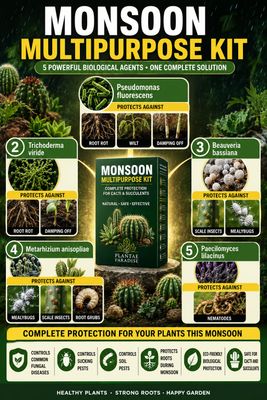
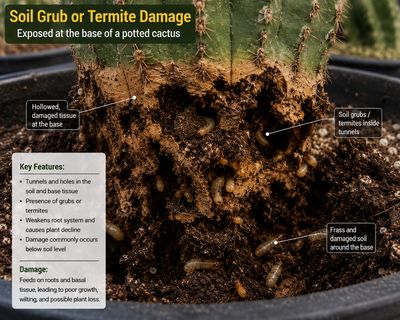
Monsoon Guardian Kit (5 in 1)
Monsoon Guardian Kit (5 in 1)
Complete 5-in-1 biological protection kit for cacti & succulents
SKU MNS024
₹850.00
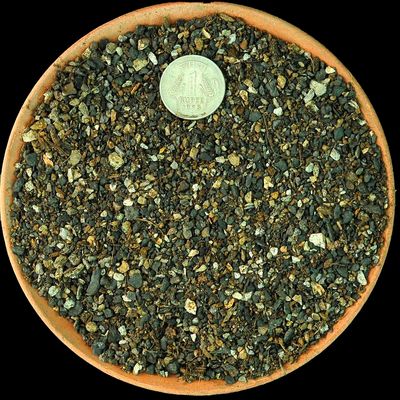

Cactus & Succulent Planting Mix COARSE (aka Cactus Soil Mix or Succulent Soil Mix)
Cactus & Succulent Planting Mix COARSE (aka Cactus Soil Mix or Succulent Soil Mix)
Washed, Free-Draining Mineral Mix for Cactus & Succulents
SKU MNS003
₹44.85