

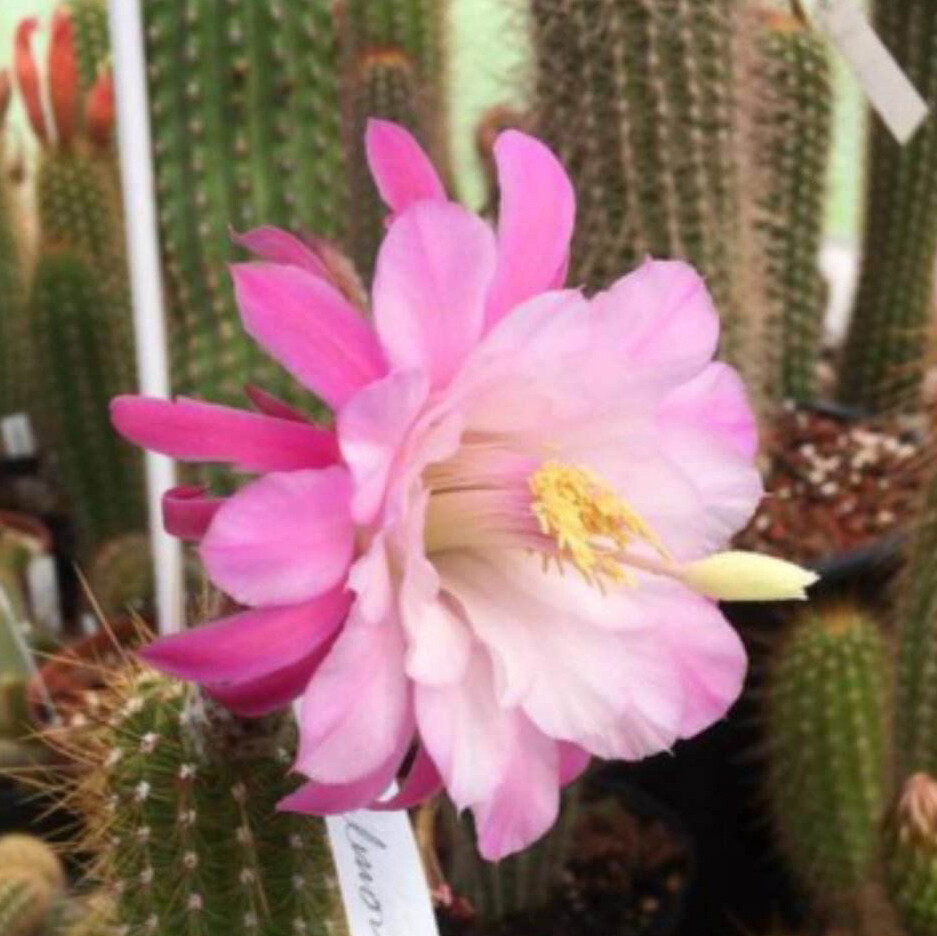
Hildewintera Pink Norheim
Product Details
Radiant Contrast: Hildewintera 'Pink Norheim'
An architectural marvel featuring a rare bicolour gradient, essential for the discerning xeric collector.
- Origin & History of Name: The genus Hildewintera (often classified under Cleistocactus) was named by Friedrich Ritter in honour of his sister, Hildegard Winter.
The cultivar name 'Pink Norheim' follows the naming tradition of European breeders, likely originating from the Norheim region in Germany, chosen to denote this specific hybrid's distinct chromatic shift from deep magenta to pale rose. - Morphology: This succulent features a cylindrical epidermis covered in dense, bristly areoles. Its most striking feature is the zygomorphic flower; the outer tepals exhibit a saturated magenta hue, while the inner petals fade to a delicate, translucent pink. A central cluster of anthers on yellow filaments provides a high-contrast focal point against the floral throat.
- Habitat & Origin: Hildewintera 'Pink Norheim' is a cultivated hybrid (cultivar) and does not exist in the wild.
It is bred from species originally native to the Andean foothills of Bolivia. As a nursery-produced cultivar, it supports sustainability by reducing the demand for field-collected specimens of its parent species. - Cultivation Profile:
- Substrate: A strictly mineral-based mix (60% volcanic rock or crushed leca, 40% coarse sand/perlite) to prevent root rot in high-humidity regions like Mumbai or Kolkata.
- Light: Requires bright, filtered sunlight. In the Indian subcontinent, provide 50% shade cloth protection during the harsh 12:00 PM – 4:00 PM window to prevent epidermal scorching.
- Water/Dormancy: Follow a "soak and dry" cycle during the summer. During the Indian monsoon and winter, induce dormancy by withholding water almost entirely to mimic the dry Andean winters.
- Scientific/Historical Anecdote: Members of the Hildewintera group are famously known as "Monkey Tail" cacti due to their pendulous growth habit.
Scientifically, they are noted for their bird-pollinated (ornithophilous) flowers; the vibrant magenta pigments are specifically evolved to be highly visible to hummingbirds, which are the primary pollinators in their ancestral South American habitats.

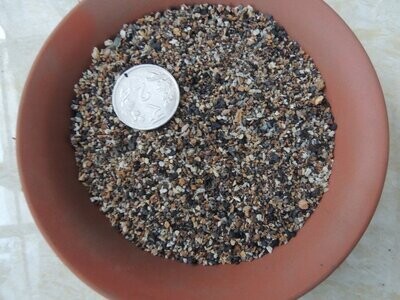
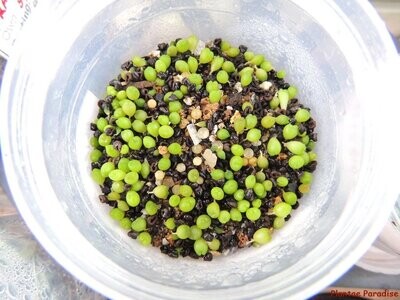
Cactus Seed Planting Mix
Cactus Seed Planting Mix
Sterile, Fine-Grain Media for Cactus & Succulent Seeds
SKU MNS005
₹74.85


Cactus & Succulent Planting Mix FINE (aka Cactus Soil Mix or Succulent Soil Mix)
Cactus & Succulent Planting Mix FINE (aka Cactus Soil Mix or Succulent Soil Mix)
Fine-Grain Potting Mix for Cactus & Succulent Roots
SKU MNS001
₹39.85
