

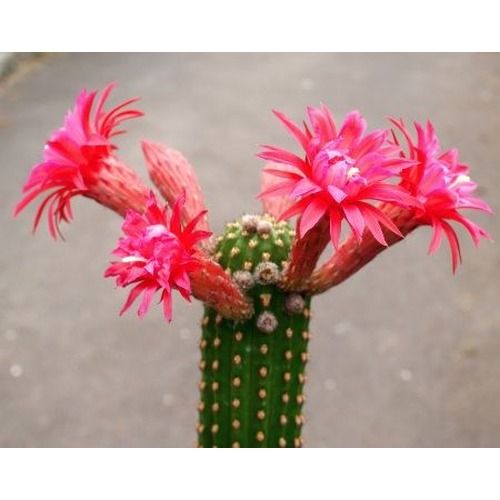
Hildewintera 'Rotenfels' Bum 35 5
Product Details
The Radiant Pendulous Beauty: Hildewintera 'Rotenfels'
A rare, trailing masterpiece featuring vibrant salmon-pink blooms and golden-spined stems that elevate any botanical collection.
- Origin & History of Name The genus name honors German botanist Hildegard Winter (sister of the famous cactus collector Friedrich Ritter), while the cultivar name 'Rotenfels' (German for "Red Rock") refers to the striking reddish-orange hue of its blossoms against its rugged, rock-dwelling appearance. Originally classified under Winterocereus and later Cleistocactus, the name reflects its transition from wild mountain cacti to refined horticultural selections.
- Morphology This succulent features cylindrical, pendulous stems reaching up to 1 meter in length. Its epidermis is densely covered in fine, golden-yellow setae (bristle-like spines) emerging from closely spaced areoles. The costae (ribs) are numerous and shallow, facilitating stem expansion during hydration. Its most distinctive feature is the zygomorphic flower—a multi-layered, tubular bloom with recurved petals in shades of deep coral and orange.
- Habitat & Origin Hildewintera 'Rotenfels' is a specialized cultivar derived from species native to the high-altitude rocky outcrops of Bolivia. Unlike wild-collected specimens, this plant is commercially propagated through cuttings or grafting to ensure environmental sustainability and to protect the fragile biodiversity of its Andean ancestors.
- Cultivation Profile
- Substrate: Use a strictly mineral-based mix (50% volcanic pumice or perlite, 25% coarse river sand, and 25% organic compost) to ensure rapid drainage and prevent root rot in humid Indian climates.
- Light: Requires bright, indirect sunlight or dappled shade. In the Indian subcontinent, protect from harsh afternoon sun (12 PM – 4 PM) to prevent epidermal scorching, especially during peak summer.
- Water/Dormancy: Water deeply when the substrate is completely dry during the growing season (March–October). Enter a dry dormancy during the monsoon and winter; reduce watering to once a month to mimic its natural arid habitat.
5. Scientific/Historical Anecdote The genus Hildewintera has long been a subject of taxonomic debate. Friedrich Ritter, who discovered many of these species, was often at odds with the botanical establishment of the 1960s regarding classification. This specific lineage is celebrated for its ornithophilous (bird-pollinated) biology; in the wild, its brightly colored, scentless tubes are perfectly evolved to attract hummingbirds, which are the primary pollinators for these high-altitude pendulous cacti.
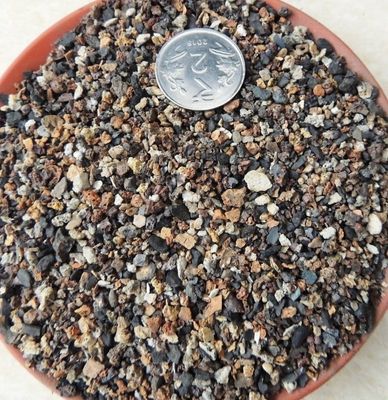

Cactus & Succulent Planting Mix FINE (aka Cactus Soil Mix or Succulent Soil Mix)
Cactus & Succulent Planting Mix FINE (aka Cactus Soil Mix or Succulent Soil Mix)
Fine-Grain Potting Mix for Cactus & Succulent Roots
SKU MNS001
₹39.85



Cactus Seed Planting Mix
Cactus Seed Planting Mix
Sterile, Fine-Grain Media for Cactus & Succulent Seeds
SKU MNS005
₹74.85
New


Monsoon Guardian Kit (5 in 1)
Monsoon Guardian Kit (5 in 1)
Complete 5-in-1 biological protection kit for cacti & succulents
SKU MNS024
₹850.00