1. Etymology: The name Huernia pillansii honors Neville Stuart Pillans, a South African botanist known for his contributions to botany. "Huernia" is derived from Justus van Heurne, a Dutch missionary and botanist. The cultivar name “Cocklebur” likely refers to the plant’s spiny appearance, reminiscent of a cocklebur seed. The hybrid H. pillansii x H. penicillata combines features from both parent species, with "penicillata" indicating its relationship to H. penicillata, known for its bristle-like features.
2. Origin of Plant: The parent species, Huernia pillansii and Huernia penicillata, are native to the arid regions of Southern Africa, primarily in Namibia and South Africa. These hybrids are developed through horticultural cross-breeding to combine desirable traits from both parent species.
3. Technical Description:
- Family: Apocynaceae (formerly Asclepiadaceae)
- Genus: Huernia
- Hybrid: H. pillansii x H. penicillata, cv. Cocklebur
- Form: Low-growing, clump-forming succulent.
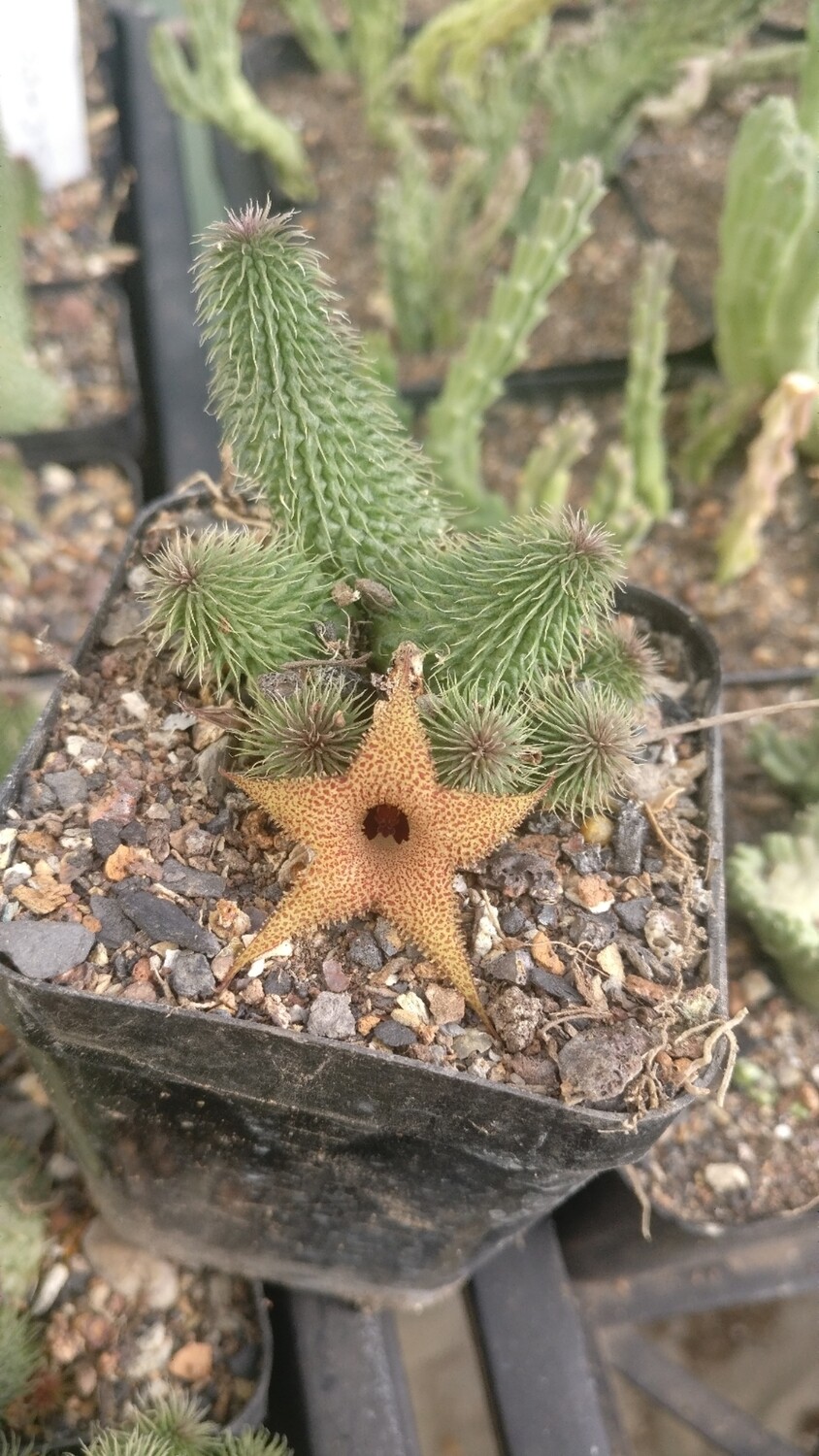
- Stem: Cylindrical, angular green stems with prominent tubercles, often covered with small spines or bristles from the penicillata parent.
- Flowers: Star-shaped, maroon to dark purple flowers with a unique bumpy or tufted texture. The flowers are typically around 2-3 cm in diameter and can have a slightly unpleasant scent.
- Blooming Period: Generally blooms in late summer to early fall.
- Fruit: Produces paired, horn-like follicles that contain numerous small seeds if pollinated.
4. Conservation Status: The exact conservation status of Huernia pillansii cv. Cocklebur is not well-documented, but the parent species, like many succulents, could face threats from habitat loss and over-collection. Responsible cultivation practices and sourcing plants from ethical growers can help ensure that wild populations remain unaffected.
5. Care Instructions:
- Light: Prefers bright, indirect light or light shade. Can tolerate some direct sunlight but should be protected from the harsh midday sun to avoid sunburn, especially in more delicate hybrid forms.
- Water: Water sparingly. Allow the soil to dry out completely between waterings. Reduce watering during the winter dormancy period to prevent root rot.
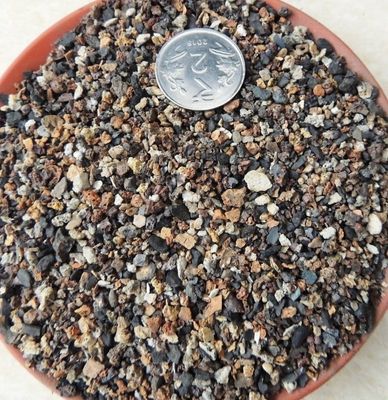
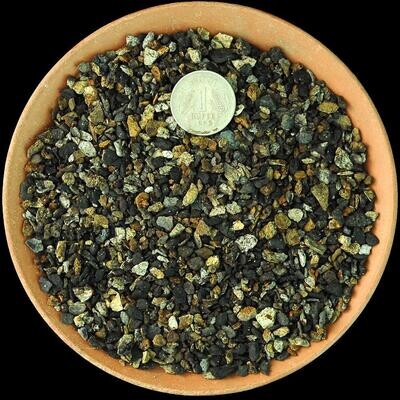
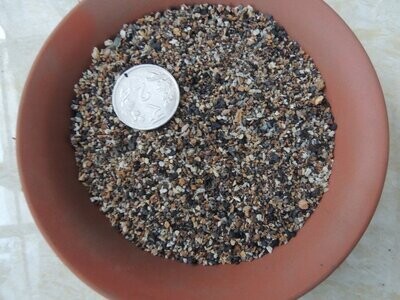
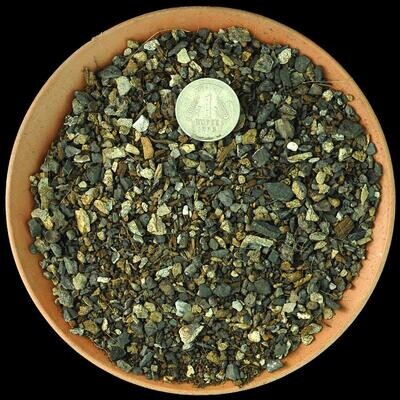
- Soil: Requires a well-draining soil mix, such as cactus or succulent soil. Adding perlite or pumice can enhance drainage.
- Temperature: Thrives in warm temperatures, ideally between 18-26°C (65-79°F). Protect from frost and temperatures below 5°C (41°F).
- Humidity: Prefers low humidity and good air circulation to prevent fungal issues.
- Fertilizer: Feed with a diluted, balanced fertilizer formulated for cacti and succulents every 4-6 weeks during the growing season (spring and summer).
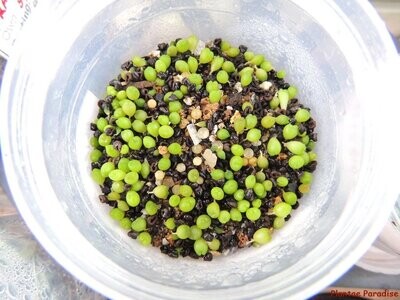
- Propagation: Easily propagated from stem cuttings or seeds. Allow cut ends to dry and callous over for a few days before planting in well-draining soil.