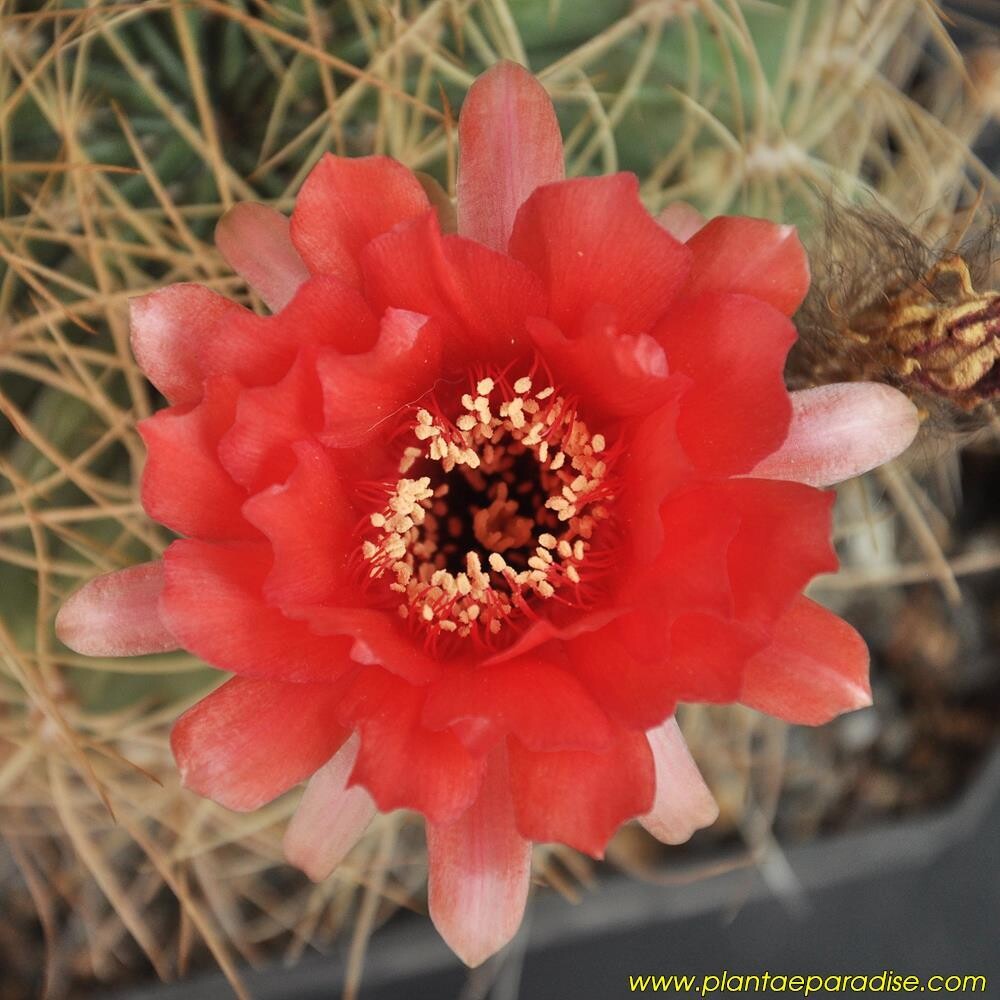
The Andean Bristle: Lobivia chrysochete R173
A standout specimen for serious collectors, defined by its compact, flattened geometry and a chaotic halo of flexible, bristle-like spines.
1. Origin & History of Name The genus Lobivia, established by Britton & Rose in 1922, is an anagram of "Bolivia," recognizing the center of diversity for these high-altitude cacti.
2. Morphology This species features a solitary, flattened-globose stem (depressed sphere) with well-defined ribs (costae). Its primary aesthetic appeal lies in the radial spines: thin, flexible, and bristle-like structures that curve and interlace, creating a cage-like effect over the dark green epidermis. Unlike many cacti, the spines are not rigid, offering a unique textural element. It produces diurnal, funnel-shaped blooms, typically in vibrant shades of orange or red.
3. Habitat & Origin This plant is a nursery-produced specimen derived from wild genetics found in the Andean highlands. It is a specific locality form (R173) rather than a man-made horticultural hybrid. All stock is sustainably seed-grown ex-situ to ensure no depletion of wild populations in South America.
4. Cultivation Profile
- Substrate: rigorous drainage is non-negotiable. Use a 70% mineral mix (pumice, perlite, or grit) with 30% sterile garden soil to prevent root rot in Indian humidity.
- Light: Requires bright, high-intensity light. In the Indian plains, provide full morning sun but utilize shade cloth or indirect placement during peak summer afternoons (1 PM–4 PM) to avoid scorching.
- Water/Dormancy: Follow the "soak and dry" method during the active growing season (Spring/Summer). Ensure total dryness during winter dormancy and protect strictly from excess moisture during the monsoon season.
5. Scientific/Historical Anecdote Taxonomically, Lobivia was distinguished from Echinopsis based on flowering habits. While Echinopsis flowers are typically long-tubed and open at night for moth pollination, Lobivia developed short-tubed, brightly colored flowers that open during the day. This is an evolutionary adaptation to the cold nights of the high Andes, shifting reliance to diurnal pollinators like bees and hummingbirds.