

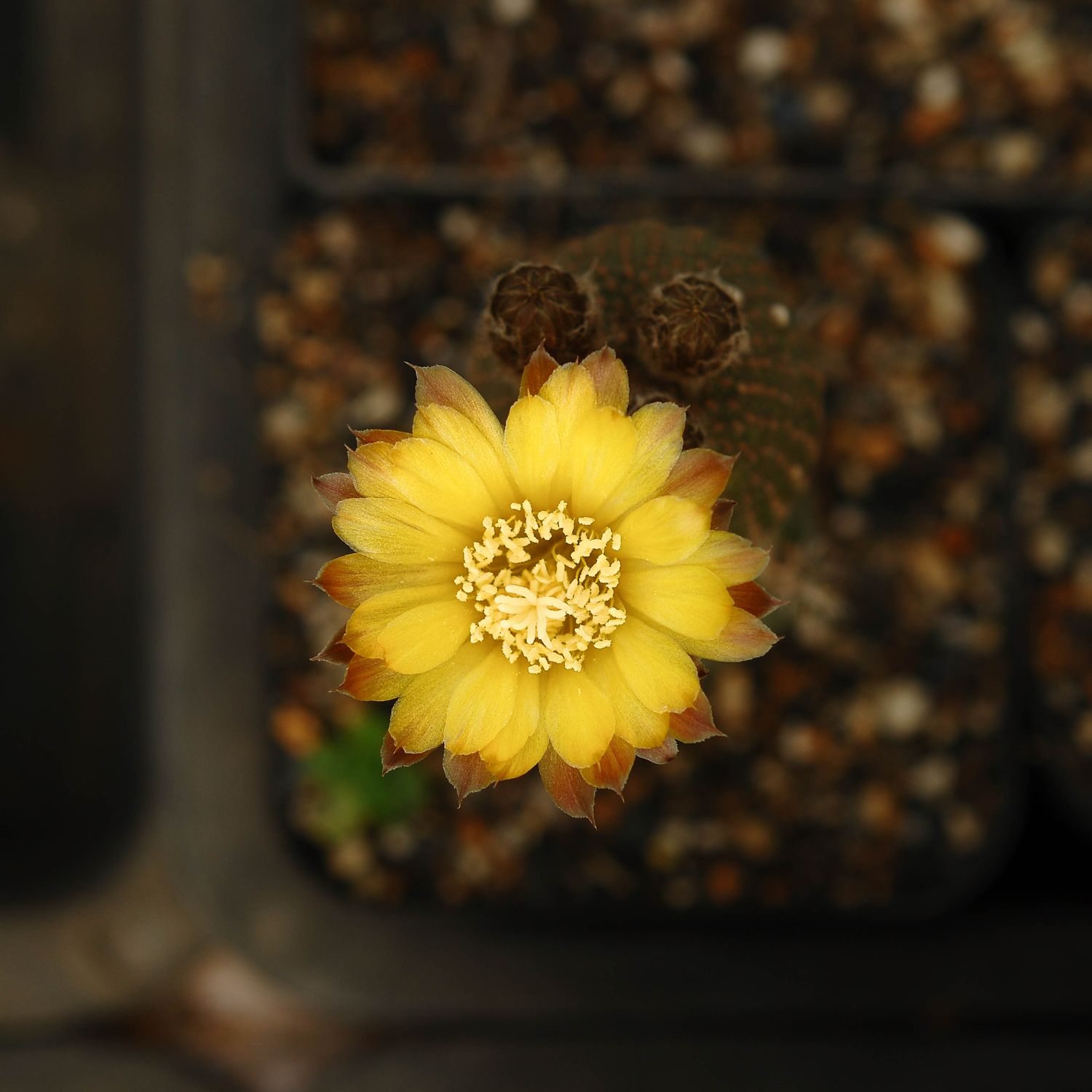
Lobivia famatimensis WR 127 Famatina, La Rioja
Product Details
Golden Glow of the Andes: Lobivia famatimensis WR 127
A high-altitude treasure from La Rioja, prized for its rare sunset-toned blooms and compact, sculptural form.
- Origin & History of Name: The genus name Lobivia is an anagram of Bolivia, the country where many species originate, though this specific variety is native to Argentina. The species name famatimensis refers to the Famatina Mountains in the La Rioja province.
- Morphology: This slow-growing cactus features a solitary, globose to cylindrical epidermis that remains small and manageable.
- Habitat & Origin: This is a wild species native specifically to the high-elevation scree slopes of Famatina, La Rioja, Argentina.
- Cultivation Profile:
- Substrate: Use a strictly mineral-based mix (70% grit/pumice/perlite and 30% organic matter). Avoid standard garden soil which retains too much moisture in humid Indian climates.
- Light: Requires very bright, filtered sunlight. In India, provide morning sun but use 50% shade cloth during harsh afternoon peaks in April–June to prevent scorching.
- Water/Dormancy: Follow a "soak and dry" method during the growing season. Maintain strict winter dormancy from November to February by withholding water entirely; this cool-dry period is essential for triggering spring blooms.
- Scientific/Historical Anecdote: Lobivia famatimensis was once famously confused with Rebutia due to its small stature, but Walter Rausch helped solidify its classification by highlighting its unique floral tube structure. In its native habitat, it grows at altitudes of up to 3,000 meters, where it survives extreme UV radiation and freezing night temperatures by retracting partially into the soil.
New


Monsoon Guardian Kit (5 in 1)
Monsoon Guardian Kit (5 in 1)
Complete 5-in-1 biological protection kit for cacti & succulents
SKU MNS024
₹850.00

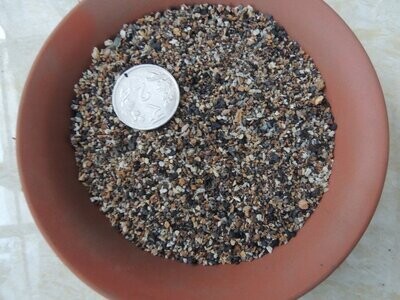

Cactus Seed Planting Mix
Cactus Seed Planting Mix
Sterile, Fine-Grain Media for Cactus & Succulent Seeds
SKU MNS005
₹74.85
