Lobivia hybrid Lovely Pink
Origin of Name:
The genus Lobivia is believed to be an anagram of “Bolivia,” reflecting its native highland habitat in South America. The name Lovely Pink was chosen to highlight the plant’s beautiful pink flowers, emphasizing its charming and delicate appearance.
Origin of Plant:
Native to the mountainous regions of Bolivia, Argentina, and Peru, Lobivia species flourish in rocky, arid environments with excellent drainage. Discovered during botanical explorations in the 19th century, the genus quickly became prized for its vibrant and intricate blossoms. The hybrid Lovely Pink is cultivated in nurseries to showcase its elegant, refined floral traits.
Description:
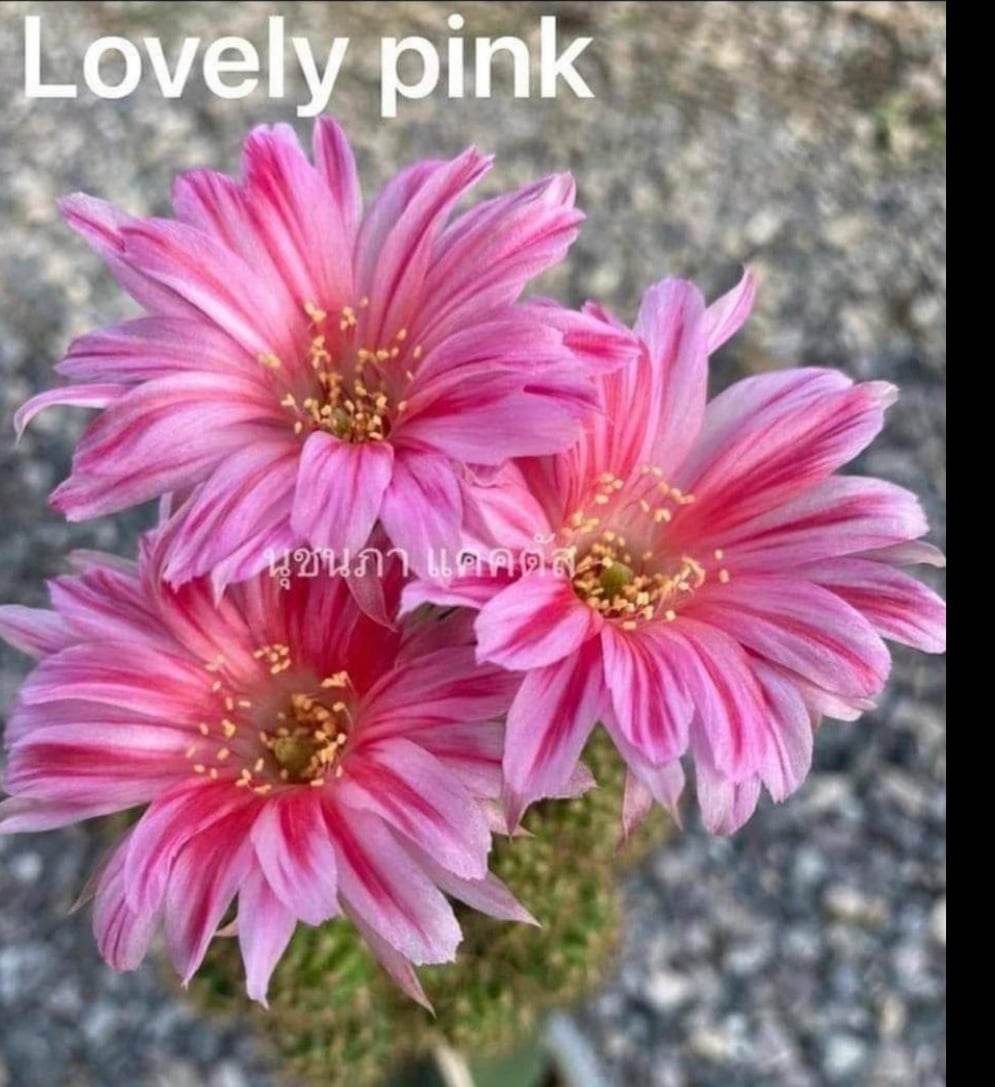
Lobivia hybrid Lovely Pink produces dainty and elegant flowers distinguished by their long, slender petals. The petals are delicate and thin, creating a graceful, airy appearance. The flowers are predominantly pink, with a striking dark pink line running across each petal, adding a beautiful contrast and intricate detail. Blooming profusely during late spring to early summer, the flowers typically open in the early morning, emitting a soft, charming allure. Its floral delicacy and fine detailing make it a captivating addition to any cactus collection.
Conservation Status:
As a hybrid cultivated in nurseries, Lovely Pink does not require conservation efforts beyond horticultural interest. Propagation in cultivation ensures the preservation of its beauty without impacting wild populations.
Care:
Plant in well-draining cactus or succulent soil. Water sparingly—only when the soil is dry—especially during the winter rest period. It prefers full sun or bright indirect light, with at least 4-6 hours of direct sunlight daily. Maintain warm temperatures between 70-85°F (21-29°C). Fertilize monthly during the active season with a cactus fertilizer to promote healthy growth and flowering.
Interesting Anecdote or Historical Story:
Named Lovely Pink for its delicate, ribbon-like petals with a graceful dark pink line, this hybrid symbolizes gentle beauty and intricate artistry. Its light, slender blossoms evoke images of fine embroidery or delicate brushstrokes in botanical art, celebrating the elegance and resilience of desert flora—perfect for collectors who appreciate subtle, refined beauty.