

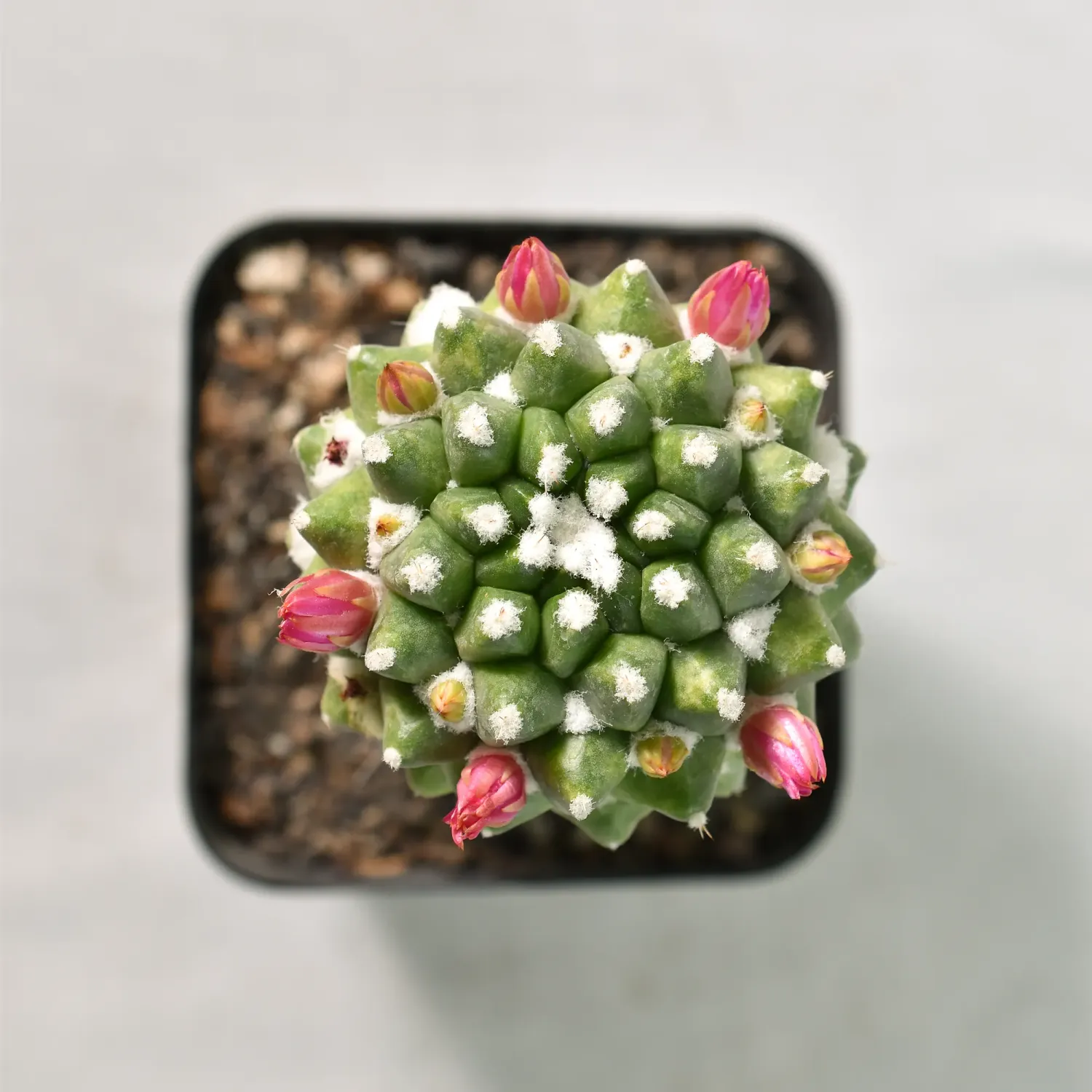
Mammillaria bucareliensis 'erusamu' grafted
Product Details
The Frosty Marvel: Mammillaria bucareliensis 'Erusamu'
A rare, wool-shrouded masterpiece for the discerning collector seeking sculptural perfection.
- Origin & History of Name: The species name bucareliensis refers to the Bucareli region in Querétaro, Mexico, where it was first documented. The cultivar name 'Erusamu' is the Japanese transliteration of "Erasmus." While the precise reason for this dedication is debated among taxonomists, it follows a long tradition of Japanese succulent breeders naming elite selections after significant historical or botanical figures.
- Morphology: This cactus is distinguished by its globular, dark green epidermis which is almost entirely obscured by exceptionally thick, white lanas (wool) in the axils. Unlike the standard species, 'Erusamu' features reduced or absent central spines, emphasizing its soft, snowy appearance. It typically produces a ring of small, vivid pink flowers that contrast sharply against the white woolly crown.
- Habitat & Origin: While the parent species is native to the high-altitude limestone hills of Central Mexico, 'Erusamu' is a specialized cultivar developed through selective breeding, primarily in Japan. As a grafted specimen, it is typically fused onto a robust rootstock like Hylocereus or Trichocereus to accelerate growth and ensure long-term stability in cultivation.
- Cultivation Profile:
- Substrate: Use a strictly mineral-based mix (60% grit/pumice, 20% lava rock, 20% organic matter). In the Indian climate, ensure the pot is porous (terracotta is ideal) to prevent root rot.
- Light: Requires bright, indirect sunlight.
In North Indian summers, provide 50% shade cloth protection to prevent epidermis scorching; in South/Central India, ensure high ventilation. - Water/Dormancy: Water thoroughly only when the medium is bone-dry. During the monsoon, withhold water entirely if humidity is above 80%. Observe a dry winter dormancy from November to February to encourage spring blooming.
- Scientific/Historical Anecdote: The genus Mammillaria was first described by Adrian Haworth in 1812. The name is derived from the Latin mammilla, meaning "nipple," referring to the tubercle structures that replace the continuous ribs (costae) found in other cacti.
This specific cultivar represents the "Japanese Style" of succulent breeding, which prioritizes the exaggeration of a single trait—in this case, the density of the wool—to turn a desert plant into a living piece of art.

Cactus & Succulent Planting Mix COARSE (aka Cactus Soil Mix or Succulent Soil Mix)
Cactus & Succulent Planting Mix COARSE (aka Cactus Soil Mix or Succulent Soil Mix)
Washed, Free-Draining Mineral Mix for Cactus & Succulents
SKU MNS003
₹44.85

New

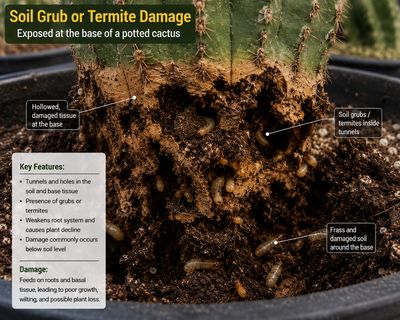
Monsoon Guardian Kit (5 in 1)
Monsoon Guardian Kit (5 in 1)
Complete 5-in-1 biological protection kit for cacti & succulents
SKU MNS024
₹850.00


Cactus & Succulent Planting Mix FINE (aka Cactus Soil Mix or Succulent Soil Mix)
Cactus & Succulent Planting Mix FINE (aka Cactus Soil Mix or Succulent Soil Mix)
Fine-Grain Potting Mix for Cactus & Succulent Roots
SKU MNS001
₹39.85